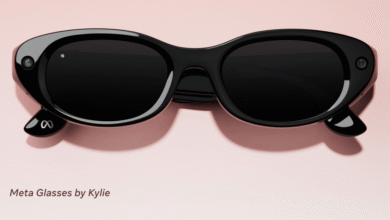
Meta Ray-Bans Share ‘Sensitive’ Videos with Human Reviewers

▼ Summary
– A report reveals video from Meta Ray-Ban smart glasses is sent to human data annotators in Kenya, including sensitive content like intimate moments and financial details.
– The glasses capture video both through manual recording and via an AI feature that sends footage to Meta’s servers for analysis.
– Workers reviewing the footage report seeing deeply private clips from users’ homes, such as people in bathrooms or engaged in sexual activity.
– Meta’s terms of use are vague about data review, and the company provided no specific details when questioned, leaving transparency lacking.
– Former Meta employees note sensitive data isn’t supposed to be sent for human review, but automated filters to block it are not always effective.
A recent investigation has raised significant concerns about the privacy practices surrounding Meta’s Ray-Ban smart glasses, revealing that video feeds are routinely sent to human reviewers and can include highly personal content. The report indicates that third-party data annotators in Kenya are tasked with manually reviewing footage, which whistleblowers claim often contains sensitive material that should be excluded from such analysis. This includes scenes of intimate moments, private home life, and financial information, highlighting a potential gap between user expectations and corporate data handling.
The glasses function in two primary modes. Users can manually activate video recording to capture point-of-view experiences, such as adventures or notable events. Separately, the integrated AI feature allows wearers to ask questions about their surroundings, which requires sending visual data to Meta’s servers for processing. While it’s understood that AI queries involve server analysis, the new allegations suggest that manually recorded videos may also be transmitted for human review, not just AI-related clips. The circumstances under which these private videos are captured remain unclear. For instance, reports of individuals wearing the glasses during intimate acts suggest either deliberate recording or a failure in the system’s safeguards.
A major issue is the lack of transparency regarding what data is sent and for how long. If a user asks the AI to identify a car, does transmission stop immediately after the answer, or does it continue? Meta’s own terms of service provide little clarity, vaguely stating that interactions with AIs may be reviewed by automated systems or humans. When pressed for details, the company reportedly directs inquiries back to these broad policies.
Network traffic analysis shows the companion app frequently communicates with Meta servers in Sweden and Denmark, but the specifics of the data payload are not disclosed. Former employees note that sensitive data should theoretically be filtered out by algorithms before human review, but this process is not foolproof and can fail, allowing private footage to reach contractors.
For users, this serves as a critical reminder about the inherent privacy risks of wearable AI technology. The convenience of hands-free recording and instant information comes with a trade-off in data control. Anyone using devices that capture audio or video should operate under the assumption that their data might be seen by others, regardless of a company’s stated policies. While the full technical details are still murky, the core takeaway is clear: exercising caution with sensitive activities around any connected camera or microphone is essential in today’s digital landscape.
(Source: 9to5Mac)