Inside Cisco: The Rebirth of Splunk with Kamal Hathi
▼ Summary
– Kamal Hathi is a data-focused executive at Splunk who previously led analytics products at Microsoft and now specializes in machine data, which he describes as the “heartbeat of the enterprise.”
– The Cisco and Splunk acquisition combines their strengths to unlock machine data at scale, aligning their strategies into a unified architecture called the Cisco Data Fabric.
– Splunk remains vendor-neutral, supporting multi-vendor environments and providing a single, unified view of data from various sources, including third-party integrations.
– Splunk uses AI to simplify complex data analysis by automating tasks like query formulation and data profiling while maintaining human oversight and transparency in AI decision-making.
– Hathi emphasizes Splunk’s evolution from handling structured data to extracting value from unstructured machine data and structuring insights for reuse in AI training and real-time analytics.
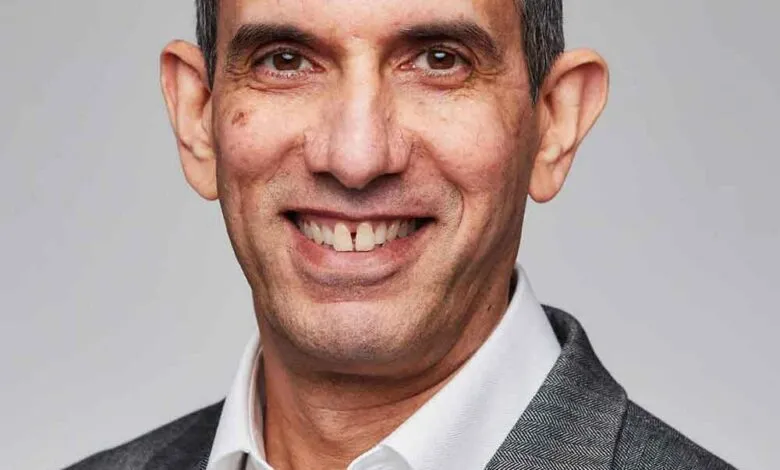
Meeting Kamal Hathi, Splunk’s Senior Vice President and General Manager, at the recent Splunk .conf 2025 event in Boston, offered an immediate glimpse into his world. Before exchanging a single word, his choice of accessories spoke volumes, an Apple Watch on his wrist, an Oura smart ring on his finger, and a Whoop fitness tracker strapped to his arm. It was clear this executive lives and breathes data.
Hathi, who joined Splunk nine months ago following a distinguished tenure at Microsoft, carved out time for an in-depth conversation about the evolving data landscape. At Microsoft, he spearheaded influential products such as Power BI and SQL Server Analytics, fundamentally shaping how businesses interpret their information. Now, at Splunk, recently acquired by Cisco, he directs his focus toward machine data, the lifeblood coursing through every modern organization.
“Machine data is literally the heartbeat of the enterprise,” Hathi explained. “If you think of logs and telemetry as the heart rate, then Splunk is the heart-rate monitor.”
The powerful pairing of Cisco and Splunk represents far more than a simple corporate acquisition. For Hathi, it marks the convergence of two data giants at a pivotal moment. “Splunk is the largest, most robust platform imaginable for data, data systems, and analytics,” he emphasized. “Combined with Cisco, we have an incredible opportunity to unlock machine data from networks and infrastructure at massive scale.”
He described the Cisco Data Fabric vision, the unifying architecture now guiding both companies, as a true meeting of minds. “Splunk always had a strategy of becoming a core data platform, while Cisco needed a strong telemetry platform of its own. The acquisition merges these strategies into a single architecture.”
Even as part of Cisco, Hathi affirms that Splunk remains vendor-neutral and dedicated to multi-vendor environments. “Most enterprises operate in hybrid setups. No one relies on just one vendor,” he noted. “Splunk has always ingested data from virtually any source, and that won’t change. Cisco customers do gain advantages through deeper integration, such as firewall insights and economic efficiencies, but we actively encourage third-party data. The objective is a unified view, no matter where the data originates.”
This principle forms the foundation of Cisco’s emerging Data Fabric strategy, which federates data sources rather than forcing customers to consolidate them into a single system.
As data sprawls across cloud, edge, and on-premises systems, the central challenge shifts from volume to comprehension. Splunk’s Motion AI Canvas is designed to bring order to this complexity. “In the past, you needed specialists to profile, join, and query your data,” Hathi said. “Now, AI handles much of that heavy lifting, understanding the data itself, formulating appropriate queries, even recommending visualizations. It makes complex environments far more approachable.”
Still, Splunk remains committed to human oversight. “We avoid anything that feels like ‘magic,’” Hathi remarked with a smile. “Our AI is practical for the enterprise, built to handle complex data, governance, and security. Everything we do keeps a human-in-the-loop. We provide guardrails, not autopilot.”
Transparency is another cornerstone. Splunk’s reasoning models don’t just deliver results, they articulate their logic. “You can ask why an AI agent took a specific action,” Hathi explained. “It will respond: ‘Here’s what I observed, this is what occurred, and here’s why I made that decision.’ That traceability is essential for building enterprise trust.”
Reflecting on how his perspective on data has evolved since his Microsoft days, Hathi highlighted the field’s dramatic transformation. “Data used to be something you could wrap your head around, rows and columns. Now it’s massive, unstructured, and nearly impossible to visualize,” he observed. “Everything today runs on data, browsers, advertisements, vehicles, buildings. Splunk sits at the center of it all, extracting value from the messy machine data that others overlook.”
Looking ahead, Splunk’s next frontier involves not only finding the needle in the haystack but transforming those insights into reusable intelligence. “We’ll always excel at forensics and log analytics,” Hathi stated. “But now we’re expanding downstream, structuring those insights for further applications like AI training or real-time analytics. We’re helping customers derive more value from the same data.”
This includes refining data collection methods from the outset. Instead of amassing everything, technologies like Isovalent help identify what truly matters. “Edge processing allows you to distinguish signal from noise,” Hathi noted. “Collecting everything isn’t efficient. The key is collecting the right data.”
Transitioning from Microsoft to Splunk after more than two decades brought a refreshing cultural shift. “Splunk has a very innovation-driven, free-form, ‘Splunky’ culture,” Hathi shared. “It’s playful, quirky, and high-energy, and that drives innovation. Cisco provides the scaffolding of a large organization, but Splunk’s spirit supplies the spark.”
He believes that energy isn’t just surviving within Cisco, it’s thriving. With Cisco leaders like Jeetu Patel and Chuck Robbins participating in Splunk .conf, Hathi sees the partnership as deeply supportive. “Cisco is actually helping us return to our roots,” he said. “This feels like Splunk 2.0, a genuine rebirth. Customers are gaining more value than ever before.”
As our discussion concluded, my attention returned to his collection of data-gathering wearables, each one silently transmitting real-time telemetry. If machine data truly is the heartbeat of the enterprise, then Kamal Hathi personifies that rhythm. He doesn’t just analyze data, he embodies it.
(Source: ITWire Australia)