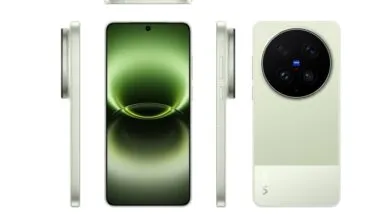
Honor’s Magic 8 Pro Adds Dedicated AI Button
▼ Summary
– Honor’s Magic 8 Pro flagship phone will feature a dedicated AI button, as revealed in exclusive design images.
– The phone series will be among the first to use the newly announced Qualcomm Snapdragon 8 Elite Gen 5 chipset.
– The design of the Magic 8 Pro is largely similar to its predecessor but features a flat back instead of a curved one.
– The rear camera system includes what appears to be a more powerful 200-megapixel telephoto lens than the previous model.
– Honor will launch the Magic 8 series in China on October 15th, with a European release expected early next year.
Honor has officially unveiled the design of its next-generation flagship, the Magic 8 Pro, confirming a significant new feature: a dedicated AI button. Exclusive images reveal a device that builds upon the foundation of its predecessor while introducing key hardware and software enhancements. Set to launch in China next month, the phone will be among the first to utilize the powerful new Snapdragon 8 Elite Gen 5 chipset from Qualcomm, positioning it as a premium contender in the competitive smartphone market.
As Honor’s flagship line, the Magic series typically debuts in China before arriving in European markets with a price tag often exceeding €1,000. These devices are known for incorporating top-tier components, including high-performance processors, large-capacity batteries, and advanced camera systems. The Magic 8 Pro appears to continue this tradition, aiming to deliver a comprehensive flagship experience.
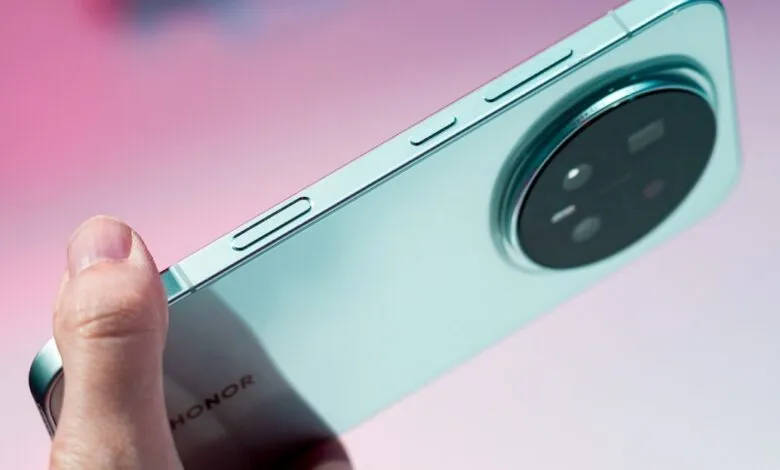
Visually, the Magic 8 Pro shares a strong family resemblance with the Magic 7 Pro. The most noticeable design change is a completely flat back panel, a departure from the subtly curved edges of the previous model. The overall aesthetic remains familiar, even extending to a light blue color option that closely mirrors a popular hue from last year’s lineup.
The most significant external addition is a new physical button located on the phone’s side frame. Honor has clarified that this is a dedicated AI button, distinct from a camera shutter. While the specific AI functions triggered by this button are not yet fully detailed, the company is introducing a new feature called Magic Color. This tool allows users to apply the color palette from one image to restyle another photo or video. The dedicated button suggests quick access to this and other, yet-to-be-announced, on-device AI capabilities.
On the rear, a prominent circular camera island houses what appears to be a multi-lens setup. It likely consists of three main cameras accompanied by a Time-of-Flight (ToF) sensor for improved depth sensing and portrait effects. Specific camera specifications are still under wraps, but Honor’s Chief Marketing Officer, Guo Rui, shared a sample image on Weibo reportedly taken with a 200-megapixel, 85mm-equivalent telephoto camera. If accurate, this would represent a substantial upgrade over the 72mm periscope lens found in the Magic 7 Pro, promising superior zoom capabilities.
The confirmation of the Snapdragon 8 Elite Gen 5 chipset ensures the Magic 8 Pro will have considerable processing power. Honor is not alone in adopting this new silicon; Xiaomi has also announced its intention to use the chip in its upcoming Xiaomi 17 series, setting the stage for a high-performance rivalry.
Honor is scheduled to hold a launch event in China on October 15th. Following the pattern of the Magic 7 series, it is anticipated that the company will introduce at least two models, likely a standard Magic 8 and the Pro variant. They will be joined by the MagicPad 3 Pro tablet, which will also feature the new Snapdragon chip. A European release for the smartphones is expected in early 2025. Industry rumors also point to the development of Magic 8 Ultra and Mini models, though these are reportedly slated for a 2026 arrival.
(Source: The Verge)