Huxe: The Audio-Powered App for News and Research
▼ Summary
– Huxe is an audio-first app created by three former Google developers who previously worked on the AI note-taking assistant NotebookLM.
– The startup raised $4.6 million in funding from investors including Conviction, Figma CEO Dylan Field, and Google’s Jeff Dean.
– The app provides a daily briefing by connecting to your emails and calendar, and it generates podcasts with interactive AI hosts on various topics.
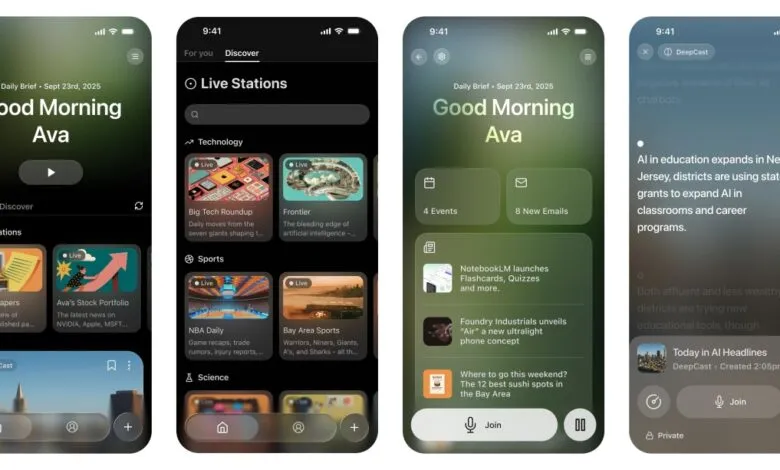
– A key feature allows users to create “live stations” on topics like tech news or sports, which provide updates by tapping into different sources.
– Huxe is designed for users who want to consume information like emails, schedules, and news audio-first, without looking at a screen.
Staying informed in today’s fast-paced world often means juggling multiple screens and endless browser tabs. Huxe, a new audio-first application, aims to change that by delivering personalized news and research directly to your ears. Developed by a team of former Google engineers who worked on the AI-powered NotebookLM, the app generates dynamic audio briefings and simulated podcasts featuring multiple AI hosts to help users digest complex topics hands-free.
The startup recently announced a significant milestone, securing $4.6 million in funding from a notable group of investors. This list includes Conviction, Genius Ventures, Figma CEO Dylan Field, and Google Research’s chief scientist, Jeff Dean. Following a limited invite-only launch in June, Huxe is now available to the general public on both iOS and Android platforms.
The company was founded by Raiza Martin, Jason Spielman, and Stephen Hughes, who departed Google in December 2024 to pursue their own venture. Their initial project was a business-oriented chatbot, but they quickly pivoted to the consumer market. By March 2025, they had built a personal assistant capable of creating customized images, videos, and audio clips. It was during this testing phase that a key user behavior emerged.
Martin explained that they noticed a strong preference for audio generation. Users consistently turned to the app at specific times of day, such as during their morning routine, to get a daily briefing or catch up on news without looking at a screen. This critical observation became the foundation for Huxe, steering the team to fully embrace an audio-centric model.
The core functionality of Huxe involves creating a daily audio summary by analyzing your incoming emails and connecting to your calendar to understand your schedule. Beyond personal organization, the app allows you to explore any subject. Much like its conceptual predecessor, NotebookLM, it produces a podcast-style discussion with AI hosts debating the topic. A key interactive feature lets you engage with these hosts at any moment, asking follow-up questions or requesting clarifications on specific points.
Huxe introduces a unique concept with its “live station” feature. Users can create a continuous audio feed for any topic, from tech news and sports scores to celebrity gossip. After you listen to a station, the app provides ongoing updates by pulling information from various sources, which is particularly useful for tracking breaking stories. An automatically generated personalized interest feed also curates audio content tailored to your preferences.
Martin noted that early power users are already shaping Huxe’s development, a pattern reminiscent of the feedback cycle that helped refine NotebookLM. She believes the app is perfectly suited for professionals who are inundated with digital information. It offers a way to stay on top of emails, schedules, and news without adding more screen time.
While its current focus is squarely on the information market, the potential for entertainment applications is clear. The success of other audio-centric platforms, such as India’s Pocket FM and Kuku FM, which use AI for content creation, points to a growing trend. Huxe is part of a broader movement where companies like ElevenLabs, Oboe, Google, and Meta are all investing heavily in audio as a primary medium for content delivery.
(Source: TechCrunch)