Gen AI Attacks Drive 40% of Cybersecurity Budgets to Software
▼ Summary
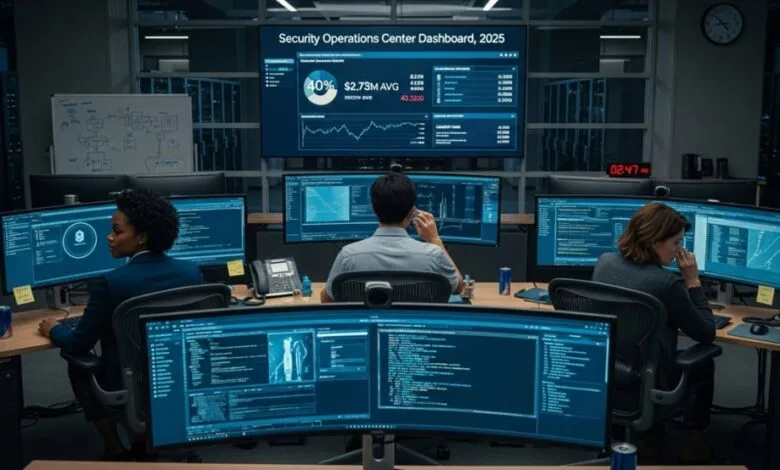
– Software now accounts for 40% of cybersecurity spending, surpassing personnel costs by 11 percentage points as organizations prioritize defenses against AI-driven threats.
– Generative AI enables attackers to create 10,000 personalized phishing emails per minute, while deepfake fraud bypasses biometric authentication in 97% of attempts.
– Security teams managing 75+ tools lose $18 million annually to integration overhead, with each additional tool reducing visibility by 12% and increasing attacker dwell time by 23 days.
– 55% of security leaders expect budget increases above 5%, with Asia Pacific organizations leading at 22% anticipating increases exceeding 10% compared to 9% in North America.
– Quantum computing poses an immediate threat through “harvest now, decrypt later” attacks, with NIST mandating post-quantum cryptography adoption by 2030 to protect $425 billion in vulnerable data.
Organizations are rapidly reallocating cybersecurity budgets in response to the escalating threat landscape driven by generative AI. Software now commands 40% of total cybersecurity spending, significantly outpacing hardware, outsourcing, and even personnel costs. This strategic shift reflects the urgent need to counter AI-powered attacks that operate at millisecond speeds, far exceeding traditional human response capabilities.
Three major threats are fundamentally reshaping cybersecurity strategies. Attackers now use generative AI to produce thousands of highly personalized phishing emails per minute, leveraging scraped data from platforms like LinkedIn. Meanwhile, the approaching quantum computing era threatens to decrypt vast amounts of currently secure data, and deepfake technology has seen a 3000% surge in fraudulent attempts, successfully bypassing biometric authentication in most cases.
The complexity of managing dozens of security tools has become a major liability. Many enterprises operate with over 75 different security solutions, resulting in an annual $18 million integration tax. Analysts are inundated with thousands of alerts daily, spending the majority of their time on false positives rather than genuine threats. This tool sprawl reduces visibility and increases the time attackers remain undetected within systems.
Platform consolidation is emerging as a critical strategy to combat this complexity. Leading vendors are integrating extended detection and response (XDR), security information and event management (SIEM), and automated remediation into unified platforms. These solutions transform security operations centers from forensic backrooms into real-time threat neutralization engines. CrowdStrike’s Charlotte AI, for example, automates alert triage with 98% accuracy, saving teams over 40 hours per week.
Budget increases reflect the growing urgency, with 55% of security leaders anticipating significant spending growth. Cloud security, on-premises technology upgrades, and security awareness training top investment priorities. Regional differences are notable, with Asia Pacific organizations leading in budget growth expectations due to localized threat landscapes.
Protecting AI inference layers has become a new frontline in cybersecurity. These critical points where AI models interact with data and users are vulnerable to prompt injection, data theft, and manipulation. Runtime defenses that operate in real-time are essential, as delayed forensic responses are no longer sufficient against AI-driven attacks.
Quantum computing presents another looming challenge. The risk of “harvest now, decrypt later” attacks means encrypted data stolen today could be decrypted once quantum processors achieve sufficient scale. New post-quantum cryptography standards are being implemented, with global mandates requiring adoption by 2030.
The explosion of machine identities has created a credential crisis, with non-human entities now outnumbering users 45 to 1. Traditional endpoint management cannot keep pace with AI-driven attacks. Combining unified endpoint management with AI-powered vulnerability scoring allows organizations to patch critical weaknesses much faster.
Security leaders are advised to divest from legacy tools and prioritize integrated platforms that enhance visibility and simplify management. Unified Secure Access Service Edge (SASE) solutions and automated remediation capabilities are becoming essential components of modern security architectures.
The future of cybersecurity lies in consolidating controls at the inference edge, implementing behavioral anomaly detection, and strengthening AI systems with rigorous provenance checks. Investing in runtime defenses and supporting specialized security teams will be crucial for organizations aiming to deploy AI securely at scale.
(Source: VentureBeat)