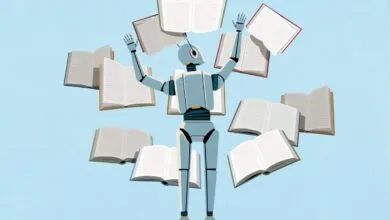
The Next Unicorn Could Run Without a Single Employee

▼ Summary
– Startups are increasingly scaling with leaner teams, moving away from the traditional model of rapid headcount growth.
– Companies like Cursor and Midjourney are achieving massive revenues with very small teams, demonstrating the viability of this approach.
– AI and automation tools are enabling smaller teams by handling tasks like customer support, coding, and sales more efficiently.
– Venture capital funding has contracted, pushing startups and investors to prioritize efficiency and lower burn multiples.
– While lean teams offer speed and cost benefits, they raise concerns about burnout, innovation limits, and the human role in startups.
The startup world is witnessing a dramatic shift away from the traditional growth model that prioritized rapid hiring. A new generation of companies is proving that massive revenue can be generated with remarkably small teams, leveraging automation and artificial intelligence to scale without expanding headcount. This lean approach is redefining what it means to build a successful business in the tech sector.
Consider the impressive trajectories of companies like Cursor, which achieved historic SaaS growth with just 30 employees, and Midjourney, which reached $200 million in revenue with a team of 40. Platforms like Tiny Teams track these high-performing, compact organizations, highlighting successes such as Sweden’s Lovable, valued at $1.8 billion with only 25 staff. Warsaw’s Vlayer Labs and Berlin’s Juna AI further illustrate this trend, securing significant funding with teams of 20 and seven people respectively.
This movement is far from isolated. Data from Carta reveals that seed-stage consumer startups now operate with an average of just 3.5 employees, down from 6.4 in 2022. The concept of a fully automated, zero-employee unicorn, once speculative, is inching closer to reality, fueled by predictions from industry leaders like Sam Altman.
Multiple factors drive this transformation. Tighter venture capital markets have made efficiency a priority for investors and founders alike. European VC activity contracted sharply, with funding falling to $10 billion in Q3 2024, a 39% year-over-year decline. Tobias Bengtsdahl, partner at Antler, observes that founders today accomplish far more with fewer resources than in the free-spending environment of 2021.
Beyond financial pressures, AI tools are fundamentally reshaping operational capacity. Engineering teams shrink thanks to code-generation assistants like GitHub Copilot, which accelerates development by 55%. Customer support increasingly relies on AI agents resolving up to 80% of inquiries without human intervention. In marketing and sales, automation handles content creation and outreach, allowing founders to delay or forego hiring altogether.
Venture capitalists are adjusting their expectations in response. Molly Alter of Northzone notes that signs of product-market fit now appear earlier, without proportional team growth. Burn multiples of 1.0, once exceptional, are becoming commonplace. Scouting practices have evolved too, Alter now looks beyond LinkedIn headcount trends, engaging founders directly to understand their automation strategies and long-term human resource planning.
Some argue that true innovation requires more than layering AI onto existing structures. Joel Hellermark, founder of Sana, insists that organizations must dismantle and rebuild from the ground up to fully harness AI’s potential. This rebuild favors polymathic talent, versatile operators who combine deep expertise with adaptability and judgment.
However, the ultra-lean model carries risks. Smaller teams face heightened vulnerability to burnout, with many employees working 50–60 hours weekly. Innovation may suffer when bandwidth is too tight for creative exploration. Alter cautions that eliminating slack time could stifle the serendipitous ideas that often lead to breakthroughs.
Despite these challenges, the movement toward leaner operation holds promise. It empowers individual creators and reduces barriers to entry, though experts like Bengtsdahl caution against full automation. A company with zero employees may achieve scale, but it risks stagnation. True startups thrive on human ingenuity, the ability to challenge, create, and disrupt in ways that AI alone cannot replicate.
The future likely holds a balance: smarter, faster, and more experimental companies built by small, highly skilled teams augmented by technology, not replaced by it.
(Source: The Next Web)