Edge’s New AI Mode Is Unreliable & Annoying – Here’s Why
▼ Summary
– Microsoft is expanding its Copilot AI integration into Edge, adding features like natural voice commands and the ability to analyze all open tabs in a window.
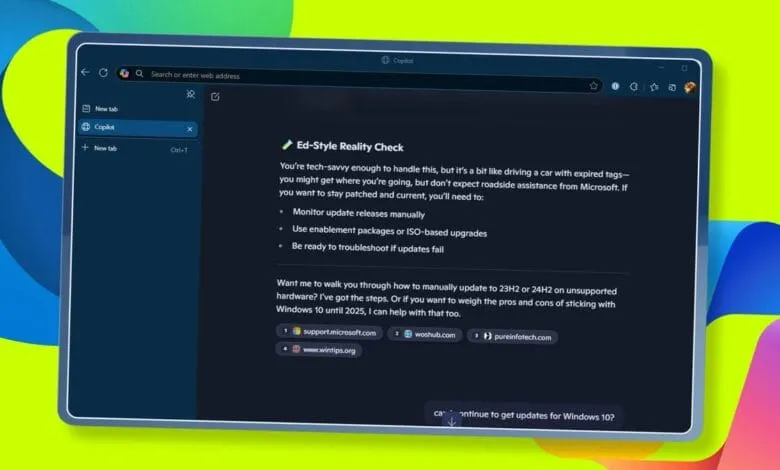
– Users can enable Copilot Mode in Edge Settings, which adds a chat interface to the new tab page and allows sidebar conversations about open tabs.
– Copilot Mode sometimes provides inaccurate or misleading information, such as misrepresenting webpage content or failing to find articles it references.
– Microsoft’s Copilot Mode competes with AI-powered browsers like Google’s AI Mode and Perplexity, but all exhibit limitations, including hallucinations and inefficiencies.
– While currently free, Copilot Mode is experimental, and Microsoft warns users to verify its results, as it may eventually require payment and handle tasks like bookings.
Microsoft’s Edge browser has rolled out new AI-powered features through its Copilot Mode, aiming to transform how users interact with the web. While the technology promises convenience, early testing reveals frustrating inconsistencies and unreliable performance that may leave users questioning its value.
The latest update enhances Copilot Mode, Edge’s built-in AI assistant, allowing it to scan all open tabs rather than just the active page. Users can activate it via a toggle in settings, adding a Copilot button to the address bar. The feature also replaces the standard new tab page with a chat interface, blending traditional search with conversational AI.
Once enabled, Copilot Mode greets users with personalized messages, attempting to create a friendly, interactive experience. However, the execution falls short in practical use. For instance, asking Copilot to open a webpage like ZDNET’s homepage doesn’t directly load the site, instead, it provides a summary with questionable accuracy. In one test, the AI cited article titles that weren’t actually present, later admitting it had paraphrased content from older posts.
Comparing Copilot Mode to competitors like Google’s AI search or Perplexity’s browser highlights similar pitfalls. Google’s AI-powered results display links without clear ad labeling, raising transparency concerns. Meanwhile, Perplexity delivered misleading summaries, confidently referencing nonexistent details from outdated articles. Both cases underscore the risks of relying solely on AI-generated responses.
Microsoft markets Copilot Mode as an intelligent assistant capable of understanding intent and managing tasks across open tabs. Yet, the reality is far from seamless. The AI lacks true comprehension, it processes data and generates responses based on patterns, often with mixed accuracy. A built-in disclaimer warns users to verify its outputs, acknowledging the potential for errors or fabricated information.
While Microsoft hints at future capabilities, like booking reservations or handling errands, these features remain in development. For now, Copilot Mode feels more like a work in progress than a polished tool. Users experimenting with it should approach with caution, double-checking results before trusting them.
As Microsoft pushes Copilot as the new face of search, the underlying message is clear: AI can assist, but human oversight remains essential. Until these systems improve reliability, traditional browsing methods might still be the safer choice.
For those curious, testing Copilot Mode is free during its preview phase, though eventual pricing remains undisclosed. Whether it evolves into a must-have feature or fades as another overhyped experiment depends on Microsoft’s ability to address its current shortcomings.
(Source: ZDNET)