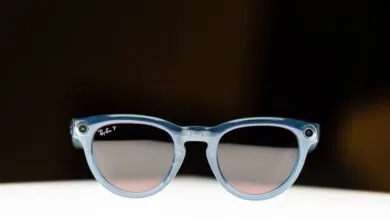
AI Smart Glasses Transform Lives for the Low-Vision Community

▼ Summary
– The author, a senior tech reporter, highlights how AI-powered smart glasses like Ray-Ban Meta are transformative for the blind and low-vision community.
– The Vergecast episode explores accessible design as universal design, featuring a visually impaired user’s positive experience with the technology.
– Jason Valley, a visually impaired reader, shares how smart glasses have improved his independence and discusses the blind community’s enthusiastic adoption.
– Be My Eyes CEO Mike Buckley explains how accessible tech benefits everyone and why AI and smart glasses are a natural fit for solving real-world challenges.
– The episode also addresses a lighthearted but practical question about smart glasses’ appropriateness in the bedroom, posed by a Vergecast listener.
Smart glasses powered by AI are proving to be revolutionary tools for individuals with low vision, offering newfound independence and practical solutions to everyday challenges. While some may dismiss these devices as unnecessary gadgets, their impact on the visually impaired community tells a different story, one of empowerment and accessibility.
Jason Valley, a visually impaired reader, recently shared how Meta’s Ray-Ban smart glasses with AI capabilities have transformed his daily life. What began as skepticism about the technology’s usefulness quickly turned into appreciation when he experienced firsthand how it assists with navigation, object recognition, and real-time descriptions of his surroundings. For Jason and many others, these features aren’t just conveniences, they’re essential tools that bridge gaps in accessibility.
The conversation around inclusive design took center stage in a recent discussion featuring Be My Eyes CEO Mike Buckley. His app connects blind and low-vision users with sighted volunteers for assistance, but he sees AI-powered smart glasses as a natural evolution in accessibility tech. Buckley emphasized that designing for accessibility often leads to innovations that benefit everyone, reinforcing the idea that universal design principles create better products across the board.
Of course, challenges remain. While AI and smart glasses show immense promise, improvements in accuracy, battery life, and affordability are still needed to make them truly mainstream. Yet the enthusiasm from the low-vision community highlights how quickly these tools are being adopted, and how much potential they hold.
And for those wondering about the more personal side of wearable tech, one burning question arose: Do smart glasses belong in the bedroom? The answer, as it turns out, depends on how seamlessly they integrate into daily routines, whether for reading, communication, or simply navigating a dimly lit room.
As technology continues to evolve, the stories of users like Jason serve as powerful reminders that innovation isn’t just about flashy features, it’s about solving real problems in meaningful ways.
(Source: The Verge)