Claude Connectors: Explore Anthropic’s New Tool Directory

▼ Summary
– Anthropic launched Connectors on July 14, enabling Claude AI models to access external data from local and remote sources.
– Remote Connectors are available for Claude Pro, Max, Team, and Enterprise users, while local Connectors are accessible to all users, including free plans.
– The feature allows Claude to integrate with tools and data, acting as an informed collaborator for more relevant responses, powered by the Model Context Protocol (MCP).
– New Connectors were introduced by Notion, Canva, Figma, Socket, and Prisma, with examples like generating release notes from Linear tickets.
– Users can explore and connect tools via claude.ai/directory, following Anthropic’s recent release of Claude 4 Opus and Claude Sonnet 4, known for strong coding and reasoning capabilities.
Anthropic has unveiled a powerful new feature called Claude Connectors, designed to bridge the gap between its AI assistant and external data sources. The recently launched tool directory allows Claude to interact seamlessly with both cloud-based services and local desktop applications, significantly expanding its functionality.
Pro, Max, Team, and Enterprise subscribers gain access to remote service integrations, while free-tier users can still leverage desktop connectors. This development transforms Claude from a standalone assistant into an integrated collaborator capable of pulling real-time data from various platforms. According to Anthropic, this shift enables more accurate and context-aware responses, making workflows far more efficient.
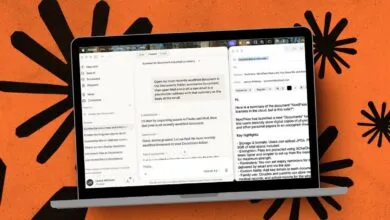
The system operates through the open-source Model Context Protocol (MCP), ensuring secure and standardized communication between Claude and third-party tools. Notable partners like Notion, Canva, and Figma have already contributed connectors, demonstrating practical use cases. For instance, instead of manually drafting release notes, users can now instruct Claude to extract sprint details directly from Linear and generate polished, publication-ready content automatically.
A dedicated directory at claude.ai/directory showcases available integrations, with straightforward “Connect” or “Install” options for setup. This release follows Anthropic’s earlier introduction of Claude 4 Opus, its top-tier language model praised for exceptional coding and reasoning performance. Alongside it, Claude Sonnet 4 offers similar extended capabilities, reinforcing the company’s commitment to advanced AI solutions.
By integrating external tools, Claude becomes a dynamic partner rather than just a responder, streamlining tasks and delivering insights based on live data. This move positions Anthropic’s AI as a versatile asset for both individual and enterprise users seeking smarter automation.
(Source: AIM)