Patreon CEO Slams AI ‘Fair Use’ as ‘Bogus,’ Demands Creator Pay
▼ Summary
– Patreon CEO Jack Conte is not anti-AI, but he strongly opposes AI companies training models on creators’ work without compensation, calling their “fair use” argument “bogus.”
– He views AI as another disruptive cycle for creators, similar to past shifts like streaming, and believes creators will adapt and thrive despite the initial disruption.
– Conte argues the AI companies’ fair use claim is invalid because they simultaneously make multi-million dollar licensing deals with large publishers and rights holders like Disney and Warner Music.
– His advocacy for creator compensation is driven by a desire to secure payouts for Patreon’s community, leveraging its scale as a platform with hundreds of thousands of creators.
– Conte emphasizes that valuing and incentivizing artists is crucial for society’s future, and he remains hopeful that human-made art will remain valued despite AI’s progress.
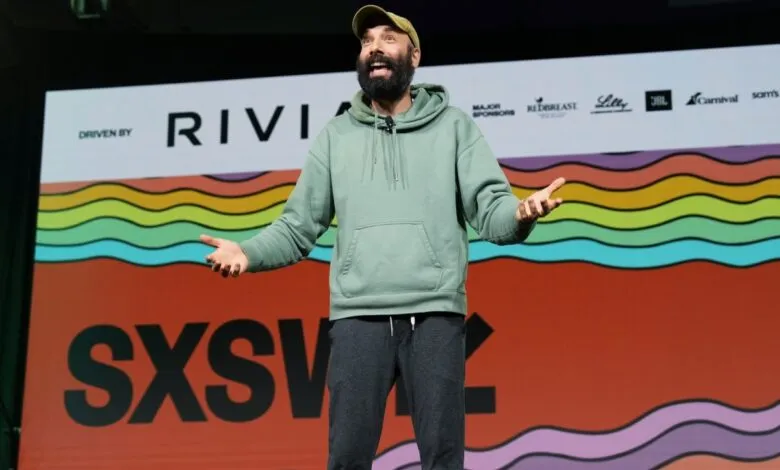
The ongoing debate about how artificial intelligence companies train their models has found a powerful voice in Patreon CEO Jack Conte, who forcefully rejects the notion that using creators’ work without permission or payment qualifies as “fair use.” Speaking at the SXSW conference, Conte, a musician and tech founder, argued that while technological change is inevitable, it must not come at the expense of the artists whose work fuels these new systems. His stance highlights a critical tension between rapid innovation and the fundamental rights of creative professionals.
Conte made it clear his position is not born from a fear of technology. “I run a frickin’ tech company,” he reminded the audience. He views AI as the latest in a long line of disruptions creators have navigated, from the shift to music streaming to the rise of vertical video. History shows that artists adapt and find new ways to thrive. “I learned a very important thing as an artist, which is that change does not mean death. You can get back up, and you can fucking go again,” he stated, drawing on his own experience building Patreon to solve the problem of getting paid for creative work.
His central critique targets the “bogus” fair use argument employed by many AI firms. Conte pointed out a glaring inconsistency in their practices. These companies are simultaneously claiming the legal right to freely use vast amounts of online content for training while also entering into lucrative licensing deals with major rights holders like Disney, Condé Nast, and Warner Music. “If it’s legal to just use it, why pay?” he asked. “Why pay them and not creators , not the millions of illustrators and musicians and writers , whose work has been consumed by these models?”
This discrepancy, Conte argues, reveals that the fair use defense is more about convenience than principle. He suggests that if the legal argument were truly sound, these multi-million dollar agreements with publishers and media conglomerates would be unnecessary. The implication is that smaller, individual creators lack the collective bargaining power to demand similar compensation, leaving their work as a free resource for building immensely valuable AI systems.
Conte’s advocacy is also practical, rooted in the interests of the vast creator community on his platform. By leveraging Patreon’s scale, a network of hundreds of thousands of artists, he aims to secure a seat at the table for those creators when the rules of this new economy are written. He envisions a system where the value generated by AI is shared more equitably with the people whose original work made the technology possible in the first place.
Importantly, Conte separates his criticism from a blanket condemnation of AI. He accepts the inevitability of progress and even finds excitement in navigating the chaos it brings. His demand for compensation is based on the belief that a thriving creative sector is essential for a healthy society. “When we plan for humanity’s future, we should plan for society’s artists, too, not just for their sake, but for the sake of all of us,” he said. Societies that properly value and incentivize creativity ultimately benefit everyone.
He concluded with an optimistic vision of the enduring role of human artists. Regardless of AI’s capabilities in generating content, Conte believes people will always seek connection through art made by other people. “Great artists don’t play back what already exists,” he said, drawing a distinction between predictive AI models and genuine cultural innovation. “They stand on the shoulders of giants. They push culture forward.” His message is a call to ensure the economic framework around AI supports that forward push, rather than undermining it.
(Source: TechCrunch)