NVIDIA DLSS 5: AI Breakthrough for Game Visuals
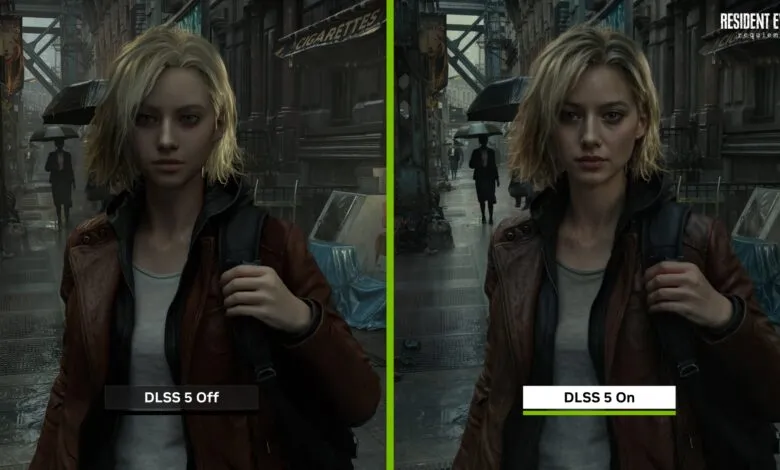
▼ Summary
– NVIDIA DLSS 5 is a real-time neural rendering model launching this fall, designed to generate photorealistic lighting and materials for game graphics.
– It is described as NVIDIA’s most significant graphics breakthrough since the introduction of real-time ray tracing in 2018.
– The technology uses AI to enhance visual fidelity in real time while remaining deterministic and anchored to the developer’s original 3D scene and artistic intent.
– Major publishers and developers, including Bethesda, CAPCOM, and Ubisoft, will support DLSS 5 in upcoming titles like *Starfield* and *Assassin’s Creed Shadows*.
– DLSS 5 provides artists with detailed controls to maintain a game’s unique aesthetic and integrates using the existing NVIDIA Streamline framework.
This fall marks a pivotal moment for gaming visuals with the arrival of NVIDIA DLSS 5, a technology poised to fundamentally change how games look and feel. Moving beyond its roots in performance enhancement, this new iteration introduces a real-time neural rendering model designed to infuse every pixel with photorealistic lighting and material properties. It represents the company’s most substantial graphics breakthrough since real-time ray tracing debuted, aiming to bridge the long-standing gap between real-time game rendering and the photorealism of cinematic visual effects.
For over two decades, NVIDIA has driven the computational power needed to make virtual worlds feel authentic. The journey from programmable shaders to CUDA architecture, and later to real-time ray tracing and path tracing, has delivered a staggering increase in raw compute capability. Despite these advances, the fundamental challenge remains: a game must render a frame in mere milliseconds, while a Hollywood VFX shot can take hours. Brute force rendering alone cannot achieve true photorealism in real time.
The original DLSS technology, launched in 2018, revolutionized performance through AI-powered upscaling and frame generation. Now, DLSS 5 evolves the technology’s core mission from boosting frame rates to transforming visual fidelity. While offline video AI models can generate impressive pixels, they lack the determinism, precise control, and real-time speed required for interactive entertainment. DLSS 5 solves this by anchoring its AI enhancements directly to the game’s own 3D world and artistic vision.
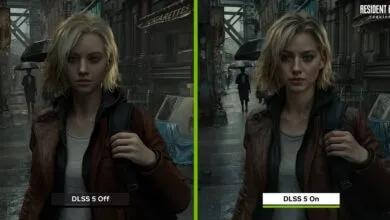
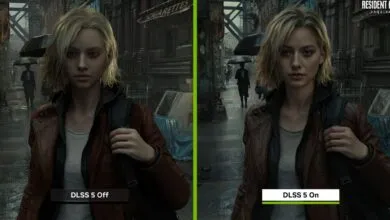
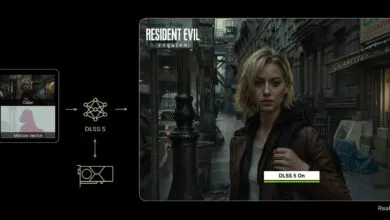
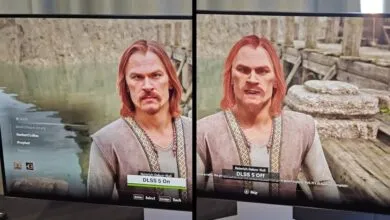
The system works by taking a game’s color and motion vector data for each frame as its input. A sophisticated, end-to-end trained AI model then analyzes this data, understanding complex scene semantics, from characters and hair to fabric and skin, along with nuanced environmental lighting. It uses this deep understanding to generate visually precise images in real time at resolutions up to 4K. The model accurately handles intricate light interactions like subsurface scattering on skin, the subtle sheen of different materials, and the way light plays across hair, all while meticulously preserving the original scene’s structure.
Critically, DLSS 5 provides developers with detailed artistic controls for intensity, color grading, and masking. This ensures that the AI enhancements serve the game’s unique aesthetic, giving artists the final say over where and how the technology is applied. Integration for developers is streamlined through the established NVIDIA Streamline framework, which is already familiar for DLSS and Reflex technologies.
The industry’s leading publishers and developers have already pledged support for this new standard. Partners include Bethesda, CAPCOM, Ubisoft, and Warner Bros. Games, among others. Developers express strong enthusiasm for the creative possibilities. Bethesda’s Todd Howard noted that DLSS 5 allows artistic style and detail to shine without traditional rendering limits, with plans to bring it to Starfield and future titles. CAPCOM’s Jun Takeuchi highlighted the technology’s role in pushing visual fidelity forward for deeper immersion in series like Resident Evil.
Players can expect to experience DLSS 5 in a wide array of anticipated titles. The confirmed lineup includes Assassin’s Creed Shadows, Phantom Blade Zero, Resident Evil Requiem, The Elder Scrolls IV: Oblivion Remastered, and Where Winds Meet, with many more games to follow. As NVIDIA CEO Jensen Huang stated, this advancement blends handcrafted rendering with generative AI, offering a dramatic leap in realism while preserving the creative control essential to game development.
(Source: NVIDIA News)