NVIDIA GTC 2026 Kicks Off: What to Expect
▼ Summary
– NVIDIA’s GTC 2026 conference opens in San Jose, featuring a major keynote by CEO Jensen Huang that sets the direction for the next phase of AI, which the company frames as essential infrastructure.
– The event highlights NVIDIA’s strong momentum, coming off record quarterly revenue and its fundamental role as the supplier of compute power for the global AI buildout.
– Key conference themes include Physical AI for robotics and simulation, with notable sessions from companies like Tesla and Disney, and the political and technical issue of AI’s energy consumption.
– Announcements anticipated at GTC, such as the NemoClaw platform and Vera Rubin deep-dives, aim to show NVIDIA’s expanding control over the AI software layer and infrastructure costs.
– The 2026 conference signifies a shift in focus from whether AI infrastructure will scale to questions of control and cost, positioning NVIDIA as a central shaper of the entire AI ecosystem.
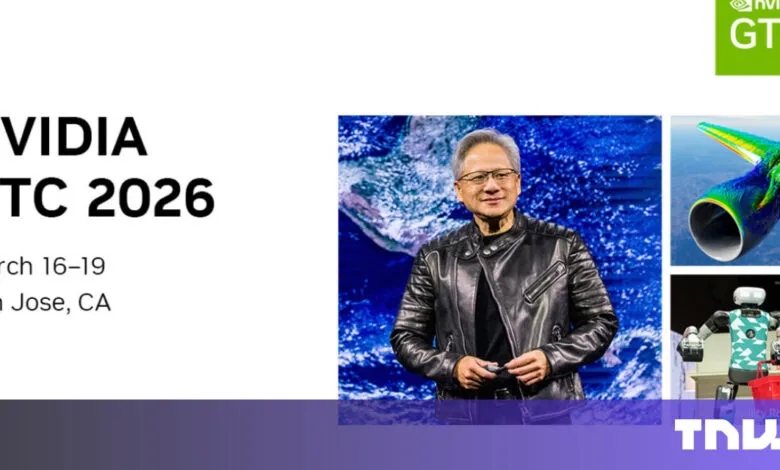
The doors swing open today for NVIDIA GTC 2026, a four-day convergence in San Jose where the future of artificial intelligence infrastructure will be charted. With an expected 30,000 attendees and a keynote address broadcast globally from the SAP Center, the event is poised to define the trajectory of AI development for the coming years. Anticipated announcements range from detailed explorations of the new Vera Rubin platform to a potential gigawatt-scale energy agreement and the introduction of an enterprise-grade agent software layer, setting the stage for the next phase of industry-wide buildout.
The city transforms each March, its convention facilities buzzing with developers, research engineers, and enterprise decision-makers from across the globe. The home ice of the San Jose Sharks becomes a stage for a two-hour presentation that commands the attention of the entire tech sector. This is the moment Jensen Huang, CEO of the world’s most valuable semiconductor company, outlines his vision for the coming era, implicitly signaling where immense value will be created.
NVIDIA enters the week with formidable momentum, having reported staggering fourth-quarter 2025 revenue of $68.1 billion, a 73% annual increase. While market valuations fluctuate amid broader geopolitical and economic pressures, the company’s fundamental role remains unshaken: it provides the essential computational power underpinning the global AI expansion. GTC serves as its annual showcase of that indispensable position.
In previewing the conference, Huang centered on a core thesis: AI has evolved from a mere application into foundational infrastructure. He asserts that every corporation will utilize it and every nation will construct it, with rapid advancement occurring simultaneously across every layer of the technology stack, from energy and chips to software models.
The event’s sprawling agenda, featuring over a thousand sessions across ten downtown venues, fills in much of the anticipated picture. A major thematic focus is Physical AI, encompassing robotics, autonomous systems, and digital twins. High-profile speakers from Tesla, Waabi, and Skild AI will share insights, alongside representatives from Johnson & Johnson and Disney Research Imagineering. Disney’s session is particularly notable, demonstrating how AI-driven physical robotics, powered by NVIDIA’s Isaac simulation tools, are bringing animated characters into real-world environments.
The integration of AI with critical global challenges is another key thread. A session on AI in climate and energy research will feature Dario Gil, now serving as a US Department of Energy Undersecretary. This participation underscores how the massive energy demands of AI data centers have escalated into a pressing political issue. NVIDIA aims to argue that accelerated computing, while power-intensive, is also crucial for developing solutions to the very energy and climate problems it highlights.
Another dedicated session will explore the convergence of AI and quantum hardware, titled “The Genesis of Accelerated Quantum Supercomputing,” projecting a path toward scientifically useful systems by 2028. Later in the week, Huang himself will moderate a panel on the state of open frontier models with leaders from prominent venture capital and research organizations.
This year’s gathering carries a distinct weight. Analysts have dubbed it a critical buying signal, and its influence on setting, rather than just reflecting, industry direction is unquestioned. The difference in 2026 lies in the palpable maturity of the technology on display. With the Blackwell architecture delivered and Vera Rubin in production, the industry’s central question has shifted. It is no longer about whether AI infrastructure will scale, but rather who will control what runs on that infrastructure and at what total cost.
Potential launches like the NemoClaw agent platform would represent NVIDIA’s strategic move to dominate the crucial software layer. Discussions around partnerships with frontier AI labs address the ecosystem of model developers. The technical deep-dives into Vera Rubin directly tackle the industry’s urgent inference cost challenges. Collectively, these moves advance a compelling narrative: NVIDIA is no longer just supplying the picks and shovels for the AI gold rush. It is increasingly designing the entire mine, and at GTC 2026, Jensen Huang will have his most robust evidence yet to make that case.
(Source: The Next Web)