Robotaxis Arrive in Tokyo: Uber, Wayve, Nissan Lead

▼ Summary
– Uber, Wayve, and Nissan have signed an agreement to pilot a robotaxi service in Tokyo, with the first deployments planned for late 2026, pending regulatory approval.
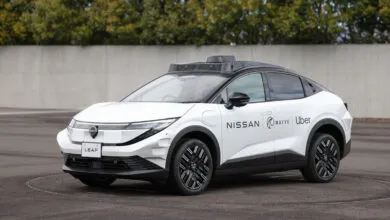
– This partnership is Uber’s first autonomous vehicle collaboration in Japan and will use Nissan LEAF cars equipped with Wayve’s AI Driver system on Uber’s platform, initially with safety operators present.
– Tokyo’s complex and demanding driving environment is seen as a key proving ground for the autonomous technology, which Wayve claims can operate in new cities without extensive, location-specific re-engineering.
– For Wayve, this follows a major $1.2 billion funding round and is part of a broader commercial rollout targeting over ten cities globally, with London being the first.
– The initiative allows Uber to navigate Japan’s strict taxi regulations through a licensed partner model and serves as a commercial test for Nissan, which plans to integrate the AI into its future consumer vehicles.
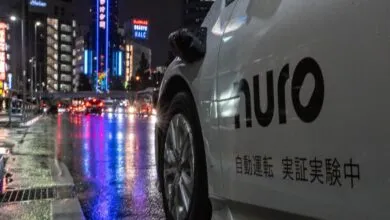
Navigating the intricate and demanding streets of Tokyo is set to become a landmark test for autonomous vehicle technology. A new three-way partnership between Uber, British AI startup Wayve, and Nissan aims to launch a commercial robotaxi service in the Japanese capital by late 2026, pending regulatory approval. This collaboration represents Uber’s inaugural foray into self-driving vehicle projects within Japan and adds Tokyo to a growing global list of over ten cities targeted for similar rollouts.
Tokyo presents a uniquely challenging proving ground. Its dense urban fabric, characterized by narrow lanes, complex intersections, and a driving culture that demands precision, is considered one of the planet’s most difficult environments for navigation. The partners believe that successfully operating here will serve as a powerful demonstration of their system’s capabilities. The service will utilize Nissan LEAF electric vehicles equipped with Wayve’s AI Driver technology, accessible to passengers through the Uber app. Initially, a human safety operator will be present in each vehicle during the pilot phase.
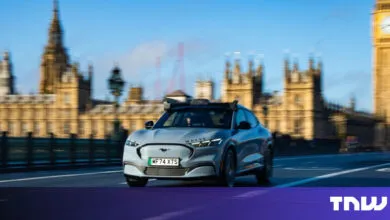
For Wayve, this announcement accelerates its commercial strategy following a significant $1.2 billion funding round in February. The company’s technical approach is central to its ambition. Its AI Driver system is designed to learn from real-world data without relying on pre-mapped, high-definition charts of every city. Wayve claims this allows for rapid deployment in new locations, a claim bolstered by asserting it has driven in over 500 cities across multiple continents without prior city-specific tuning. Tokyo is the second confirmed city for its commercial network, following London.
Nissan’s involvement extends an existing relationship with Wayve. The automaker is already integrating the startup’s AI into its next-generation ProPILOT driver-assistance system, slated for consumer vehicles in the 2027 fiscal year. The Tokyo robotaxi pilot effectively serves as a large-scale, real-world test for technology destined for future mass-market Nissan cars.
Uber’s participation is strategically significant for its operations in Japan, where regulatory hurdles have historically limited its traditional ride-hailing model. By partnering with a licensed taxi company to operate the autonomous fleet, Uber can navigate the country’s strict transportation laws more effectively than with its standard driver network. The company has also committed up to $300 million in milestone-based funding to support Wayve’s multi-city deployments.
The late-2026 launch target remains contingent on discussions with Japanese authorities. While the country has established a relatively supportive framework for testing, commercial deployment at scale requires thorough engagement with regulators. Japan’s renowned safety culture means the pilot program will operate under intense scrutiny, where any incident would be critically examined. Successfully establishing a strong safety record in Tokyo’s rigorous conditions could pave the way for smoother expansions into other major global cities.
(Source: The Next Web)