Meta’s AI Glasses Reportedly Share Private Footage With Kenyan Reviewers

▼ Summary
– An investigation alleges Meta’s AI smart glasses send sensitive user footage, including intimate moments, to human reviewers in Kenya for AI training.
– A class action lawsuit accuses Meta of false advertising and privacy violations, claiming it hid that AI feature use results in strangers viewing private moments.
– Contractors in Kenya, who label data to train AI systems, report seeing unblurred faces and personal details like bank cards in the footage they review.
– Despite privacy concerns, sales of the AI-powered glasses have soared, with over 7 million sold in 2025, and recent policy changes limit user control over data storage.
– Meta states that media stays on the device unless shared, and that it uses contractors to review shared data to improve the AI, taking steps to filter and protect privacy.
A recent investigation has raised serious questions about the privacy safeguards of Meta’s popular AI-powered smart glasses. Swedish media outlets report that contractors in Nairobi, Kenya, tasked with reviewing data to improve the AI, have allegedly been exposed to highly sensitive footage captured by the devices. This includes videos of intimate moments in bathrooms and bedrooms, directly contradicting the company’s public assurances about user privacy. The findings have already sparked a proposed class action lawsuit, accusing Meta of deceptive practices and violating consumer protection laws.
The contractors involved are AI annotators, whose job is to label images and audio to help train the artificial intelligence systems. According to the investigation, these reviewers have seen a wide range of private content. “We see everything , from living rooms to naked bodies,” one worker stated. While a former Meta employee indicated that faces in the data are automatically blurred, Kenyan workers claim this system frequently fails, leaving identifiable individuals and even details like bank cards visible in the footage.
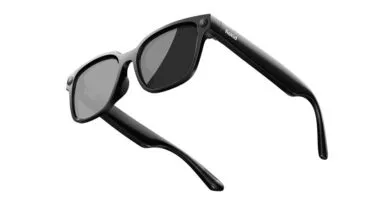
Meta’s collaboration with EssilorLuxottica has produced wildly successful smart glasses, with sales exceeding 7 million units in 2025. The built-in AI assistant can answer questions about what the wearer sees, a feature that has driven its popularity despite ongoing privacy debates. Last year, Meta adjusted its privacy policy, making the camera-enabled AI active by default unless users manually disable the “Hey Meta” voice command. The company also removed the option for users to opt out of storing their voice recordings in the cloud.
In response to the allegations, a Meta spokesperson stated that media from the smart glasses remains on the user’s device unless they choose to share it. The spokesperson explained that when content is shared with Meta AI, contractors may review it to improve the service, a common industry practice, and that steps are taken to filter data and protect privacy. However, the firsthand accounts from reviewers suggest these protective measures are not consistently effective, leaving a gap between corporate policy and on-the-ground reality for those handling the data.
(Source: The Verge)