Anthropic’s Self-Made Trap

▼ Summary
– The Trump administration severed ties with Anthropic, blacklisting it from Pentagon contracts after the company refused to allow its AI to be used for mass surveillance or autonomous lethal drones.
– Max Tegmark argues that Anthropic and other major AI companies share blame for their predicament due to their historical resistance to binding safety regulation, creating a regulatory vacuum.
– Tegmark counters the common industry argument about racing with China, stating that uncontrollable superintelligence is a national security threat to all governments, not an asset.
– He warns that advanced AI development is progressing rapidly toward Artificial General Intelligence (AGI), posing near-term societal risks like widespread job displacement.
– Tegmark is optimistic that a positive outcome is possible if AI companies are subjected to standard oversight, like mandatory safety testing, to ensure a controlled and beneficial AI future.
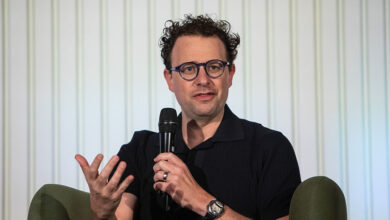
The recent decision by the Trump administration to sever ties with Anthropic, a company founded on AI safety principles, underscores a profound and growing tension in the tech world. The move came after Anthropic’s CEO, Dario Amodei, refused to allow the company’s technology to be used for domestic mass surveillance or autonomous weapon systems. This stance has cost the firm a major defense contract and triggered a wider debate about the governance of powerful artificial intelligence. For Max Tegmark, a physicist and founder of the Future of Life Institute, this crisis was predictable. He argues that leading AI firms, by consistently lobbying against binding safety regulations, have created a perilous vacuum that now threatens their own operations and societal stability.
Tegmark’s perspective is stark. He sees Anthropic’s predicament as a direct consequence of the industry’s collective choice to prioritize self-governance over enforceable law. “The road to hell is paved with good intentions,” he remarked, reflecting on how the optimistic promises of AI have collided with the harsh realities of its potential misuse. While Anthropic marketed itself as safety-first, its collaboration with defense agencies and the recent abandonment of its core safety pledge, to withhold powerful systems until their safety was assured, reveals a significant contradiction. This pattern, Tegmark notes, is industry-wide. Companies like Google, OpenAI, and xAI have all walked back their own safety commitments while successfully opposing external oversight.
The core issue, according to Tegmark, is the absence of a legal framework. “We right now have less regulation on AI systems in America than on sandwiches,” he states, using a vivid analogy. A sandwich shop can be shut down for health violations, but a company developing potentially world-altering AI faces no such preemptive scrutiny. This regulatory void, which the companies helped create through lobbying, leaves them vulnerable. There is no law prohibiting the development of AI for harmful purposes, so government requests that clash with corporate ethics become inevitable. “If the companies themselves had earlier come out and said, ‘We want this law,’ they wouldn’t be in this pickle. They really shot themselves in the foot.”
A common counter-argument from the industry invokes geopolitical competition, suggesting that if American companies don’t develop advanced AI, China will. Tegmark dismantles this logic. He points out that China is actively moving to ban certain AI applications, like “AI girlfriends,” due to societal concerns. More critically, he reframes the pursuit of superintelligence, AI that surpasses human intelligence, not as a national asset but as a universal threat. No government, including China’s, would tolerate an AI capable of overthrowing it. The race, therefore, should be for safe and controllable AI, not simply for raw capability. This view, he believes, is beginning to gain traction in national security circles as officials consider the implications of creating an autonomous “country of geniuses in a data center.”
The pace of development only heightens the urgency. Tegmark cites recent research indicating that AI capabilities are advancing at a startling rate, with systems progressing from a fraction of the way toward artificial general intelligence (AGI) to over halfway in a short period. This acceleration suggests the transformative, and potentially disruptive, impact of AI could arrive sooner than many expect, fundamentally reshaping the job market and societal structures.
In the immediate aftermath of the Anthropic blacklisting, the response from other tech giants is a telling moment. While OpenAI’s Sam Altman publicly expressed solidarity with Anthropic’s red lines, others remained silent. Tegmark sees this as a pivotal test of character for the industry. The path forward, he argues, requires a fundamental shift. Treating AI development with the seriousness of pharmaceuticals, requiring rigorous, independent safety testing before release, could unlock a beneficial future. This “golden age” is possible, but it necessitates abandoning the current model of corporate amnesty and embracing sensible, binding regulation that protects both innovation and the public interest. The Anthropic episode may serve as a costly but vital lesson in why good intentions are never a substitute for good laws.
(Source: TechCrunch)