Samsung Galaxy Unpacked: Top 11 Biggest Reveals

▼ Summary
– The Samsung Galaxy S26 Ultra was the event’s flagship focus, featuring a new processor, aluminum frame, Privacy Display technology, and an unchanged $1,300 price point.
– A key new feature is the Privacy Display, which uses Black Matrix technology to selectively narrow pixel visibility and prevent onlookers from seeing sensitive screen content.
– The standard Galaxy S26 and S26 Plus models received less attention but feature larger screens and batteries, along with a $100 price increase compared to their predecessors.
– New AI features were highlighted, including a Samsung Browser integrated with Perplexity for research, a Now Nudge assistant for contextual help, and AI-powered voice/text photo editing.
– Other announcements included the Galaxy Buds 4 Pro earbuds, an enhanced Circle to Search for shopping, Super Steady video with Horizontal Lock, and Ocean Mode for underwater photo color correction.
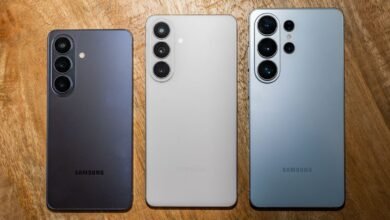
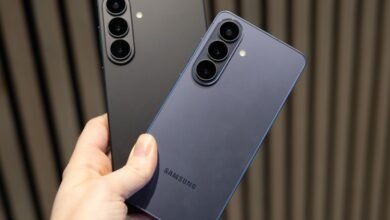
This week’s Samsung Galaxy Unpacked event delivered a series of significant announcements, headlined by the new Galaxy S26 series and a suite of AI-powered features designed to enhance everyday smartphone use. While leaks had previewed much of the hardware, the event provided crucial details on innovative software, from a novel privacy screen to smarter AI assistants, setting the stage for Samsung’s 2026 mobile lineup.
The Galaxy S26 Ultra emerged as the clear centerpiece of the show. Samsung dedicated the majority of its presentation to this flagship model, offering only brief mentions of the standard S26 and S26 Plus. This new Ultra model arrives slightly lighter and thinner than its predecessor, swapping the titanium frame for aluminum and integrating the new Snapdragon 8 Elite Gen 5 processor. It maintains the $1,300 starting price, a welcome surprise in an era of frequent price hikes. Preorders are live, with the first shipments scheduled for March 11.
A standout hardware innovation is the S26 Ultra Privacy Display. Moving beyond typical brightness specs, this technology addresses a common annoyance: prying eyes. When activated, it uses a system called Black Matrix, where physical rings within certain pixels narrow their light output. This makes the screen appear darkened to anyone viewing it from an angle, effectively thwarting “shoulder surfers.” Users can apply this selectively to specific apps, like banking or messaging, or configure it to only hide incoming notifications, offering practical, on-demand privacy.
As for the more mainstream models, the Galaxy S26 and S26 Plus received less fanfare but include notable updates. The standard S26 features a larger screen than the S25, making it slightly taller and wider while maintaining a slim 7.8mm profile. It also gains a larger 4,300-mAh battery, with the Plus model keeping its 4,900-mAh capacity. The less welcome news is a $100 price increase for both, putting the 256GB models at $900 and $1,100 respectively.
Artificial intelligence was, unsurprisingly, a dominant theme. Samsung introduced a new Samsung Browser deeply integrated with AI vendor Perplexity. Its Ask AI tool can research queries by scanning all open browser tabs and even your search history to compile answers. Another AI feature, Now Nudge, aims to act as a subtle assistant. It might surface relevant photos during a chat about past events or display your calendar when making plans, all without leaving the conversation app, designed to feel helpful rather than intrusive.
The event wasn’t exclusively about phones. Samsung also unveiled the Galaxy Buds 4 series, with the Pro model boasting a wider woofer design for 20% more vibration area, promising deeper sound. Reviewers note they offer excellent audio quality with upgraded noise cancellation. Preorders for the $250 Buds 4 Pro start February 26.
Google’s collaboration with Samsung yielded updates to Circle to Search. The enhanced feature now allows users to select multiple items within a circled area. In a demo, circling a person’s entire outfit triggered the AI to identify and find shopping links for each individual clothing item, pushing the boundaries of visual search.
Camera advancements leaned heavily on software. While hardware changes are minimal for the S26 series, AI photo editing takes a leap forward. Users can now edit photos using voice commands or text prompts, like asking the AI to “repair” a cupcake with a bite taken out of it. This makes complex edits accessible to everyone. A new video feature, Super Steady with Horizontal Lock, automatically maintains a level horizon during recording. Playback shows stable footage even if the phone was tilted or spun during filming.
Google’s presentation segment focused on the future, offering an early preview of agentic AI with Gemini 3. The concept involves AI that can perform multi-step tasks autonomously. In one described scenario, a family’s chaotic group chat about pizza toppings was handed off to Gemini 3. The AI supposedly synthesized the requests, opened a food delivery app in a virtual window, built the order, and presented it for review, all in the background without interrupting other phone use.
Finally, a unique camera mode debuted: Ocean Mode. Originally developed for marine researchers, this setting within the Expert Raw app corrects the color distortion typical of underwater photography. It aims to restore the vibrant hues of coral reefs and marine life that are often lost, promising more true-to-life aquatic images for divers and snorkelers.
(Source: CNET)