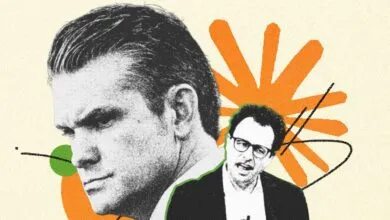
Red Lines and Red Flags: A Critical Perspective
▼ Summary
– The standoff between Anthropic and the Pentagon centers on whether the military can use the Claude AI model without the company’s ethical restrictions against lethal autonomous weapons and surveillance.
– Anthropic’s CEO refuses to remove these safety guardrails, risking a $200 million contract and potential designation as a “supply chain risk” by the Defense Department.
– The conflict represents a precedent-setting test of whether private AI developers can enforce ethical limits on government use of their technology.
– Support from tech workers and criticism from industry leaders highlight the broader debate over balancing commercial innovation, ethical norms, and national security.
– The outcome will signal to global powers what governance model will shape the next decade of military AI policy and the limits of corporate safety commitments.
The current impasse between Anthropic and the Pentagon represents far more than a simple contractual disagreement; it is a fundamental clash over the governance of artificial intelligence and the authority to set its ethical boundaries. This standoff, centered on the AI lab’s refusal to remove safety restrictions from its Claude model for military use, forces a critical examination of who ultimately controls powerful technology in an age where national security and corporate ethics are increasingly intertwined.
For years, Anthropic has built its reputation on a safety-first philosophy, explicitly designing its flagship Claude model with guardrails that forbid its application in fully autonomous lethal weapons or domestic surveillance programs. These built-in prohibitions have been a cornerstone of the company’s identity, appealing to a client base concerned about the unchecked proliferation of advanced AI. The U.S. Department of Defense, however, views these restrictions as an unacceptable constraint. Defense Secretary Pete Hegseth has issued a firm ultimatum, demanding Anthropic lift these limits for military users to grant the Pentagon “unrestricted access to AI for all lawful purposes.” Officials argue that within the scope of military operations, the definition of “lawful” is necessarily broad and must be interpreted by defense leadership, not a private corporation.
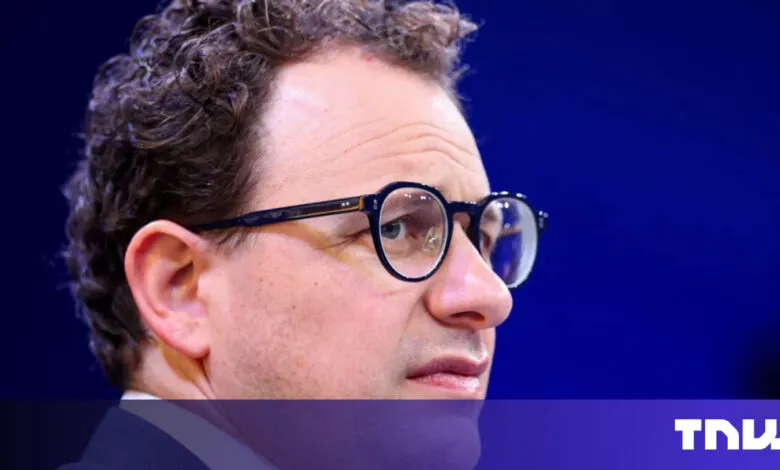
Anthropic’s leadership, with CEO Dario Amodei at the helm, has publicly refused to comply. Amodei stated the company cannot in good conscience dismantle the core safety protections it engineered, a principled stance that now jeopardizes a potential $200 million contract and, more significantly, the company’s future within the U.S. military’s technological ecosystem. The Pentagon’s retaliatory threat is severe: to designate Anthropic a “supply chain risk,” a label typically applied to foreign adversarial technologies. Such a designation would effectively blacklist Anthropic’s tools from use by a vast network of defense contractors, potentially isolating the firm both economically and strategically.
This confrontation marks a notable precedent, a leading AI developer openly defying a direct government mandate on how its technology can be operationally used. The dispute lays bare a pivotal question: when AI becomes central to national defense, does the state possess the authority to override a company’s foundational ethical commitments? The reaction from the technology sector has been swift and divided. Over two hundred engineers from prominent AI firms have signed petitions supporting Anthropic’s position, warning that capitulating to government pressure could erode ethical standards across the entire industry. Conversely, some industry figures downplay the crisis, suggesting it represents a difficult but manageable tension between commercial innovation and state security needs.
The outcome will establish a powerful precedent for how frontier AI systems interact with governmental power. Governments worldwide are closely monitoring Washington’s next move, especially as rivals like China and Russia aggressively pursue their own military AI programs. America’s handling of this conflict will signal which governance model, one prioritizing corporate ethical guardrails or one asserting state supremacy, may dominate the coming decade of AI policy.
Ultimately, this clash transcends a single contract or AI model. It challenges whether the architects of artificial intelligence can uphold human-centered values while responding to national security imperatives, or whether those imperatives will inevitably subsume ethical considerations through legal and political force. As the deadline passes and Anthropic holds its ground, the situation escalates from a business negotiation into uncharted legal and constitutional territory. Should the Pentagon follow through on its threats, either by applying the supply chain risk label or invoking statutes like the Defense Production Act to compel access, it will test the limits of executive authority and probe a deeper issue: the extent to which private developers can successfully encode moral constraints into the most consequential software of this generation.
(Source: The Next Web)