Figma Integrates OpenAI’s Codex for AI-Powered Design

▼ Summary
– Figma is integrating OpenAI’s Codex AI to let users create and tweak designs directly from their coding environments.
– This follows a similar recent partnership with Anthropic to integrate Claude Code, allowing easy movement between Figma and code platforms.
– The integration is designed to help both engineers iterate visually and designers work closer to implementation without requiring full coding expertise.
– OpenAI’s Codex, launched last year, is now in ChatGPT, has a dedicated MacOS app, and boasts over a million weekly users.
– Figma is a key partner for OpenAI and was among the first companies to launch an app within ChatGPT in October 2025.
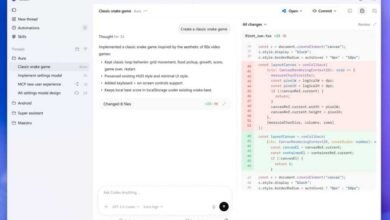
Figma is now incorporating OpenAI’s Codex, an advanced AI coding assistant, directly into its platform. This strategic move allows designers and developers to fluidly transition between visual design work and code implementation without switching tools. The integration arrives shortly after Figma announced a similar partnership with Anthropic to bring Claude Code into its ecosystem, highlighting a clear industry trend toward blending design and development workflows.
This new capability is powered by Figma’s Model Context Protocol (MCP) server, which acts as a bridge. Users can initiate a project in either Figma’s design environment or within Codex and seamlessly move between the two. Whether starting with a visual mockup or a code snippet, the integration aims to break down traditional barriers. Previously, teams could import elements from Figma design files, Figma Make, or FigJam into Codex for coding tasks. Now, the process is significantly more interconnected.
According to Loredan Crisan, Figma’s chief design officer, this fusion empowers teams to refine their concepts more effectively. “With this integration, teams can build on their best ideas, not just their first idea, by combining the best of code with the creativity, collaboration, and craft that comes with Figma’s infinite canvas,” Crisan stated.
The philosophy behind the integration is to move beyond rigid professional labels. Alexander Embiricos, product lead for Codex, emphasized this point. “The integration makes Codex powerful for a much broader range of builders and businesses because it doesn’t assume you’re ‘a designer’ or ‘an engineer’ first,” he explained. Engineers can now iterate visually without disrupting their coding workflow, while designers can engage with real implementation details without needing to become expert programmers.
OpenAI originally introduced Codex as a command-line tool last year, positioning it as a competitor to Anthropic’s Claude Code. Since then, the company has integrated the coding assistant into ChatGPT and, earlier this month, launched a dedicated MacOS application for Codex. That standalone app saw remarkable adoption, being downloaded over a million times in its first week. OpenAI also released two updated Codex models shortly after the launch and reports that over a million users engage with Codex on a weekly basis.
Figma’s relationship with OpenAI is well-established; the design company was among the first to launch an integrated app within ChatGPT back in October 2025. This latest collaboration deepens that partnership, aiming to create a more unified and efficient environment for digital product creation.
(Source: TechCrunch)