Why Tech Companies Are Designing Cute Robots for Humans
▼ Summary
– People are showing empathy and affection for delivery robots in public spaces, as seen when a Los Angeles robot struggling in floodwaters sparked sympathy online.
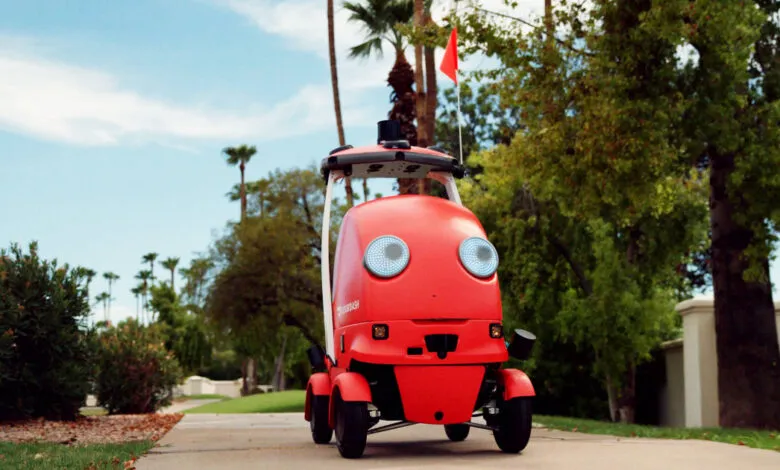
– To foster human acceptance, tech developers are designing robots with cute, pet-like features such as large heads, big eyes, and rounded forms, as exemplified by DoorDash’s robot, Dot.
– Companies are creating robots with distinct personalities and interactive capabilities, like the Ongo lamp that acts as a companion and the household robot Memo designed to avoid an uncanny valley effect.
– Experts warn that as these AI-powered robots become more prevalent, there are risks of emotional dependency and concerns over data privacy, especially for vulnerable users like children.
– The consumer robotics industry is experiencing major growth, driven by AI advancements, with the current decade expected to be defined by the rise of “physical AI” or robotics as hardware catches up to software capabilities.
During a recent rainstorm in Los Angeles, a surprising scene unfolded online. A video captured a food delivery robot struggling to navigate a flooded curb, sparking an outpouring of sympathy from viewers. This emotional reaction highlights a significant shift in robotics design. As these machines move from factory floors into our homes and onto our sidewalks, tech companies are intentionally crafting them to appear cute and non-threatening, aiming to foster human acceptance and even affection.
The sight of a drenched robot prompted comments like, “She’s doing her best,” reflecting a growing tendency for people to assign personality to machines. In urban areas, delivery robots with friendly names and expressive faces often receive help from pedestrians, who might hold a door open or wish them a safe trip. This dynamic is no accident. Designers are leveraging deep-seated biological responses, creating robots with larger heads, big eyes, and rounded forms that humans instinctively find appealing.
DoorDash’s autonomous delivery robot, named Dot, exemplifies this philosophy. The company’s vice president of autonomy explained that humans are social animals who form bonds with pets, and robots like Dot are designed to fit into that familiar category. Its round shape, based on studies showing a human preference for curves over sharp angles, and its large, communicative eyes are intentional choices. Dot uses its gaze to signal intent to pedestrians and makes sounds to announce its presence, all strategies to build trust as it operates in cities.
This trend extends far beyond delivery services. A startup called Interaction Labs enlisted a Hollywood writer to design Ongo, an interactive desk lamp robot. With wide, expressive eyes and a playful voice, Ongo moves with a personality reminiscent of animated characters. Its creators describe it as existing somewhere between a pet and a concierge, a physical AI companion that can learn about its user and express excitement through movement.
However, embedding cute personalities into physical AI raises important questions. Researchers warn that the emotional dependencies observed with chatbots could transfer to robots, especially for vulnerable groups like children or the elderly. Transparency about the machine’s true nature is crucial, even as people naturally form attachments. Case studies show that individuals often personalize their robots anyway, naming their Roomba vacuums or adding decorations, demonstrating a human desire to assign meaning.
Another example is Memo, a household robot designed for tasks like loading dishwashers. Its developers carefully avoided the “uncanny valley” by giving it a friendly, almost toy-like appearance reminiscent of beloved animated characters. The goal was a design perceived as robust yet inherently non-threatening. As it nears testing, the team is even exploring customizable accessories like colored hats to enhance its approachable character.
Industry analysts note that developers are walking a fine line between a robot’s functional efficiency and its physical charm. By incorporating eyes, faces, and human-like gestures, robots tap into our innate ability to read body language, accelerating emotional connection and acceptance. The consumer robotics sector is experiencing major growth, fueled by AI software advancements. While the current decade has focused on artificial intelligence, the latter half is poised to be defined by “physical AI”, the integration of that intelligence into capable, and often deliberately cute, robotic bodies.
(Source: NBC)