The Top AI Chatbot Choice Might Surprise You
▼ Summary
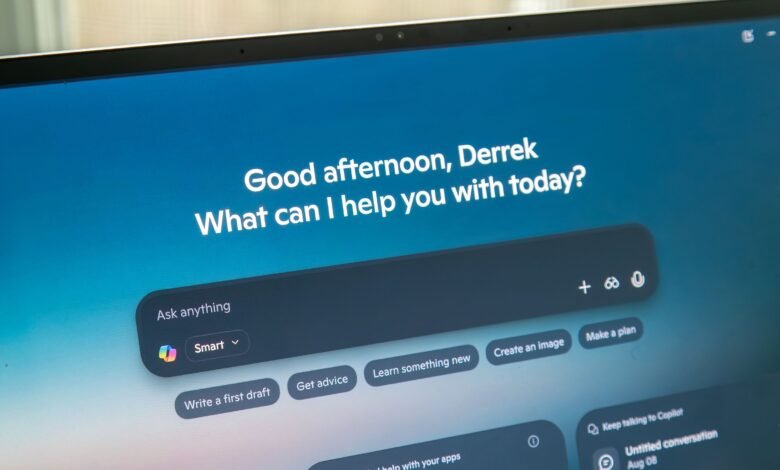
– A poll of over 1,600 readers revealed Microsoft’s Copilot as the preferred AI chatbot, receiving 61% of the vote.
– Google’s Gemini placed second with 17%, while ChatGPT came in a distant third with only 8% of the vote.
– Readers praised Copilot for being integrated into Office, less prone to arguing or “hallucinating,” and having a human-like voice mode.
– Many users employ multiple chatbots for different tasks, such as Gemini for marketing, Perplexity for research, or Claude for data analysis.
– A common criticism of ChatGPT was its perceived over-agreeableness, while opinions on Copilot’s utility, especially in workplace settings, were mixed.
Navigating the crowded field of AI assistants reveals a clear frontrunner that may catch many off guard. A recent survey of over 1,600 users shows a decisive preference for Microsoft’s Copilot, which secured a commanding 61% of the vote. Google’s Gemini followed in a distant second place at 17%, while OpenAI’s ChatGPT garnered just 8% support. This distribution highlights a significant shift in user loyalty and practical application beyond initial hype.
Feedback from the community provides rich context for these numbers. One user, Agonist87, champions Copilot for its reliability, noting it “doesn’t hallucinate or gaslight as much as other AI chatbots.” They appreciate its integration into Office suites and its tendency to avoid arguments, stating, “it gets things wrong but it doesn’t argue with me and then hallucinate answers.” Another commenter, James Lawson, praises Copilot’s human-like voice mode and research capabilities but admits ChatGPT remains their daily tool, calling Gemini “disappointing” and likening it to a “glorified Google search,” despite its skill in generating images.
A growing trend among power users is the strategic employment of multiple chatbots, each for specialized tasks. Reader Vince Lupe describes using a “trio” of tools: “Google Gemini for marketing & sales strategy/execution, Perplexity Pro for research & AI agent usage, and Replit Agent for software creation.” This approach maximizes the unique strengths of each platform, moving beyond reliance on a single solution.
Similarly, Randall Uyeno adopts a multi-bot strategy, using “Gemini for most personal stuff” and Claude for work-related analysis and spreadsheets, which they find exceptionally impressive. Their experience with Copilot at work, however, is less favorable, describing it as ineffective. They also express a common criticism of ChatGPT, noting it “seems to always give me a ‘yes’ answer,” which undermines their trust in its responses.
The collective insight points to a nuanced landscape. While Copilot emerges as the preferred choice for many, particularly for its seamless integration into productivity ecosystems, user sentiment is far from monolithic. Critiques of ChatGPT’s perceived over-agreeableness and Gemini’s variable utility contrast with high praise for niche players like Claude for analytical work. The overarching takeaway is clear: savvy consumers are increasingly curating a personalized toolkit of AI assistants, selecting the right tool for each specific job rather than seeking a single, all-purpose champion.
(Source: Android Central)