Nvidia and Meta Forge New Era of Computing Power
▼ Summary
– Nvidia, traditionally known for its powerful GPUs, is expanding its focus to serve customers in the less compute-intensive AI market who need efficient ways to run agentic AI software.
– The company has made strategic moves like licensing low-latency AI technology and selling stand-alone CPUs, as part of a broader “soup-to-nuts” approach to computing power.
– Nvidia and Meta announced a multiyear deal where Meta will purchase billions of dollars worth of Nvidia chips, including a large-scale deployment of Nvidia’s CPUs and millions of its latest GPUs.
– This partnership highlights the growing importance of CPUs in data centers to support AI, as agentic AI creates new demands for general-purpose processing to manage data and interact with GPU systems.
– Despite the increased role for CPUs, GPUs remain the primary driving force for advanced AI computing, with Meta’s planned GPU purchases far outnumbering its CPU acquisitions.
For decades, Nvidia has been synonymous with powerful graphics processing units, but the company’s latest strategic moves reveal a broader vision. While the explosive demand for generative AI has cemented the GPU’s role in model training, Nvidia is now aggressively expanding its reach into the less intensive but equally critical realm of AI inference and agentic software. This pivot is underscored by a landmark, multiyear agreement with Meta, which involves the social media titan purchasing billions of dollars worth of Nvidia hardware, including a significant commitment to the company’s standalone Grace CPU technology.
This expanded partnership signals a new chapter. Meta had previously outlined plans to amass a colossal fleet of GPUs, but the new deal explicitly includes building hyperscale data centers optimized for both training and inference. A key component is the “large-scale deployment” of Nvidia’s CPUs alongside millions of next-generation Blackwell and Rubin GPUs. Meta is the first major tech company to publicly commit to a large-scale purchase of Nvidia’s Grace CPU as a standalone chip, a option Nvidia highlighted when unveiling its Vera Rubin superchip platform earlier this year.
Industry analysts see this as a strategic acknowledgment of shifting computational demands. The rise of agentic AI, software that can autonomously perform complex tasks, is creating new requirements that align more closely with general-purpose CPU architectures. These systems often need to manage data, make logical decisions, and interact with other software in ways that don’t always require the raw parallel processing power of a GPU. As one expert notes, the industry’s growing interest in data center CPUs is directly tied to these new agentic workloads, which place fresh demands on system design.
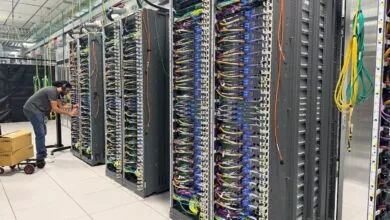
Supporting this trend, recent industry analysis points to accelerating CPU usage in AI infrastructure. In advanced setups, like those supporting major large language models, tens of thousands of CPUs are now deployed to process and manage the enormous volumes of data generated by GPU clusters. This creates a complementary relationship where CPUs handle preparatory and managerial tasks, ensuring the high-value GPU resources are used as efficiently as possible.
However, it’s crucial to understand that this does not diminish the central role of the GPU. The number of GPUs in Meta’s planned infrastructure still vastly outnumbers the CPUs. The goal is system balance. If the CPU is too slow, it becomes a bottleneck, hindering the entire AI workflow. The software running on the CPU must be fast enough to effectively interact with the GPU architecture, which remains the primary engine for the most compute-intensive AI work. Nvidia’s strategy appears to be a “soup-to-nuts” approach, offering the full stack of interconnected technology, from CPUs and GPUs to the networking that binds them, to provide optimized, end-to-end computing solutions.
Meta’s substantial investment reflects this holistic infrastructure need. The company has announced plans to dramatically increase its capital expenditures on AI infrastructure this year, with spending projected to reach as high as $135 billion. This deal with Nvidia locks in a critical supply of the specialized hardware required to power its ambitious long-term AI roadmap, ensuring it has the balanced computing power necessary for both creating and deploying the next generation of artificial intelligence.
(Source: Wired)