Google’s AI Music Maker Arrives in Gemini App
▼ Summary
– Google has integrated DeepMind’s Lyria 3 model into the Gemini app, allowing users to generate 30-second AI music tracks from text, image, or video prompts.
– The music-making feature is now globally available in several languages for users 18 and older, with plans for future expansion.
– Users can create instrumental or lyrical songs by describing genres, moods, or memories, and the tool is designed for personal expression rather than creating masterpieces.
– Google emphasizes the tool is for original expression and uses filters to avoid mimicking existing artists, instead generating tracks with a similar style or mood.
– This marks a broader release of Lyria, previously limited to Google Cloud, and follows similar AI music tools from competitors like TikTok and Microsoft.
Google has integrated a new AI music generation feature directly into its Gemini app, powered by DeepMind’s advanced Lyria 3 model. This global rollout allows users to create unique 30-second audio tracks from simple text descriptions, uploaded images, or video clips without ever leaving the chatbot interface. The tool supports multiple languages and is designed as a creative outlet for self-expression rather than a professional music production suite.
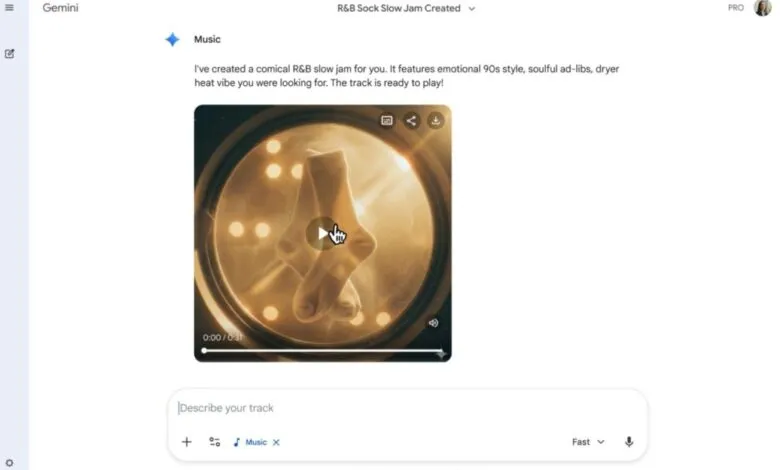
The new music-making tool is available globally starting today in English, German, Spanish, French, Hindi, Japanese, Korean, and Portuguese, with plans to expand in the future. Access is currently restricted to users of the Gemini mobile app who are at least 18 years old. By typing a prompt, such as a request for a “synthwave instrumental that sounds like a 1980s driving montage”, users can generate both instrumental pieces and songs with fully composed AI-generated lyrics. The system can also interpret the mood or theme of a photograph to inspire a matching musical composition.
According to Google, the primary aim is to offer a fun and novel way for people to articulate ideas and emotions through sound. Each generated track receives custom cover art, created by an AI called Nano Banana, to make the files more visually appealing for sharing or downloading. In a related development, the same Lyria 3 technology is being incorporated into YouTube’s Dream Track feature, which helps creators produce custom soundtracks for their Shorts videos.
This represents a significant broadening of access to Lyria. The model was first introduced in 2023 but was previously confined to developers on Google’s Vertex AI platform. Its arrival in a mainstream consumer app, however, places Google in a competitive field where rivals like TikTok and Microsoft Copilot have already launched similar AI music tools. A key distinction in Google’s approach involves copyright considerations. While earlier demonstrations showcased an ability to mimic famous artists, the company now emphasizes that Lyria 3 “is designed for original expression, not for mimicking existing artists.”
The system employs filters to check outputs against known copyrighted material. If a user requests a song in the style of a specific musician, Gemini will generate a track that evokes a similar genre or feeling without directly copying the artist’s signature sound or voice. This careful positioning highlights the ongoing industry effort to balance innovative AI capabilities with the intellectual property rights of human creators.
(Source: The Verge)