AI Decodes Rules of Ancient Mysterious Board Game
▼ Summary
– A smooth, white Roman-era stone found in the Netherlands, marked with lines, has been identified as an ancient board game using AI analysis.
– Researchers used 3D imaging to detect wear patterns on the stone’s lines, indicating where game pieces were likely slid during play.
– An AI program named Ludii, trained on rules of about 100 ancient games, generated and tested possible rule sets for the stone’s game.
– The most likely game was a strategy game where the goal was to hunt and trap an opponent’s pieces in as few moves as possible.
– While the proposed rules align with the stone’s wear and comparable historical games, researchers caution that the exact Roman rules cannot be certain.
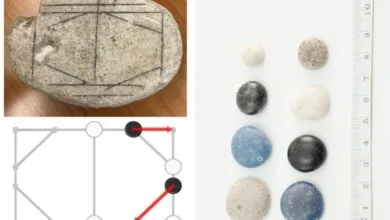
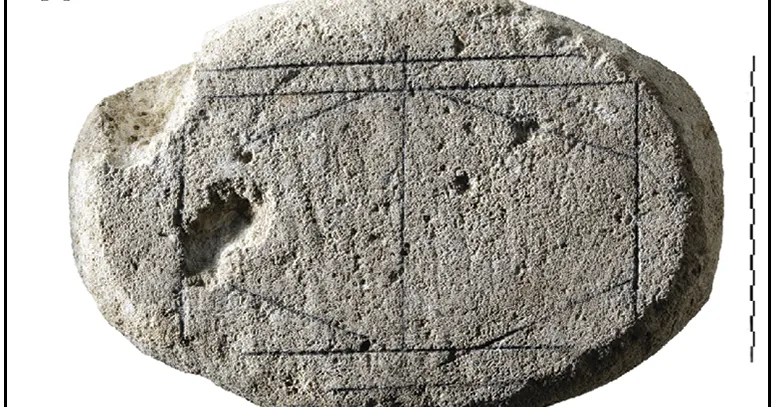
A smooth, white stone from the Roman period, discovered in the Netherlands, has puzzled experts for years. New research employing artificial intelligence now suggests this artifact is an ancient board game, with researchers even proposing its likely rules. The circular limestone piece features a pattern of intersecting diagonal and straight lines etched into its surface. Advanced 3D imaging revealed that some of these grooves show more pronounced wear than others, indicating where game pieces were repeatedly slid during play.
Archaeologist Walter Crist, who specializes in ancient games, noted the significance of this wear pattern. The marks align perfectly with where one would move a piece, strongly supporting the theory that the stone served as a game board. To decipher how it was played, a team turned to a specialized AI program named Ludii. This system was trained on the rules of roughly one hundred ancient games from regions associated with the Roman stone.
The AI generated numerous potential rule sets for the newly discovered board. It then played these versions against itself to identify which ones resulted in an engaging and logical game for human players. Researchers cross-referenced these AI-generated rules with the physical evidence of wear on the stone to pinpoint the most plausible gameplay. The resulting game appears to be a strategic contest where the goal is to hunt and trap an opponent’s pieces in the fewest moves possible, likely using pieces made of materials like glass, bone, or earthenware.
While the findings are compelling, the scientists involved emphasize a degree of caution. The AI is designed to find playable rules for any pattern presented to it, so there is no absolute certainty that the proposed rules match exactly how Romans played. However, the correlation between the proposed gameplay and the physical wear on the artifact is remarkably strong. The research, published in the journal Antiquity, represents a significant step in understanding ancient leisure activities and pushes evidence for this type of strategic “blocking” game in Europe back by centuries.
(Source: CBS News)