Nuclear Power’s Future & AI’s Social Media Hype
▼ Summary
– AI’s growth is driving massive investment in data centers and creating a huge demand for new energy sources to power them.
– Next-generation nuclear power plants are being considered as a potential, cheaper, and safer electricity source for these AI data centers.
– A recent discussion highlighted hyperscale AI data centers and next-gen nuclear as key technologies on a 2026 breakthrough list.
– Social media often amplifies exaggerated AI claims, exemplified by a dispute between AI leaders over an overstated mathematical breakthrough.
– Radiative cooling materials, like advanced paints and coatings, offer an energy-free method to combat heat and reduce strain on power grids.
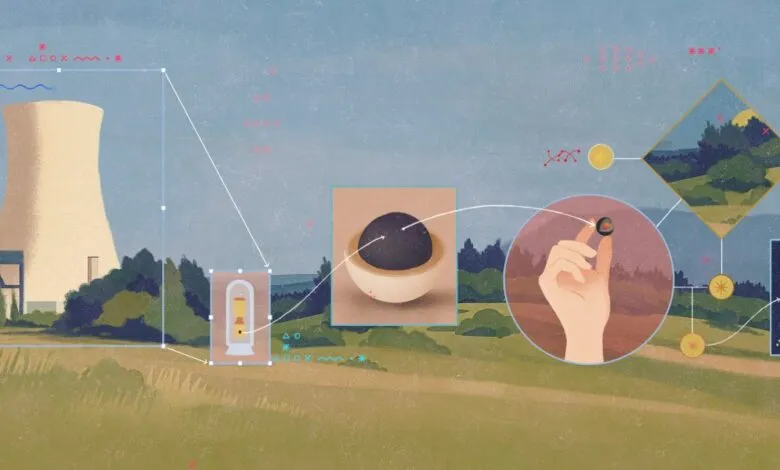
The growing demand for artificial intelligence is fueling massive investment in data centers, creating an unprecedented need for reliable and substantial electricity. Next-generation nuclear power plants are emerging as a potential solution, offering the promise of safer operation and lower construction costs compared to traditional reactors to meet this computational appetite.
We recently explored this intersection in a subscriber discussion, focusing on hyperscale AI data centers and advanced nuclear technology. Both areas are highlighted on a prominent list of anticipated technological breakthroughs, underscoring their significance for the near future.
Meanwhile, the public discourse around AI’s capabilities often spirals into unhelpful hype, a trend amplified by social media. A recent online exchange perfectly illustrates this issue. A research scientist from one leading AI company made a bold post claiming their firm’s newest large language model had solved ten previously unsolved mathematical problems. The CEO of a rival AI lab responded with a blunt, three-word critique: “This is embarrassing.”
This incident highlights a core problem within the current AI landscape. Exaggerated claims and competitive posturing on platforms designed for virality can distort public understanding and erode scientific credibility. It shifts focus from measured, verifiable progress to sensational announcements that often lack necessary context or proof.
In a separate but related challenge, the world’s increasing temperatures are putting immense pressure on energy infrastructure. Recent severe heatwaves have caused widespread power grid failures across several continents. As global warming drives more people to use air conditioning, the strain on electricity networks intensifies, creating a vicious cycle of higher demand and greater instability.
An ancient concept, refined with modern materials science, might provide a partial answer. Radiative cooling technology uses specially engineered paints, coatings, and fabrics to scatter sunlight and release heat directly into space. This process requires no external power, offering a passive way to reduce cooling loads and alleviate stress on the very grids that power-hungry technologies depend on.
(Source: Technology Review)