Why Telephoto Lenses Are Your Phone’s Most Important Camera
▼ Summary
– Samsung’s Galaxy S20 Ultra, heavily marketed for its 100x “Space Zoom,” sparked debate about the utility and quality of extreme zoom, leading manufacturers to later focus marketing on better quality at shorter distances.
– Smartphone camera systems, especially telephoto lenses, became a key area of differentiation as other hardware specs like chipsets and displays became more uniform across flagship models.
– Manufacturers have competed by adding extravagant telephoto hardware, including higher megapixel counts, dual lenses, continuous optical zoom, and even external add-on lens attachments for greater optical reach.
– Recent high-end phones are prioritizing larger sensors and faster apertures at more practical 3-4x optical zoom ranges, making these telephoto cameras versatile for portraits and often the best camera on the device.
– Future developments will likely include more advanced hardware imitations, AI-enhanced zoom software, and improvements in low-light performance, though the industry may be nearing diminishing returns on pure zoom capability.
Telephoto lenses have quietly become the most critical camera on your smartphone, transforming from a niche feature into the primary tool for capturing compelling, professional-looking photos. While other hardware specifications have largely converged, the telephoto camera remains a key battleground for innovation and differentiation among manufacturers.
The journey began in earnest with phones like Samsung’s Galaxy S20 Ultra, which heavily promoted its “Space Zoom” capability. This sparked a debate about the practical need for extreme magnification, with critics pointing out the often-poor image quality at maximum zoom. Manufacturers listened, shifting their focus from sheer distance to improving the quality of shots at more usable ranges. This pivot ignited a new kind of competition, with companies like Apple, Google, and Huawei racing to incorporate better telephoto systems with higher megapixel counts, larger sensors, and innovative periscope designs that allow for greater optical zoom in a slim body.
As standard main cameras have become exceptionally good across all price points, the telephoto lens represents the new frontier for meaningful improvement. Selfie and ultrawide cameras, while capable, don’t attract the same scrutiny over fine detail. The telephoto, however, still carries a reputation for grainy, distant shots, giving phone makers a clear area to prove their engineering prowess and deliver noticeable upgrades that consumers can appreciate in their everyday photography.
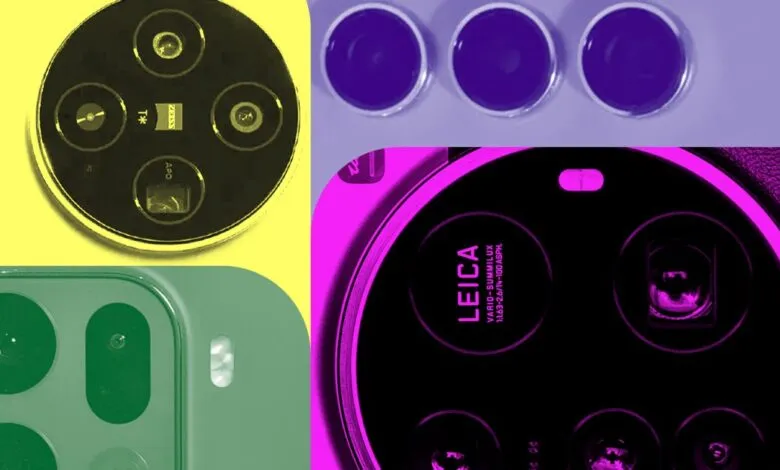
Today, the competition has escalated into a hardware spectacle. Brands are deploying increasingly extravagant setups to stand out. We’ve seen phones with dual telephoto lenses, ultra-high-resolution 200-megapixel sensors, and even concepts like continuous optical zoom. The latest trend extends beyond the phone’s body, with attachable telephoto extender lenses that offer remarkable optical reach. Perhaps more importantly, there’s a growing emphasis on practicality. Recent flagship models are optimizing for the 3x to 4x zoom range, perfect for portraits and detailed shots, while equipping these lenses with larger sensors and wider apertures for superior low-light performance and natural background blur.
For many photographers, the telephoto is now the go-to lens, offering more flattering framing and a sense of depth that wide main cameras often lack. It’s not just an accessory for zooming; it’s frequently the best camera on the device.
Looking ahead, the innovation race shows no signs of slowing. We can expect more iterations on continuous zoom mechanisms, ever-larger sensors, and a proliferation of accessory lenses. Artificial intelligence will play a larger role, with generative AI enhancing digital zoom capabilities, though this raises philosophical questions about the nature of a photograph. Challenges remain, particularly in matching main camera performance in very low light, but progress is being made rapidly.
We may be approaching a point of diminishing returns for pure zoom distance, shifting the competition toward computational photography and overall image quality. Once the cost of advanced telephoto components drops, making them commonplace, manufacturers will inevitably search for the next exclusive feature to drive flagship sales.
On a technical note, it’s worth remembering that most smartphone “zooms” are a combination of optical telephoto lenses and digital cropping. Very few devices offer a true, continuous optical zoom lens. Furthermore, companies like Apple are redefining the conversation by using computational methods to simulate the focal lengths of multiple lenses from a single physical camera, challenging traditional definitions of what constitutes a telephoto shot.
(Source: The Verge)