Waabi Secures $1 Billion for Uber Robotaxi Expansion

▼ Summary
– Waabi has raised $1 billion, including a $750 million Series C and $250 million from Uber, to deploy its self-driving technology.
– The company has partnered with Uber to exclusively deploy 25,000 or more Waabi Driver-powered robotaxis on its ride-hailing platform.
– Waabi’s strategy is to use a single, capital-efficient AI technology stack to scale across multiple verticals, like trucking and robotaxis, simultaneously.
– A core part of its technology is the Waabi World simulator, which trains its system to reason and generalize with less reliance on massive real-world data fleets.
– The partnership builds on CEO Raquel Urtasun’s prior role at Uber ATG and Waabi’s existing work with Uber Freight and Volvo on autonomous trucks.
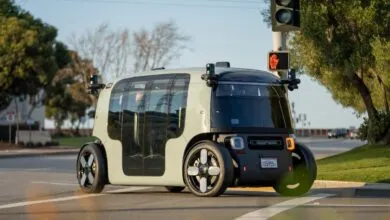
The autonomous vehicle company Waabi has secured a massive $1 billion investment, a move that includes a landmark partnership with Uber to bring its self-driving technology to the ride-hailing giant’s platform. This strategic shift marks Waabi’s first major expansion beyond its original focus on autonomous trucking. The financial package combines a $750 million Series C funding round led by Khosla Ventures and G2 Venture Partners with an additional $250 million in milestone-based capital from Uber. This capital is earmarked to support the eventual deployment of 25,000 or more Waabi-powered robotaxis exclusively on Uber’s network, though a specific timeline for this large-scale rollout has not been disclosed.
This collaboration represents a significant wager on Waabi’s unique artificial intelligence approach. The company’s leadership believes its capital-efficient technology stack can successfully scale across different transportation sectors, like robotaxis and trucking, simultaneously, a challenge where other industry players have stumbled. Founder and CEO Raquel Urtasun, who previously served as chief scientist at Uber’s former self-driving unit, argues that Waabi’s generalizable AI architecture is the key differentiator. “Our incredible core technology really enables, for the first time, a single solution that can do multiple verticals, and they can do them at scale,” Urtasun stated. “It’s not about two programs, two stacks.”
A cornerstone of Waabi’s strategy is its reduced reliance on massive real-world data collection. Instead, the company develops its “Waabi Driver” system using a sophisticated closed-loop simulator called Waabi World. This platform creates digital twins of real environments, runs real-time sensor simulations, and generates challenging scenarios to rigorously test the AI. Urtasun claims this method allows the system to learn and reason more like a human, enabling it to generalize effectively from fewer examples than traditional autonomous systems. “We don’t need the gazillion humans to develop the technology and the large fleets that AV 1.0 needs,” she said, highlighting the cost and efficiency advantages.
While Waabi has spent years refining its technology for trucks in partnership with Volvo, the company has always planned for a broader application. Urtasun notes that from the beginning, they collected and simulated passenger car data alongside their trucking work. The new Uber alliance accelerates this vision, positioning Waabi alongside other AV partners on Uber’s global platform, such as Waymo and Nuro. The deal coincides with Uber’s launch of Uber AV Labs, a new division that will use its vehicles to gather data for its autonomous vehicle partners.
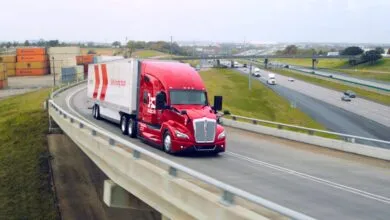
With this latest infusion, Waabi’s total funding reaches approximately $1.28 billion. This positions the startup against well-funded competitors like Aurora Innovation but with a distinctly different operational philosophy focused on efficiency and a unified AI brain. The company is already conducting commercial pilots with safety drivers in Texas and is preparing to launch its first fully driverless trucks on public highways in the coming quarters. For the robotaxi initiative, Urtasun indicated Waabi will pursue deep integration with an automaker, building its sensors and software into vehicles from the factory floor to ensure safety and scalability. “We believe in vertically integrating with a fully redundant platform from the OEM,” she explained. “That is how you really build safe and truly scalable technology.”
(Source: TechCrunch)