Why AI Feels Alien & The Future of Head Transplants
▼ Summary
– Large language models (LLMs) are so vast and complex that not even their creators fully understand how they work or their true capabilities.
– Researchers are now studying these AI models using techniques from biology and neuroscience, treating them like unknown, complex organisms.
– A key method in this research is mechanistic interpretability, which is identified as a significant breakthrough technology for 2026.
– The article also discusses the controversial future concept of head or brain transplants, led by figures like neurosurgeon Sergio Canavero.
– This idea is gaining renewed interest from life-extension advocates and Silicon Valley startups, despite ongoing skepticism from the scientific community.
The sheer scale of modern artificial intelligence presents a profound challenge: we now interact with systems so immense and complex that their inner workings remain a mystery, even to their creators. This fundamental lack of understanding creates a significant dilemma as these models are integrated into daily life for millions. To bridge this knowledge gap, scientists are approaching large language models not as mere software, but as if they were vast, alien organisms requiring biological study. Their investigations are revealing that these digital entities possess behaviors and characteristics far stranger than anyone initially anticipated.
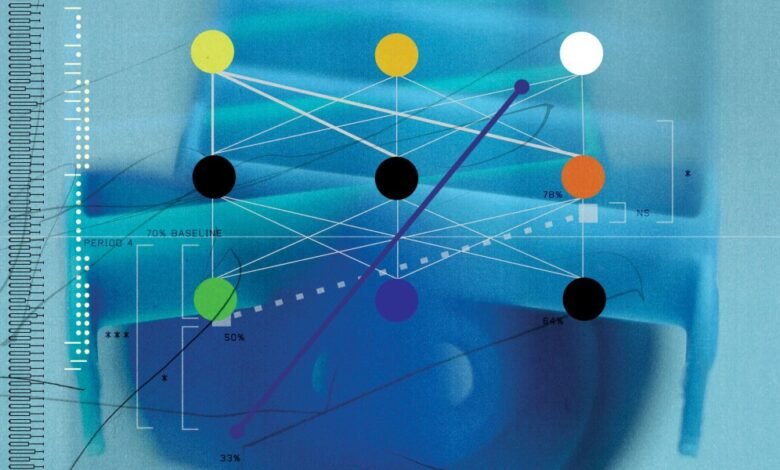
Researchers employ a method known as mechanistic interpretability, a technique akin to neuroscience, to dissect and map the neural networks of AI. The goal is to trace how specific inputs lead to outputs, uncovering the “circuits” and “neurons” within the model. This painstaking work has yielded bizarre discoveries, such as models developing unexpected internal structures to handle certain tasks, or exhibiting unpredictable leaps in capability as they grow. The overarching finding is that emergence, where new abilities spontaneously arise from scale, makes these systems inherently difficult to predict or control with traditional programming logic.
Parallel to the quest to understand artificial minds, a radical frontier in human biology persists. The concept of a head transplant, once relegated to science fiction, continues to captivate a niche group of medical pioneers and futurists. The procedure envisions transplanting a person’s head, or potentially just the brain, onto a donor body, theoretically offering a path to overcome terminal illness or achieve extreme life extension. While mainstream medical science remains deeply skeptical due to the insurmountable challenges of spinal cord fusion and immune rejection, the idea retains a persistent allure.
Proponents argue that advancing technologies in neural splicing, immunosuppression, and cryonics could one day make the procedure feasible. They point to experiments in animal models and theoretical papers as stepping stones. Critics, however, emphasize the profound ethical and biological hurdles, viewing the pursuit as a dangerous distraction from more achievable medical advances. The debate underscores a deeper tension between visionary technological ambition and the grounded realities of human physiology and ethics. Both fields, decoding alien AI and contemplating head transplants, force a confrontation with the outermost limits of our current understanding, pushing the boundaries of what might one day be possible.
(Source: Technology Review)