Integrate AI Into Your Workflows Now
▼ Summary
– Businesses face a new risk of “AI silos” as they develop AI strategies and centralize tools.
– The primary value of AI lies in integrating it into workflows to automate manual tasks, like in campaign creation.
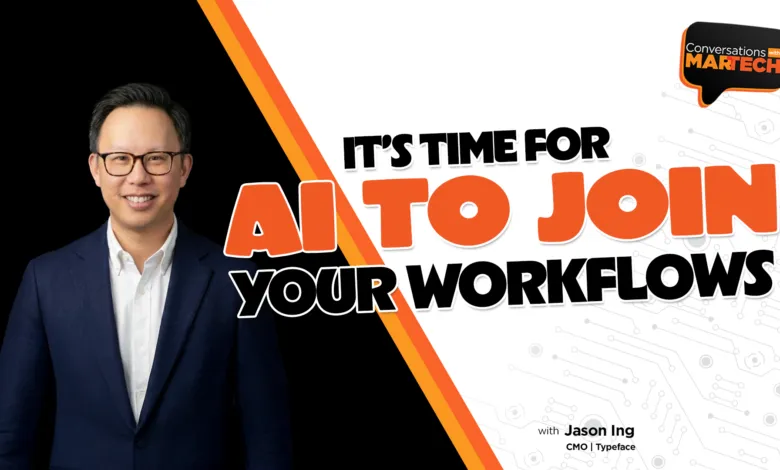
– The article promotes an episode of “Conversations with MarTech” featuring Jason Ing, CMO of Typeface.
– The discussion focuses on integrating AI into workflows and managing hybrid teams of humans and AI agents.
– The episode guide outlines specific topics, including AI’s role in marketing and future trends.
The true power of artificial intelligence lies not in isolated experiments, but in its seamless integration into daily workflows. By embedding AI tools directly into the processes teams already use, organizations can unlock significant gains in efficiency and creativity. This approach moves beyond viewing AI as a novelty and instead positions it as a collaborative partner, capable of handling repetitive tasks and augmenting human decision-making. The goal is to enhance productivity without disrupting the fundamental ways people work, creating a more fluid and intelligent operational environment.
A major challenge emerging today is the risk of creating AI silos. Similar to the problems caused by data or organizational silos, this occurs when AI tools are adopted in a fragmented, department-by-department manner without a cohesive strategy. The result is a patchwork of disconnected systems that don’t communicate, leading to inconsistent outputs, duplicated efforts, and missed opportunities for synergy. To avoid this, companies must focus on centralizing their AI strategy, ensuring tools are selected and implemented in a way that supports cross-functional collaboration and data sharing.
For marketing teams, this integration is particularly transformative. AI can dramatically ease the manual burdens of campaign creation, from generating initial creative concepts and copy variations to optimizing asset delivery and performing preliminary audience analysis. This allows human marketers to shift their focus from tedious execution to higher-level strategy, creative direction, and relationship management. The technology acts as a force multiplier, handling the volume work while humans provide the crucial elements of brand voice, emotional intelligence, and strategic oversight.
Managing this new dynamic requires building effective hybrid teams of humans and AI agents. Success hinges on clear role definition. Leaders must identify which tasks are best suited for AI’s speed and data-processing capabilities and which require human judgment, nuance, and ethical consideration. Training teams to work alongside AI, interpreting its suggestions, providing it with quality feedback, and knowing when to override its outputs, is essential. This partnership model fosters an environment where technology handles complexity at scale, freeing people to engage in more meaningful and innovative work.
Looking ahead, the conversation around AI is poised to evolve from basic implementation to sophisticated optimization and governance. Key topics will likely include developing robust frameworks for measuring AI’s return on investment beyond simple efficiency metrics, establishing stronger ethical guidelines and transparency standards for AI-generated content, and creating more intuitive interfaces that allow non-technical users to harness advanced capabilities. The differentiation between AI platforms will increasingly depend on how well they can integrate into existing tech stacks, their ability to learn from and adapt to specific brand guidelines, and the depth of control they offer to users.
(Source: MarTech)