OpenAI Tests ChatGPT Ads in U.S., Shifting AI Monetization
▼ Summary
– OpenAI is introducing clearly labeled ads for free and new $8 “Go” tier users in the US, while higher-tier subscription plans will remain ad-free.
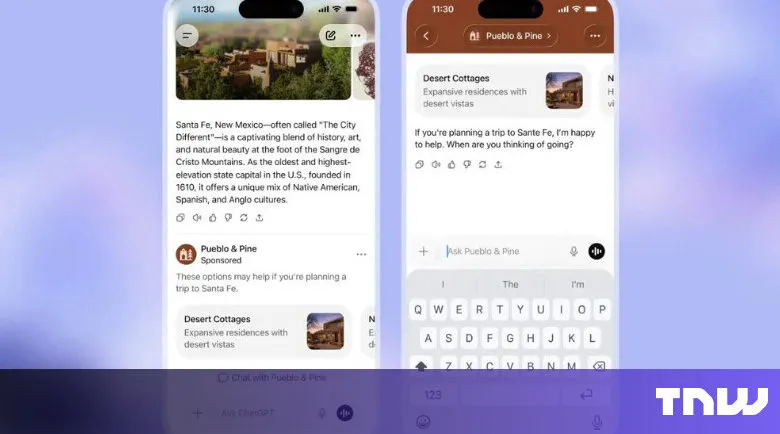
– This represents a strategic shift, embedding ads within the conversational flow at the moment of user intent rather than as separate search results.
– The company states ads will not influence AI responses, will avoid sensitive topics, and do not rely on selling individual user conversations.
– This move is driven by the need to generate scalable revenue from its vast free user base to offset enormous infrastructure costs.
– The change introduces a new advertising paradigm focused on contextual, narrative relevance within a dialogue, which could impact user trust and brand engagement.
OpenAI’s move to integrate advertisements into ChatGPT for its free users and a new budget-friendly subscription tier represents a fundamental shift in how artificial intelligence platforms approach monetization. This isn’t merely a new revenue stream; it’s a reimagining of the point where commercial influence meets digital intent in an era dominated by conversational interfaces. The company is preparing to launch initial tests in the United States, targeting adults using the free version and the new $8 monthly “Go” plan, while ensuring higher-tier subscribers remain in an ad-free environment.
The introduction of ads within ChatGPT’s conversational flow, rather than alongside a list of links, creates a new interface for commercial intent. For years, the platform stood as an ad-free space in a cluttered digital world. Now, it is adopting one of the web’s oldest monetization strategies. OpenAI emphasizes that advertisements will be clearly labeled, kept separate from the AI’s answers, and will not influence how ChatGPT generates responses. The company also states it does not sell user conversations and will avoid placing ads near sensitive topics or targeting minors.
This strategic pivot is driven by immense financial pressures. The computational costs of running advanced AI are staggering, and the vast majority of ChatGPT’s hundreds of millions of weekly users do not pay. Advertising presents a scalable way to generate revenue, potentially subsidizing free access and creating a more sustainable business model beyond relying solely on subscriptions. The shift is notable given that ads were once considered a last resort for the company.
The core implication lies in a transformed logic of intent. In traditional search, a query yields a page of links with adjacent ad slots. In a ChatGPT conversation, a user receives a direct answer and remains within that contextual frame. An ad placed below that response isn’t an interruption; it becomes a potential extension of the user’s thought process. This positions brands differently, they are no longer just competing for a top spot on a results page but are vying to become part of the narrative that unfolds between a question and its resolution.
This model offers a level of semantic proximity to user intent that traditional keyword-based advertising struggles to achieve. Imagine a scenario: instead of an ad appearing after someone searches “best running shoes,” a relevant brand suggestion surfaces contextually when a user asks, “What are the most durable running shoes for trail conditions?” This changes where the journey toward a conversion begins.
However, this integration carries significant risk. A substantial part of ChatGPT’s value has been its perceived credibility, the sense that answers are impartial. Introducing commercial messages, even if clearly labeled, can make trust negotiable. Research indicates that ads within AI interfaces can reduce perceived trust and make users feel manipulated, especially if the line between answer and advertisement feels blurred. OpenAI acknowledges this challenge, promising careful placement and insisting ads won’t twist the model’s outputs. Yet, trust is fragile; a single poorly contextualized ad could seed doubt about whether an answer was shaped by objectivity or commercial interest.
From a creative perspective, this change is both exciting and fraught with difficulty. It moves away from the interruptive model of banners and pop-ups toward something resembling contextual dialogue. Successful brands in this space will need to prioritize narrative relevance and being genuinely helpful. They must craft messages that feel like natural extensions of the conversation, not intrusive sales pitches.
This development does not signal the end of established players like Google, whose advertising ecosystem is deeply integrated and highly optimized. Instead, it highlights that digital intent now operates on multiple layers: traditional search intent tied to links and conversational intent captured in natural language. These layers will coexist and sometimes compete.
The ultimate test will be whether users come to trust a commercial recommendation when it appears alongside an AI-generated answer. As AI systems evolve into multifaceted assistants that help with planning, purchasing, and problem-solving, the point where commerce enters that interactive loop becomes critically important. The question for advertisers is evolving from “Will people see our ad?” to “Will they trust our suggestion when it appears within this conversational flow?” This marks the new frontier for digital advertising.
(Source: The Next Web)