Physical AI: The Next Tech Frontier Is Already Here
▼ Summary
– Physical AI is AI implemented in hardware that can perceive, reason, and act in the real world, moving beyond chatbots into everyday environments.
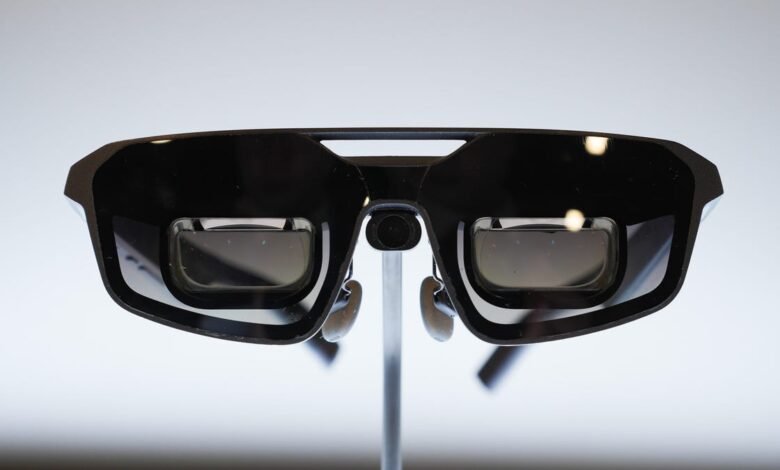
– A key example of existing physical AI is smart glasses, which can see and hear what the user does, integrating AI into the physical world.
– A major challenge for physical AI development is the lack of real-world data, as training robots or autonomous vehicles with real data is often too risky.
– Companies like Nvidia and Qualcomm are creating solutions, such as synthetic data simulations and comprehensive hardware/software stacks, to train these AI systems.
– Wearable AI devices could create a symbiotic data ecosystem by providing anonymized, real-life data to train robots, which in turn can generate more useful data.
The next major leap in artificial intelligence isn’t just about smarter chatbots; it’s about machines that can see, understand, and interact with the physical world around us. This emerging field, known as physical AI, represents a fundamental shift from software confined to screens to intelligent systems embedded in hardware that can perceive, reason, and act autonomously in real environments. While concepts like self-driving cars have been in development for years, the core distinction now is the advanced reasoning capability that allows these systems to interpret context and make intuitive decisions, much like a human would.
At its heart, physical AI refers to artificial intelligence integrated into hardware that can sense its surroundings, process that information, and then execute or coordinate physical actions. The goal is to move beyond simple programmed responses to a level of contextual understanding. As industry leaders explained at recent technology showcases, the true definition involves a “chain of thoughts” or a reasoning brain that operates within a specific context to take appropriate actions. This means a robot could do more than just move a box from point A to B; it could assess a cluttered room, identify the correct package, and navigate obstacles to deliver it without explicit step-by-step instructions.
You might already be using a prime example of this technology without realizing it. Smartglasses are currently one of the best representations of physical AI already in consumer hands. These devices are present in your environment, seeing what you see and hearing what you hear. They act as an intelligent layer over your physical world, capable of providing real-time information and assistance based on immediate context. This demonstrates how the technology is evolving to augment human capabilities directly, rather than simply automating tasks in isolation.
A significant challenge in advancing physical AI has been the scarcity of high-quality, real-world training data. Large language models thrive on the vast textual data of the internet, but equivalent datasets for physical interactions and environments are much harder to come by. It’s often too risky or impractical to train robots entirely in the real world, leading companies to rely heavily on synthetic simulations. This data gap is a major focus for innovation, with new processors and software stacks being developed specifically to generate and manage the complex data needed for physical AI systems to learn effectively.
An intriguing solution to this data problem lies in the potential for a symbiotic relationship between different types of physical AI devices. The sensors in everyday wearables, like smart glasses, generate a continuous stream of data based on genuine human experiences and perspectives. This anonymized, contextual information could become an invaluable resource for training other systems, such as humanoid robots. In turn, robots performing tasks can generate new data, creating a feedback loop that enriches the entire ecosystem. This shared intelligence between personal devices and autonomous machines could accelerate development and lead to more capable and helpful systems.
Of course, leveraging personal data from wearables raises important privacy concerns that must be addressed with the highest safeguards. Industry proponents emphasize that any data used must be rigorously anonymized by the device manufacturers and handled with strict confidentiality. The vision is for a secure, collaborative ecosystem where data sharing benefits system training without compromising individual privacy. The ultimate promise of physical AI is a more intuitive and helpful technological environment, where intelligent systems work alongside humans, enhancing our abilities and handling tasks that are tedious, complex, or dangerous.
(Source: ZDNET)


