Salesforce Slackbot Evolves Into AI-Powered Agent

▼ Summary
– Salesforce has upgraded Slackbot into an AI-powered work agent that uses Slack conversational data to answer questions, organize tasks, draft content, and automate workflows through natural language prompts.
– The new Slackbot, powered by Salesforce’s Agentforce 360, acts as a context-aware personal AI companion, eliminating the need to switch apps by surfacing campaign details and drafting briefs directly within Slack.
– This upgrade aligns with Salesforce’s vision of making Slack an “agentic operating system,” shifting tools from being reactive to proactive collaborators that boost marketing productivity.
– A key benefit for marketers is the AI’s ability to provide context-rich summaries and updates on campaigns by pulling information from scattered threads, files, and notes, automatically connecting information like a project manager.
– Slackbot’s AI integrates with Salesforce data and third-party apps, allowing marketers to trigger workflows and make real-time decisions within chat, enabling faster iteration and better team alignment.
Salesforce has significantly upgraded its Slack assistant, transforming it from a basic chatbot into a sophisticated AI-powered work agent designed to streamline marketing and team collaboration. This evolution moves beyond simple generative tools, embedding intelligent automation directly into the daily workflow. The enhanced Slackbot, now available to Business+ and Enterprise+ customers, leverages conversational data from your Slack channels to answer queries, organize tasks, draft content, and automate processes using natural language commands. Soon, it will even handle meeting scheduling, further reducing administrative overhead.
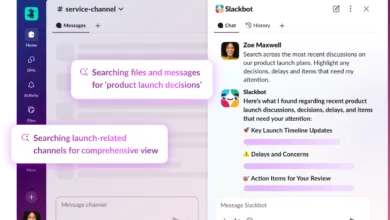
This rebuilt assistant is powered by Salesforce’s Agentforce 360 platform, positioning it as a context-aware companion rather than a mere reminder tool. It operates seamlessly within Slack, eliminating the need to switch between applications or dig through endless message threads. For marketing professionals, this capability is transformative. The AI can surface relevant campaign details, draft creative briefs, and synchronize plans across multiple channels, all initiated directly from Slack conversations. This integration effectively bridges the gap between initial ideas and final execution, creating a more fluid creative process.
The development aligns with Salesforce’s strategic vision of establishing its ecosystem as an “agentic operating system” for modern enterprises. For marketing teams, it represents a shift from using reactive software to collaborating with proactive AI partners. By unifying people, data from CRM systems, files, and connected applications, the new Slackbot aims to accelerate productivity. The goal is to deliver marketing campaigns with greater clarity and precision, as insights and subsequent actions can occur almost instantaneously.
A particularly compelling feature for marketers is the AI’s ability to enhance campaign visibility and coordination. Users can pose a simple question like, “What’s the latest on the Q2 launch?” and receive a comprehensive summary synthesized from disparate sources: scattered message threads, shared files, and meeting notes. This functionality acts as an automated project manager with perfect recall, freeing teams from the tedious work of piecing together updates or repeatedly following up with colleagues. For teams managing complex timelines involving paid media, creative reviews, and performance analytics, this level of intelligent synthesis can reclaim hours previously lost to friction.
The AI’s power is amplified by Slack’s deep integration with Salesforce data and numerous third-party applications. Marketers can initiate complex workflows, such as generating reports, creating summaries, or sending follow-up emails, using live data, all within the chat interface. The benefit extends far beyond saving a few clicks; it enables faster campaign iteration, improves team alignment, and supports real-time decision-making. In an era where marketing agility is paramount, having an adaptive AI assistant embedded in the primary communication platform is becoming not just useful, but essential for maintaining a competitive edge.
(Source: MarTech)