Claude Code Without Coding: Anthropic’s New Cowork Tool

▼ Summary
– Anthropic launched Cowork, a new tool built into Claude Desktop that allows users to give Claude access to a specific folder to read or modify files via a chat interface.
– Cowork is currently in a research preview and is only available to Claude Max subscribers, with a waitlist for users on other plans.
– The tool is designed to be more accessible than Claude Code, requiring less technical skill as it doesn’t need command-line tools or virtual environments.
– It enables a range of use cases, such as creating expense reports from photos or managing media files, by acting as a general-purpose AI agent.
– Anthropic warns that Cowork, like Claude Code, can autonomously take actions, posing risks like file deletion if instructions are vague, and advises users to be clear.
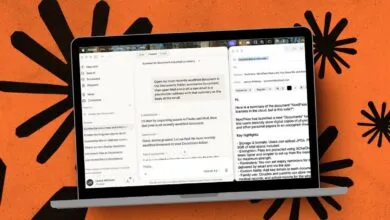
Anthropic has introduced a new feature called Cowork, designed to bring the power of Claude Code to a much wider audience without requiring technical expertise. Integrated directly into the Claude Desktop application, Cowork allows users to assign a specific folder that the AI can both read and modify, with all commands managed through the familiar chat interface. This creates a sandboxed environment similar to Claude Code but eliminates the need for complex setup involving command lines or virtual environments, making advanced AI agent capabilities accessible to non-coders.
Currently, this tool is in a research preview phase and is exclusively available to Claude Pro and Team subscribers, with a waitlist open for users on other plans. The development of Cowork was partly motivated by observing how many subscribers were already using Claude Code for tasks beyond traditional programming, treating it as a versatile, agentic AI assistant for general productivity. Built on the same Claude Agent SDK that powers Claude Code, it leverages the identical underlying model. The designated folder system provides a straightforward method to control file access, significantly lowering the barrier to entry.
This accessibility unlocks a broad spectrum of practical applications. Anthropic suggests one example: compiling an expense report from a folder containing various receipt images. However, early adopters of Claude Code have demonstrated its utility for a range of other functions, such as organizing collections of media files, scanning and summarizing social media content, or performing detailed analysis on text-based conversations.
Like its predecessor, Cowork is engineered to execute multi-step actions autonomously, without requiring constant user confirmation between steps. This capability, while powerful, introduces potential risks if instructions are unclear or contradictory. In its announcement, Anthropic explicitly cautions users about hazards like prompt injection attacks or the accidental deletion of files. The company strongly advises providing instructions that are as precise and unambiguous as possible to mitigate these issues. The blog post notes that while these risks are inherent to advanced AI tools, Cowork may represent many users’ first encounter with a system that operates beyond simple question-and-answer interactions.
Claude Code, initially launched as a command-line tool, quickly became one of Anthropic’s standout offerings. Its success has spurred the company to develop and release a series of new interfaces to cater to different user needs. This includes a dedicated web interface that launched recently, followed shortly by an integration for the popular workplace communication platform, Slack.
(Source: TechCrunch)