Minneapolis: Why Reality Still Matters
▼ Summary
– The article describes a fatal shooting by ICE agents in Minneapolis, captured in multiple graphic videos by civilian witnesses who risked their safety to record the event.
– The victim, Renee Nicole Good, was a legal observer present to document an ICE raid, and the Trump administration immediately labeled her a domestic terrorist.
– Official narratives promoted a single, ambiguous video clip to support their version of events, asking the public to disregard the mounting contradictory evidence from other recordings.
– The shooting provoked intense local outrage and defiance, with residents and politicians condemning the actions and demanding that ICE leave their community.
– The author argues that while technology platforms can abet a “war on reality,” the acts of ordinary people documenting atrocities represent a continued belief that objective reality and due process matter.
The chilling footage from a Minneapolis neighborhood, where ICE agents shot and killed a legal observer, underscores a profound and unsettling truth: in an era of digital manipulation and political propaganda, the raw documentation of events by ordinary citizens remains a powerful act of resistance. The immediate aftermath, captured from multiple angles on smartphones, presents a stark narrative that official statements struggle to obscure. This incident reveals not just a tragic death, but a community’s defiant insistence on bearing witness, challenging attempts to control the story and redefine reality itself.
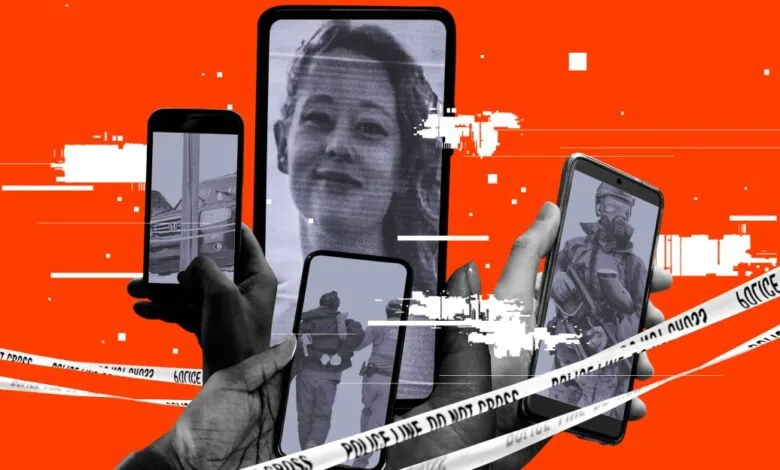
The initial video clip, widely circulated, shows agents leaning over a slowly moving vehicle before three shots are fired. The car accelerates and crashes. A deeper analysis of the footage clearly shows the agents were not in the vehicle’s path, contradicting any potential narrative of immediate threat. Yet it is the extended, four-minute recordings that leave a lasting impression. Civilians in winter coats, initially confused, gradually raise their phones. They film the wrecked car with its blood-spattered airbag, the ice stained red, and the masked agents. They stay, despite the clear danger, driven by a conviction that capturing the truth is paramount.
The victim was Renee Nicole Good, a 37-year-old legal observer. The cacophony of whistles heard at the scene indicates activists and observers had gathered to monitor an ICE raid. The administration’s swift response was to label the deceased a domestic terrorist, promoting a single, ambiguous 13-second clip as the definitive account while dismissing all other evidence. This strategy represents a direct assault on public perception, asking people to distrust their own eyes. As one reporter noted, who needs sophisticated AI deepfakes when a selectively edited clip can effectively distort the truth?
However, reality proved difficult to suppress. The shooting shattered the community’s calm, igniting raw, public fury. The mayor bluntly told ICE to leave the city. Residents’ screams of “Shame!” and “Murderer!” echo through the recordings as an agent departs the scene. Good and her fellow observers were there to document what they viewed as the violent, unjust seizure of their immigrant neighbors. Their whistles, honking car horns, and smartphone videos were acts of faith in a shared reality and in due process, however eroded those concepts may feel.
This tragedy is unlikely to halt the resistance. If anything, it may compel observers to continue their work with heightened caution, documenting potential atrocities even at great personal risk. While technology platforms and AI tools can be weaponized to wage a war on factual truth, the actions of individuals, pointing their cameras, uploading their footage, represent a steadfast belief that reality still holds weight. Their collective witness stands as a testament that this war is not yet won.
(Source: The Verge)