Can LG’s CLOi Robot Really Do Laundry?

▼ Summary
– LG unveiled CLOi, an AI-powered home robot at CES, designed to autonomously perform a wide array of domestic chores like laundry and cooking.
– The robot uses cameras, sensors, and vision-language models to navigate, understand its environment, and convert verbal commands into actions.
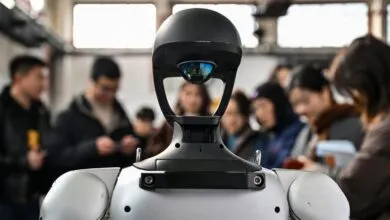
– Unlike simpler domestic robots, CLOi features a large upper body and two arms, giving it greater physical capability to interact with objects.
– During its live demonstration, the robot performed tasks very slowly and gingerly, and its commercial availability and release timeline remain unclear.
– The presentation positioned CLOi as part of LG’s “Zero Labor Home” vision and as a showcase for its broader AI home ecosystem, rather than a currently available product.
The annual CES showcase consistently introduces a wave of new robotics, and this year, LG unveiled its latest contender: the CLOi home robot. Promoted as an AI-powered assistant capable of handling domestic duties from laundry folding to breakfast preparation, it represents a significant step toward the company’s vision of a fully automated “Zero Labor Home.” This concept aims to free individuals from mundane chores by deploying intelligent automation throughout the living space. While the ambition is clear, a hands-on demonstration revealed a device that is more a promise of future potential than a ready-to-ship product.
Described as an AI-powered home robot, CLOi is engineered to assist with a wide spectrum of household tasks. LG envisions it evolving into an ambient-care agent that supports daily life. The robot features autonomous navigation, equipped with an array of cameras and sensors. These components integrate with LG’s smart home ThinQ app, allowing the system to analyze environmental data and offer proactive suggestions to improve the user’s routine. For communication, it utilizes a vision language model to interpret images and video, alongside a program that translates verbal commands into physical actions.
This announcement enters a market exploring domestic robotics, following products like Amazon’s Astro. CLOi distinguishes itself with a more humanoid design, featuring a substantial upper torso and two articulated arms. This physical form factor is intentionally crafted to manipulate objects and interact with the home environment in ways simpler rolling robots cannot. The design suggests a capability for complex tasks like lifting items and operating appliances.
However, the live demonstration painted a more cautious picture. Observers watched as the robot performed with deliberate, almost painstaking slowness. In one sequence, it carefully extracted a shirt from a laundry basket and placed it into a dryer. In another, it picked up a croissant and gently positioned it inside an oven. When tasked with making breakfast, CLOi moved to the refrigerator, waited for the door to open, and then paused for a notably long time before selecting a carton of milk. The robot’s pace was its most defining characteristic, far slower than any human counterpart.
This lack of speed, however, is part of the stated philosophy. The goal isn’t to race against a human but to completely remove labor from the equation. The idea is that you could be occupied elsewhere, getting ready for work or taking a call, while CLOi methodically handles meal prep or chores in another room. This aligns perfectly with LG’s broader “Zero Labor Home” ecosystem, which includes other AI-enhanced appliances like an oven that identifies ingredients and a conversational refrigerator, all synced through the ThinQ platform.
A major question remains regarding availability. The presentation included a disclaimer noting that the products shown are under development and not released for commercial use, with specifications subject to change. LG representatives confirmed CLOi is planned for a future release but could not provide a specific timeline. This uncertainty positions CLOi similarly to many CES robotics reveals: it functions as a compelling showcase of a company’s technological aspirations and a strategic tool for marketing an integrated smart home ecosystem. For now, it stands as an intriguing prototype, a glimpse into a possible automated future that is still taking its time to arrive.
(Source: TechCrunch)