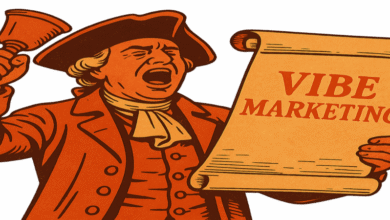
Vibe Marketing: What It Means for Your Strategy
▼ Summary
– Vibe marketing is an emerging trend where marketers use AI and no-code tools to create campaigns by describing desired outcomes in plain English, similar to the software development trend of vibe coding.
– This approach democratizes and accelerates marketing by allowing small teams to quickly produce personalized ads, webpages, and workflows without relying on large departments or IT support.
– A new marketing technology stack is forming, combining workflow automation builders, AI content generators, AI agents, and AI-assisted development tools to enable rapid campaign creation and iteration.
– Practical tests of platforms like Bolt, Lovable, and Make demonstrate they are effective for rapid prototyping, building internal tools, and automating workflows, though results depend on clear prompting and may require polish for complex features.
– Marketing leaders are advised to upskill teams in AI and no-code tools, consider hiring hybrid “vibe marketers,” and establish governance to maintain brand and data security while leveraging this new agility.
The rise of vibe marketing represents a fundamental shift in how campaigns are built and executed, moving from complex technical processes to intuitive, AI-driven creation. This approach empowers marketers to translate strategic vision directly into reality using natural language and no-code tools, dramatically accelerating time-to-market and fostering unprecedented agility.
The concept draws direct inspiration from vibe coding, a software development trend where engineers describe a desired outcome to an AI, which then generates the functional code. For marketers, the parallel is powerful. It signals a move away from waiting for specialized technical resources or navigating bloated software suites. Instead, marketers can describe the goal, be it a personalized ad sequence, a dynamic landing page, or a multi-channel workflow, and leverage intelligent platforms to construct it. This democratization places a greater emphasis on creative direction and strategic messaging, while automation handles the operational heavy lifting.
At its core, vibe marketing champions lean, adaptive workflows over slow, rigid campaign structures. It’s not about replacing human creativity but augmenting it. Marketers can focus more on strategy and storytelling, automating the tasks best handled by machines. This model is gaining remarkable traction, with new roles like “Vibe Marketer” emerging, often commanding significant salaries, reflecting the high value placed on this hybrid skill set.
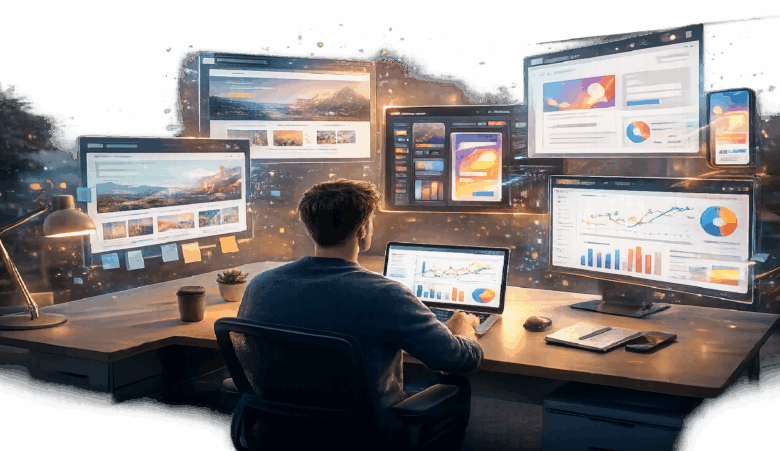
For marketing leaders, the implications are substantial. Interest in this methodology has skyrocketed, prompting a reevaluation of the traditional marketing technology stack. A new, integrated stack is forming, built on key technologies: no-code workflow automation builders, AI content and design generators, AI agents for real-time campaign optimization, and development tools that create applications from prompts. This combination enables what was once impossible, launching sophisticated campaigns in days instead of months, often with just a small team. The result is a capacity for rapid experimentation, faster go-to-market cycles, and significant cost efficiencies.
Practical experimentation with leading platforms reveals both the potential and the learning curve involved. Bolt excels at rapid prototyping, allowing users to generate full-stack web applications from a chat prompt. It can swiftly create campaign microsites with integrated databases, saving weeks of development time. The trade-off is that highly specific or complex features may still require careful AI prompting or developer intervention for final polish.
Lovable takes a slightly different approach, targeting business teams and marketers directly. It allows for the creation of complete web apps and dashboards by describing needs in natural language or importing design mockups. Its value for quickly building internal tools or custom analytics dashboards is clear, though success heavily depends on the clarity and quality of the user’s prompts to guide the AI effectively.
Meanwhile, a platform like Make.com acts as the essential connective tissue in a vibe marketing setup. This no-code automation tool visually links various applications and data sources, creating seamless workflows behind the scenes. It can automate everything from social media monitoring to dynamic content generation, turning a collection of standalone tools into a unified, responsive marketing engine that saves countless hours on repetitive tasks.
The path forward for marketing leadership involves proactive adaptation. Upskilling teams in AI and no-code platforms is now a critical priority. This includes considering hires who blend marketing expertise with technical and AI proficiencies, the quintessential vibe marketer. As teams gain this powerful new freedom, establishing clear governance is essential to prevent chaos. Guidelines around brand consistency, data security, and quality assurance ensure that speed and creativity do not come at the expense of professionalism and control.
Ultimately, vibe marketing is more than a fleeting trend; it’s a structural shift in operational philosophy. It presents a compelling opportunity to re-architect how marketing functions, moving towards a model that is inherently collaborative, intelligently accelerated, and deeply resonant with the pace of modern business.
(Source: MarTech)