CES Hype vs. Reality: The Rise of Smarter Roombas

▼ Summary
– CES 2026 showcases a trend toward specialized domestic robots, like advanced vacuums and mowers, rather than a single multi-purpose android.
– New robot designs include legged vacuums that navigate stairs and obstacles, as well as robotic pets and toys offering companionship or filming services.
– The current market mirrors industrial robotics, where efficient, single-task machines are preferred over adaptable but complex humanoid designs.
– Prototypes of general-purpose humanoid robots, like those from Boston Dynamics and LG, exist but are not yet practical or ready for consumer release.
– The realistic near-future involves networks of single-purpose smart appliances, not a singular robot capable of handling all household chores.
The promise of a single, all-purpose household robot remains a fantasy, but the reality of a specialized robotic workforce is already taking shape in our homes. The latest wave of domestic robots, heavily featured at tech showcases, focuses on perfecting individual tasks rather than attempting to be a jack-of-all-trades. This mirrors a successful strategy long used in factories and warehouses, where dedicated machines outperform humans in specific, repetitive jobs. For now, the dream of a robotic butler is being replaced by the practical, if piecemeal, adoption of automated helpers for vacuuming, mowing, and more.
For years, the most common home robot has been the single-purpose vacuum cleaner. That foundational technology is now evolving in surprising ways. Roborock unveiled the Saros Rover, a vacuum on two articulating, wheeled legs designed to climb stairs and navigate obstacles. Following a similar concept, Dreame showcased its Cyber X, a legged vacuum with a tank-tread design. On a simpler note, Anker’s Eufy brand introduced a robovac that also functions as a fragrance diffuser. Beyond floors, nearly every major manufacturer is now expanding into robotic lawn mowers and pool cleaners, applying their navigation expertise to new outdoor domains.
Alongside these utilitarian machines, a wave of robotic companions has emerged. These range from Ecovacs’ pet-like LilMilo to the cellular-connected, AI-powered Fuzozo from Tuya and Robopoet. There’s even an autonomous camera robot, FrontierX’s Vex, that follows pets to film and edit videos. While charming, these devices highlight a central theme: today’s home robots are highly specialized. The vision of a single humanoid assistant like The Jetsons‘ Rosey remains distant, replaced by an ecosystem of devices each excelling at one job.
This approach directly reflects industrial trends. In automated warehouses, companies deploy armies of robots designed for singular purposes, like moving crates or packing orders, because they are faster and more reliable than a generalized machine. As one industry executive noted, in a controlled environment, a specific tool for a specific job is almost always superior. The built-in limitations of a humanoid form factor, which attempts to mimic human versatility, often introduce unnecessary complexity and cost for a single function.
The economic equation, however, changes dramatically in a residential setting. While a corporation can justify purchasing thousands of identical crate-moving robots, the prospect of a consumer buying eight different expensive machines for eight different chores is far less appealing. The cost and clutter of a fleet of single-task robots could limit widespread adoption, despite their individual capabilities.
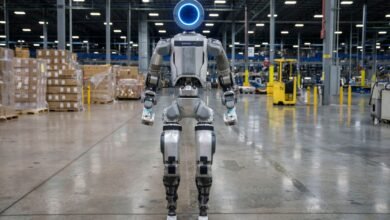
Major manufacturers have not entirely abandoned the quest for a more versatile machine. Boston Dynamics revealed the production version of its humanoid Atlas, slated for factory work by 2028. In the home category, LG demonstrated its CLOiD robot slowly loading laundry, while SwitchBot promoted its Onero H1, a robot claiming to fold clothes and prepare breakfast. Yet these examples are still prototypes or early concepts, often more impressive in marketing materials than in live demonstrations. Their slow, deliberate movements and limited functionality show they are not yet ready for prime time in a busy household.
A more plausible near-future vision may involve connected ecosystems rather than standalone androids. LG’s “Zero Labor Home” concept, for instance, imagines networks of smart appliances working in concert as a unified AI system. This is a gradual evolution of the smart home, not a revolution sparked by a charismatic robot. The true robotic takeover of domestic chores is happening incrementally, one specialized device at a time, bringing automation to specific tasks long before a master machine can handle them all.
(Source: The Verge)