6 AI Predictions That Will Terrify You by 2026
▼ Summary
– OpenAI’s recent “code red” to compete with Google mirrors Google’s own alarm three years prior, which was followed by historic layoffs.
– The author speculates that OpenAI might similarly reduce its workforce early next year, prompting a set of predictions for the coming year.
– Anti-data center activism, often organized on social media, could be exploited by China and Russia to spread disinformation and hinder US AI development.
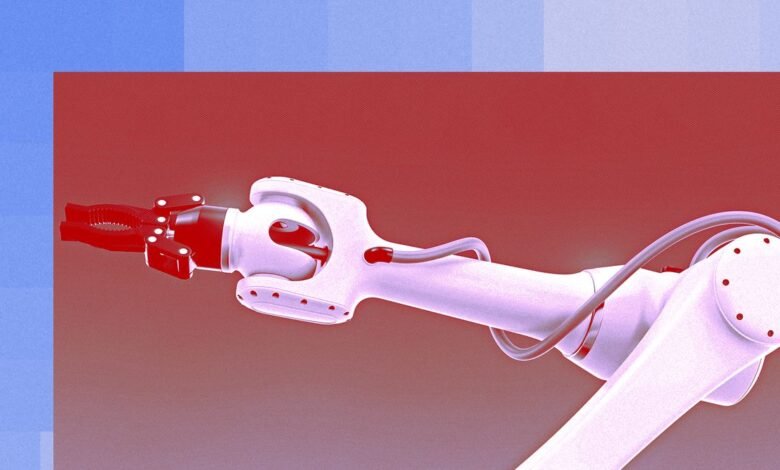
– AI-powered robots are expected to be a major theme at 2026 tech conferences, with large language models enabling them to perform complex household tasks with less training.
– Experts note that large language models allow robots to understand manuals and videos, representing a move into interacting with the physical world.
The rapid evolution of artificial intelligence is poised to reshape industries and societies in profound ways, with several emerging trends carrying significant implications for global security, employment, and daily life. The competitive frenzy among tech giants underscores a pivotal moment, where strategic shifts can lead to major organizational changes and set the course for technological dominance. Looking ahead, several developments on the horizon warrant close attention for their potential disruptive and unsettling impacts.
Communities worldwide are increasingly resisting new data center construction, with activists in the US leveraging social media platforms to organize. This grassroots opposition presents a potential vulnerability. Adversarial state actors, namely China and Russia, could exploit these movements by injecting AI-generated disinformation designed to amplify local concerns and slow critical infrastructure development in the West. While current analysis suggests much of the online activity is authentic, the low-cost ability to create convincing fake images and videos means foreign influence campaigns could easily blend into these debates. Slowing US data center growth would directly benefit nations racing to lead in industrial and military AI applications.
A different kind of physical presence will become impossible to ignore at major tech events. By 2026, AI-powered robots are predicted to be a central showcase at conferences like CES. The integration of advanced large language models into robotics promises machines that can understand complex instructions and adapt to new tasks with minimal specific training. We can expect live demonstrations where robots perform intricate chores, such as navigating an unfamiliar kitchen to cook a meal or organizing a cluttered refrigerator, all guided by simple voice commands. This leap is possible because the AI can now interpret manuals, learn from video demonstrations, and understand spatial diagrams, effectively bridging the digital and physical worlds.
The underlying technology enabling these robots also drives a quieter revolution in corporate operations. Businesses are increasingly deploying AI agents to automate complex internal processes, moving beyond simple chatbots to systems that handle multi-step workflows involving data analysis, report generation, and decision routing. This shift could lead to significant restructuring within companies, as roles centered on process management and intermediate analysis are reconfigured. The efficiency gains are substantial, but they come with the looming prospect of workforce displacement as software begins to autonomously execute functions that once required human oversight and judgment.
On the geopolitical front, the race for AI supremacy is intensifying. Nations are aggressively pursuing sovereign AI capabilities, investing heavily in domestic infrastructure, talent, and proprietary model development to reduce dependence on foreign technology. This trend risks fragmenting the global digital ecosystem into competing blocs with differing standards and regulations. The strategic focus is shifting from merely adopting the best available tools to controlling the entire technological stack, which could stifle international collaboration and accelerate a new form of technological nationalism with far-reaching economic and security consequences.
The creative industries face their own existential challenge from generative AI. Advanced models are now capable of producing high-quality written, audio, and visual content at a scale and speed that undermines traditional creative economics. This threatens to devalue professional expertise in fields from journalism and marketing to music and graphic design, as businesses opt for cheaper, instantly generated alternatives. The resulting market pressure could devastate freelance economies and erode the quality of public discourse, as synthetic content floods digital channels and makes authentic human creativity a premium luxury rather than a standard.
Perhaps the most disquieting prediction involves the fundamental nature of online interaction. We are approaching a point where a majority of content consumed online could be synthetically generated, crafted by AI tailored to individual user profiles and engagement algorithms. This creates a feedback loop where our digital experiences are increasingly shaped not by human expression, but by optimized artificial constructs designed to capture attention. The line between reality and simulation will blur, challenging our collective ability to discern truth, trust information, and maintain a shared sense of authentic human culture and connection in digital spaces.
(Source: Wired)


