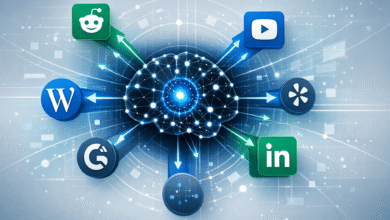
Brand Mentions: The New Currency of Generative Search

▼ Summary
– **Generative Engine Optimization (GEO) is a major shift in search optimization**, focusing on how AI-powered search engines interpret context and user intent rather than just keywords.
– **Brand mentions are now a critical signal for visibility**, reducing ambiguity for language models and establishing authority, similar to links in traditional SEO.
– **Link-building remains important but less dominant**, as generative engines prioritize contextual relevance over sheer link volume for long-tail queries.
– **Effective GEO strategies include targeted media engagement, authentic community participation, and unique content creation** to generate high-quality brand mentions.
– **GEO tactics will evolve as AI models adapt**, requiring brands to continuously refine strategies to maintain visibility and avoid signal noise.
A significant new concept is emerging within the domain of online visibility: Generative Engine Optimization, or GEO. This idea extends far beyond a mere relabeling of existing practices; it signifies a deep recalibration in how search platforms, particularly those powered by expansive language models, interpret and surface information. While the established value of traditional backlinks remains, a more subtle yet increasingly influential indicator now commands attention: strategic, contextual brand mentions. Brands aiming for strong online presence must grasp this evolving dynamic to secure their visibility.
Understanding Generative Engine Optimization
GEO represents perhaps the most significant change in search optimization in a decade. It moves beyond simple keyword matching, focusing instead on how natural language processing (NLP) and machine learning models understand context and user intent. This means a brand’s discoverability is now directly influenced by how it is perceived and referenced across the web.
Links, long a core component of SEO, continue to matter. They remain vital to the web’s structure, guiding search engines through connections and providing information about your site and brand. However, for the highly specific, long-tail queries common in generative search, the sheer volume of links may become less critical than in conventional SEO. Generative engines often operate in less competitive query spaces. Yet, because Large Language Models (LLMs) frequently draw upon information discovered by traditional search engines, building a strong link profile remains a necessary, foundational practice. Links cannot be discarded entirely.
Cultivating Brand Authority in the GEO Era
The real strength of brand mentions in GEO comes from their ability to reduce ambiguity for language models. Consider the word “president.” The system understands the general concept. Adding “Trump” immediately provides mutual information, clarifying the specific entity. As a brand accumulates mentions related to its products, services, or industry, it establishes itself as an authoritative source. Search engines and generative engines use these mentions as a signal of authority and relevance, much as links were used in the past. Given the vast, constantly updated databases powering generative engines, mentions play an even more critical role. They supply the context language models need to confidently answer specific queries.
Beyond Traditional Link Building
Building brand mentions shifts focus toward broader marketing communications. The goal is to provide generative engines like ChatGPT, Gemini, and Perplexity with the necessary mutual information and context. This calls for a multi-faceted approach.
Targeted Media Engagement
Digital public relations must now prioritize securing high-quality, contextual brand placements. Identify key industry publications, blogs, and podcasts where your audience consumes content. Tools like SparkToro can help pinpoint these channels. Develop a targeted outreach strategy: pitch story ideas, comment on trending topics, and position your brand’s experts for guest posts or interviews. Monitor media coverage to find new opportunities. The aim is to build brand authority through high-quality mentions, not simply to acquire links. A valuable tip: observe publications forming content deals with LLMs. ChatGPT, for instance, actively partners with publishers, making their content more likely to appear in generative answers. Securing mentions within these partnered outlets offers a direct path to enhanced visibility.
Authentic Community Participation
Direct engagement within online communities, forums, and social media discussions offers another powerful avenue. Imagine a strategy where a brand’s representatives genuinely participate in relevant Reddit groups or industry forums. They build trust over weeks by engaging naturally, then share relevant content, perhaps asking for community thoughts. This approach generates authentic public responses, both positive and negative, and builds mutual information around your brand within these spaces. As language models increasingly factor social signals, such organic engagement becomes a valuable GEO strategy. Brands must proceed cautiously, avoiding overt promotional tactics that can backfire. The core idea involves building genuine relationships and providing value, rather than relying on covert methods.
Crafting Unique Content
The emphasis on content shifts. Instead of solely chasing keywords, prioritize creating content people might not even know how to search for—what some call “unexpected content.” This means going beyond standard guides to offer original research, forward-looking perspectives, data-driven insights, or analysis of emerging trends. This kind of content positions your brand as a trusted authority, earning valuable mentions and citations from both users and language models. Do not shy away from tackling topics not yet extensively covered; focus on emerging needs, unaddressed pain points, or areas of uncertainty in your industry.
Strategic Influencer Collaborations
Instagram’s recent decision to allow web indexing of its content carries significant implications for GEO. This means employing influencer marketing can be a powerful tactic. Focus on micro-influencer programs to seed mentions of your brand, products, and industry across niche audiences. While large influencers have their place, micro-influencers often have passionate, engaged followings and maintain their own blogs or web properties. Partnering with them introduces your brand to new audiences and expands your overall web presence and citation network, generating a high volume of contextual brand mentions across diverse web properties.
The Changing Landscape of GEO Tactics
A fundamental principle of natural language processing is the drive to reduce ambiguity. This holds true in GEO, but with a twist. As more brands adopt similar tactics, like generating high volumes of brand mentions, they risk introducing more ambiguity, not less. Language models might begin to struggle with signal noise, making it harder to differentiate true authority. This dynamic parallels the early days of PageRank, where popularity tactics eventually necessitated more sophisticated filtering systems.
GEO tactics will not remain static. What works effectively today may lose its impact tomorrow as language models evolve to cut through generic, overused strategies and focus on deeper signals of trust and relevance. To stay ahead, you will need continuous adaptation, closely watching how generative engines respond to scale, repetition, and even attempts at spam. Success in this new era hinges on your brand’s ability to adapt and earn visibility where it truly matters.