Superhuman’s new auto-draft feature nearly wins me over to AI replies
▼ Summary
– Superhuman launched a new auto-draft feature that identifies important emails and creates draft replies matching the user’s tone from past conversations.
– The feature generates three draft variations, allowing users to select the most appropriate response with minimal editing.
– In testing, the feature sometimes produced overly positive or impractical replies (e.g., agreeing to midnight meetings), but users could quickly choose alternative drafts.
– The feature learns from user corrections; for example, after declining a midnight meeting, it automatically suggested a timing conflict for similar future requests.
– Superhuman uses a mix of AI models from Anthropic and OpenAI, with 40% of auto-drafts sent within one day and 60% of those sent unedited during testing.
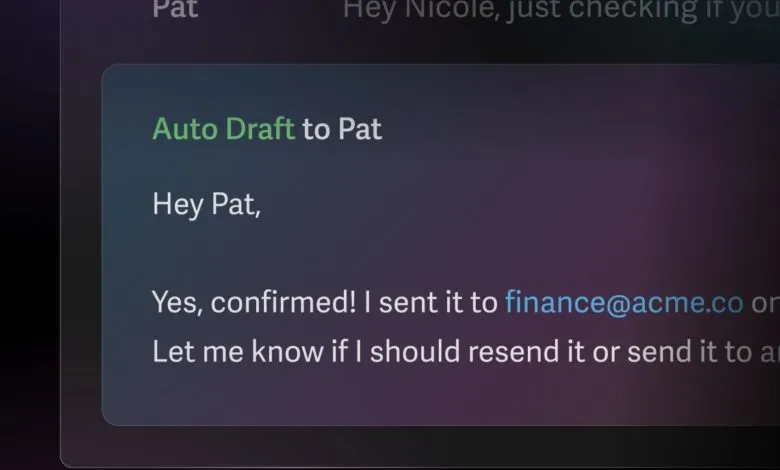
Since the large language model revolution took off, countless companies have raced to tame overflowing inboxes by using AI to sort messages and draft replies that actually sound human. Email client Superhuman is now rolling out an upgraded version of its auto-draft feature, designed to spot important emails and generate responses that feel far less robotic than earlier attempts.
Superhuman previously tried similar tools, such as instant replies and follow-up auto-drafts. But those often read like an overly eager AI salesperson, so I rarely used them. The latest iteration, however, feels markedly different. After gaining beta access a few days ago, I’ve already sent several emails with little to no editing of the generated drafts.
The system identifies which emails likely need a reply and crafts a response based on your tone from past conversations. It also offers two alternative variations you might prefer instead.
During my testing, I saw drafts that agreed to embargoes on pitches in exchange for more details, or confirmed meeting times I could send with minimal changes. The feature even responded to requests for an authored post on TechCrunch, noting that I don’t handle that work. (TechCrunch does not accept guest posts.)
Still, the tool is far from flawless. By default, it often generated overly positive replies to pitches or agreed to meetings scheduled for post-midnight hours. Fortunately, I could quickly select a different response from the other variations and send it off.
The feature learns from your behavior and improves over time. After the midnight meeting mishap, when someone suggested a similar time, the tool generated a draft saying the timing doesn’t work for me.
I receive thousands of emails each month, partly because AI makes first drafts easier for others, like communications and PR professionals. I’m not ready to fully hand over my inbox to AI, but this feature could help me respond to more people without typing long messages.
Users can personalize their experience by going to Settings > Personalization and adding details about themselves and their role, along with files or links for extra context.
During testing, Superhuman co-founder Rahul Vohra reported that 40% of auto-generated drafts were sent within one day, and 60% of those were sent without any manual editing.
Vohra noted that earlier features like instant replies relied on older models such as GPT-3.5, which were less intelligent or had a smaller context window. The new implementation uses a mix of models.
“Today, we are using a mixture of models to make this work. The actual writing is done by frontier models from both Anthropic and OpenAI. So we’re applying the maximum amount of intelligence and context to this that we possibly can to make the feature work,” Vohra said.
Last year, Grammarly acquired Superhuman and later rebranded the company as Superhuman. Now, the firm is building an assistant called Superhuman Go that works across platforms while carrying context from one app to another.
(Source: TechCrunch)