Meta debuts Muse Image, its first AI model from Wang’s lab

▼ Summary
– Meta launched Muse Image, its first image-generation AI model, inside Meta AI, Instagram, and WhatsApp.
– Users can generate images of friends or creators from their public Instagram posts, with an opt-out available.
– The model includes invisible watermarks and safety precautions against violations like CSAM.
– Advertisers will soon get access to Muse Image for creating marketing materials.
– Meta plans to sell access to its AI models via cloud offerings to monetize its infrastructure and compete with OpenAI and Anthropic.
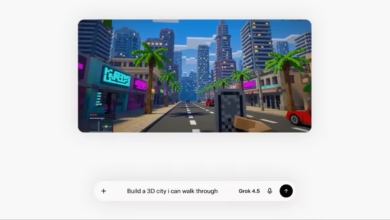
Meta has officially launched Muse Image, its first generative AI model developed under the Superintelligence Labs division, helmed by Chief AI Officer Alexandr Wang. The tool is now live within the Meta AI chatbot and is being integrated across Instagram and WhatsApp, giving users the ability to produce images from text prompts or edit existing photos.
The standout capability allows users to generate images that include friends or public creators, drawing on their publicly available Instagram posts. For those who prefer not to have their content reused or remixed by AI, an opt-out option is available in the settings menu. Every image created with Muse Image carries an invisible watermark, and the system includes built-in safety measures to prevent violations of Meta’s terms of service, including protections against CSAM.
Advertisers will gain access to the model soon, enabling them to generate marketing materials. This release follows the debut of Muse Spark, Meta’s first large language model from the Superintelligence Labs, which launched in April. The lab is also developing a video generation model, expected to arrive in the coming months. Muse Image marks the second major product from the lab since Wang was brought on a year ago, after Meta invested billions and recruited researchers with compensation packages exceeding $200 million.
Meta intends to sell access to its AI models to outside developers through a cloud-based offering, a move that would help monetize its data center infrastructure and expensive AI chips. This cloud business is part of a larger strategy, which Bloomberg reported last week may include selling raw computing power. Despite these plans, Meta continues to seek more computing capacity, recently signing deals with CoreWeave, Google, and Oracle. The company cut 8,000 jobs in May and redirected billions toward AI infrastructure as it races to compete with OpenAI and Anthropic across every AI modality.
(Source: The Next Web)