Cut Screen Time With a Brick
▼ Summary
– The Brick is a $59 magnetic, NFC-enabled gadget that requires physically tapping a phone to it to deactivate custom screen-time limits, adding friction that software-only solutions lack.
– The author created a “Sleep” mode blocking all apps except messaging and audio from 10:30 PM, forcing them to get out of bed and walk to the Brick to unblock apps in the morning.
– Co-founders Zach Nasgowitz and TJ Driver state the Brick was built from a personal need to create real separation and intentional reconnection, as software prompts are easy to bypass.
– The product offers a small number of “emergency unbricks” for essential apps like maps or rideshares, but the author lumps those into sleep mode to avoid wasting them.
– The Brick serves as a happy medium between full smartphone use and switching to a dumb phone, allowing users to customize how “dumb” their phone becomes at different times.
I have kept screen-time limits on my iPhone for years, capping social media at 30 minutes daily. Yet I cannot count how many times I tapped “Ignore Limit” and kept scrolling through pointless Reels. The truth would likely horrify me.
As it turns out, the real solution came in the form of a $59 slab of gray plastic. Self-discipline would have been cheaper, but apparently it was out of stock. The Brick , a magnetic, matchbox-sized device , has done what no screen-time app ever could. It has genuinely reduced my phone usage and improved my sleep habits.
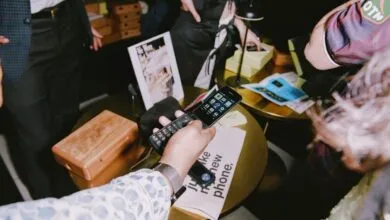
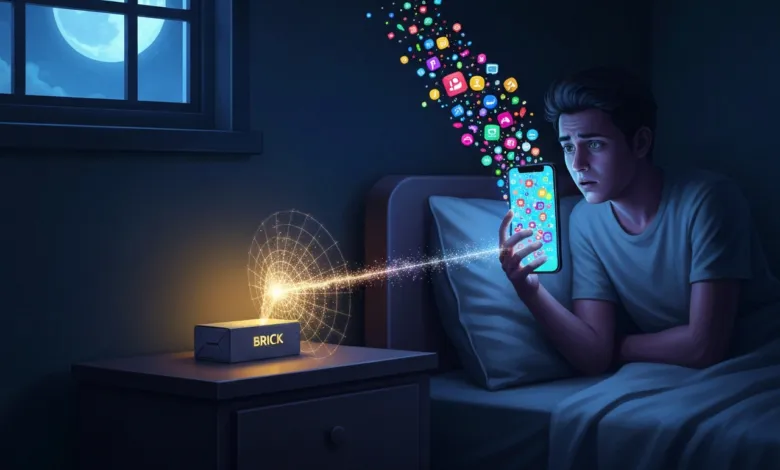
What sets Brick apart from standard screen-time apps is its physical component. This branded, NFC-enabled square forces you to tap your phone against it , much like a tap-to-pay terminal , to deactivate your custom limits. If I must physically stand up, walk over, and tap my phone to the Brick just to open Instagram, I simply won’t bother.
“Brick was born from a personal need: our phones were getting in the way of living,” co-founder Zach Nasgowitz told TechCrunch. “We searched for solutions to this problem in our lives, but we found that nothing was quite right, so we decided to build something for ourselves that would solve this problem.”
I tested Brick specifically to fix my sleep hygiene, and I’m embarrassed to admit it worked better than I expected.
Like many millennials , especially those whose jobs revolve around the internet , I have a terrible habit of climbing into bed at night and mindlessly scrolling, which makes falling asleep harder. Even worse, I sometimes wake up and stay in bed on my phone, starting the day feeling groggy and unfocused.
I set up a “Sleep” mode in the Brick app that activates automatically at 10:30 PM. Once it’s on, my phone blocks everything except messaging apps (so I’m still reachable in an emergency) and audio apps (I often listen to podcasts or audiobooks to drift off). In the morning, I cannot waste time on my phone unless I get out of bed, walk downstairs, and tap it against the Brick. (If you prefer keeping your phone out of the bedroom entirely but still want sleep aids, consider the Dreamie alarm clock.)
It feels ridiculous that a $59 piece of plastic was necessary to change my behavior. But without the Brick, slipping back into old habits would be far too easy. I’ve been testing a unit the company sent for review, and it has been so effective that I plan to buy one so I can continue using it (we return or donate review units for ethical reasons). If you’re feeling crafty, you could even attempt a DIY version using an NFC tag and Apple Shortcuts.
“Software-only solutions like Screen Time and Digital Wellbeing are easy to bypass, and what actually works is adding friction,” co-founder TJ Driver told TechCrunch. “This has allowed physical technology to come into play to create real separation that a software prompt can’t replicate. By requiring you to physically return to the device to unblock your apps, the decision to reconnect becomes an intentional one rather than an unconscious reflex.”
Brick provides a small number of “emergency unbricks” for situations where you’re out and absolutely need an app like Google Maps or Uber to get home safely. Personally, I find it easier to include those apps in my sleep mode for the rare late night out, so I never waste an emergency unbrick. Knowing I can open Uber doesn’t disrupt my sleep , I’m not about to doomscroll in a rideshare.
“Rather than constantly relying on willpower, it can be more effective to design your environment so that you don’t have to always be taxing your willpower or brain,” Driver said. “Things like Brick help people choose how they want their phone to best serve them for a given moment or task, and then design their digital environment so that they don’t have to think about it anymore.”
This focus on personalization and user agency has made the product resonate with many customers.
“One user had wanted a dumb phone for years, but couldn’t give up his primary texting app, KakaoTalk, for communicating with his wife and friends based in Korea,” Nasgowitz shared. “He said, ‘Brick has turned my phone into what I always wanted – a phone that can text, call, take some photos, and use Kakao. It’s perfect.’”
Interest in dumb phones is growing as people grow disillusioned with Big Tech. But flip phones aren’t built for modern life, where we scan tickets from our screens, pay subway fares with our phones, and rely on specific two-factor authentication apps for work. (Companies like Dumb. Co and Commodore are trying to bridge this gap by hacking flip phones to load essential apps or creating entirely new hardware.)
If switching to a flip phone feels too extreme, the Brick offers a comfortable middle ground. It works without requiring a drastic lifestyle overhaul. You can make your phone as dumb as you want, whenever you want.
“When you zoom out and think about the screen time movement as a whole, it isn’t about rejecting technology,” Driver said. “It’s about reclaiming agency and being intentional again.”
(Source: TechCrunch)