Adobe’s AI Week: Firefly, Disney, Semrush, LinkedIn Deals
▼ Summary
– Adobe launched a Firefly AI Assistant in public beta inside Photoshop, Premiere, and other apps, which acts as a chatbot that can execute tasks like sorting footage or generating versioned files.
– Adobe partnered with Disney Imagineering to create custom generative AI models trained on Disney’s proprietary assets, emphasizing IP safety over models trained on scraped internet data.
– Adobe introduced Brand Visibility, a tool that tracks how often a brand is mentioned in AI search results from platforms like ChatGPT and Google AI Mode, using a database of 300 million prompts.
– Adobe expanded GenStudio for retail media networks, adding a “Simulate” skill that uses synthetic data and AI-modelled audiences to test ad content before spending money.
– Adobe and LinkedIn launched free AI training courses for marketers, responding to a 113% increase in job postings requiring AI literacy, while Adobe’s own survey found 85% of creators insist the final creative decision should remain theirs.
Adobe has spent two years embedding AI into its existing software. This week, it made a bolder push to become the foundational AI layer for all creative and marketing work, rolling out five major announcements over three days.
The headline feature is a new agent integrated directly into its core apps. But the broader strategy reveals what Adobe is truly constructing: a unified creative and marketing AI ecosystem that connects a solo creator’s Photoshop file to a Disney theme park, a retailer’s ad network, and a marketer’s LinkedIn profile.
1. The AI Agent Arrives Inside Photoshop and Premiere
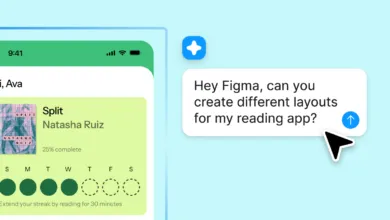
Starting Thursday, the Firefly AI Assistant enters public beta inside Photoshop, Premiere, Illustrator, InDesign, and Frame.io, with a private beta in After Effects. Each app now features a chatbot-style sidebar that responds to plain language commands, with each assistant fine-tuned as a specialist for its respective program.
This builds on a preview from April, when Adobe first demonstrated the agent’s ability to use its apps to execute prompts. The critical difference now is that users can interact with it directly from within Photoshop or Premiere.
The core pitch is delegation, not magic. In Premiere, the assistant sorts footage into bins, batch-renames clips, flags interview questions, and drops markers. In Photoshop, you describe a desired outcome, swap a background, resize for multiple platforms, tidy layers, and it executes across the file. In Illustrator, it can generate 50 versioned files from a spreadsheet or run a pre-flight check for missing fonts.
As Engadget noted from a demo, the agent will not seize your cursor or walk you through a task step by step. It is not a computer-use agent.
Adobe also previewed a rebuilt Firefly creative AI studio (private beta, waitlist) aimed at generative AI’s most persistent challenge: consistency. A feature called Elements lets you save a character, location, or object and reuse it by name. A companion feature, Projects, keeps assets and context in one place. New preset “skills” push Firefly closer to rivals like Figma and Canva, enabling users to build a brand kit, turn product photos into short videos, assemble a Quick Cut, or generate video from a storyboard.
2. Disney Imagineering Gets Custom Firefly Models
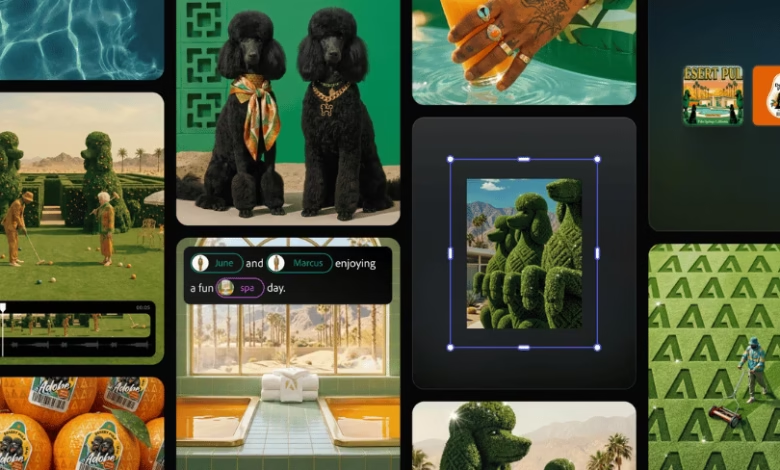
The same week, Adobe announced a collaboration with Walt Disney Imagineering’s R&D arm. Using Adobe Firefly Foundry, they are building custom generative models trained on Imagineering’s own design catalogue, not the open web.
That distinction is the entire pitch. “Models trained on scraped internet data offer no guarantees around IP fidelity, brand consistency or the provenance of what they produce,” Adobe argues. A Foundry model, by contrast, is built on licensed and proprietary assets.
For Disney, the tools include sketch-to-image concept art, a model that generates franchise-accurate assets across Mickey, Frozen, Moana, Lilo & Stitch, and Cars, and a 3D-modelling capability that turns 2D concepts into prototypes. This shortens the path from a hand-drawn sketch to a built attraction.
It is a marquee endorsement of Adobe’s “commercially safe” positioning, the same argument that has defined Firefly since launch and sets it apart from rivals trained on scraped data, a fight that has drawn public protest from inside the AI industry.
3. A Tool to Track How Your Brand Shows Up in ChatGPT
On the enterprise side, Adobe launched Brand Visibility, its first product built on the Semrush business it recently acquired. It is a generative engine optimisation (GEO) tool, the AI-era successor to SEO. It tracks how often a brand is mentioned across ChatGPT, Google AI Mode, Microsoft Copilot, and Perplexity, drawing on what Adobe says is the largest database of its kind: nearly 300 million real-world AI search prompts.
The “why now” lies in Adobe’s own data: AI traffic to US retail sites surged 1,324 per cent between October 2024 and May 2026, and 2,215 per cent in travel. As buyers increasingly ask a chatbot before visiting a website, Adobe is betting brands will pay to find out whether the chatbot is recommending them or a competitor.
4. AI Ad Creative for Retail Media Networks
Adobe also expanded GenStudio, its AI “content supply chain”, with a version built for commerce media networks. These are the fast-growing businesses of retailers selling ad space against their own shopper data.
The release leans heavily on synthetic data. A new Brand Intelligence “Simulate” skill lets marketers test how content will land with AI-modelled audiences before spending a cent. Firefly Custom Models are now available inside Photoshop for on-brand image generation. It is plumbing, not glamour, but it is where the enterprise money is.
5. Reskilling the Marketers in the Firing Line
Finally, Adobe and LinkedIn launched AI Essentials for Marketers, a set of free, role-based LinkedIn Learning courses in 47 languages. The framing is its own kind of admission. Per LinkedIn’s data, the share of marketing job postings requiring AI literacy has more than doubled year on year, up 113 per cent.
Adobe notes that 99 per cent of Fortune 100 companies already use AI in one of its apps. The logic is clear: teach the workforce to use the tools, and the tools become harder to leave.
The Throughline: Keep the Human (Visibly) in Charge
Across all five announcements, one message repeats: the human stays in the director’s chair. It is a deliberate choice, because Adobe is selling AI to the exact people most worried about being replaced by it.
Its own 2026 Creators’ Toolkit Report, a survey of more than 16,000 creators run with The Harris Poll, gives the company its talking points and its anxieties in equal measure. On the optimistic side, 87 per cent of creators using creative AI say it has accelerated the growth of their business or audience, and 93 per cent say it helps them produce content faster.
On the cautious side, 85 per cent say the final creative decision should always remain theirs, 81 per cent say human judgment is essential to creative taste, and 57 per cent say AI outputs still need moderate or extensive editing before publishing. 90 per cent want copyright protection for AI-assisted work, yet only 49 per cent say they always or often disclose when they have used it.
That tension, enthusiasm shadowed by unease, is the backdrop to Adobe’s entire week. Other research has been blunter still: most consumers say they are actively put off by “AI” in a brand’s messaging.
With Canva past 265 million monthly users and Figma and Google circling the same market, Adobe’s bet is that owning the whole stack, the app, the model, the enterprise plumbing, and the training, matters more than any single feature. The assistant inside Photoshop is this week’s headline. Whether creatives trust the rest of it enough to hand over the work is the longer test.
(Source: The Next Web)