Gradial secures $65M for AI marketing agents
▼ Summary
– Gradial raised $65 million in Series C funding, led by Insight Partners, to build an AI agent layer that operates across multiple marketing tools rather than being trapped inside a single product.
– The startup’s agents plug into systems like Adobe, Salesforce, and Databricks to handle tasks such as content authoring, brand-compliance checks, and routing updates through approval chains.
– Gradial’s agents can detect missing brand content in AI-generated answers, draft fixes, push them through approval, and publish them without human intervention.
– Early adopters include heavily regulated sectors like healthcare and financial services, with clients such as AWS, T-Mobile, and Kaiser Permanente; T-Mobile reported an 80-90% cut in campaign-execution time.
– The four co-founders, including alumni from SpaceX and Microsoft, launched Gradial in 2023, and the company plans to use the new funds to hire across engineering, sales, and marketing.
Every software company is rushing to add an AI agent to its product. Gradial, however, is betting that the real opportunity lies in the space between them.
The Seattle-based startup has secured $65 million in Series C funding to develop what it describes as an operating system for marketing. Instead of building a separate bot locked inside each tool, Gradial creates a layer of AI agents that execute tasks across the dozens of platforms a large organization already uses. The round, first reported by Axios, was led by Insight Partners and values the company at $675 million. Existing investors VMG, Madrona, and PruVen Capital also participated, bringing Gradial’s total funding to over $110 million in the past 16 months.
“Gradial is competing to be the AI glue that makes it all work together and makes it delightful for the marketer and super efficient,” CEO Doug Tallmadge told Axios. “You should have an agent that spans across your workflow, not a separate agent for every step of the workflow.”
In practice, this means plugging agents into systems like Adobe, Salesforce, ServiceNow, and Databricks, then handling the operational grind of getting content live: authoring, quality assurance, brand-compliance checks, and routing updates through a company’s existing approval chains. One use case directly taps into the year’s hottest marketing anxiety. Gradial’s agents can spot where a brand is missing from AI-generated answers, draft the fixes, push them through approval, and publish them across systems without a human queuing up an agency ticket.
This is a bet on orchestration rather than yet another point tool. The same instinct is drawing capital to startups building an orchestration layer for enterprise AI, as companies deploy agents faster than they can wire them together. Gradial’s pitch is that marketers should be freed to focus on strategy and creativity while the agents handle the plumbing.
Some of the earliest adopters came from heavily regulated sectors like healthcare and financial services. Tallmadge says these clients valued the ability to encode compliance rules into workflows so that agents apply requirements humans might miss. Gradial’s client list now includes AWS, Prudential, T-Mobile, Vanguard, Kaiser Permanente, and US Bank. T-Mobile, the company says, cut its campaign-execution time by 80 to 90 percent, a figure cited by one of the carrier’s own executives rather than independently verified.
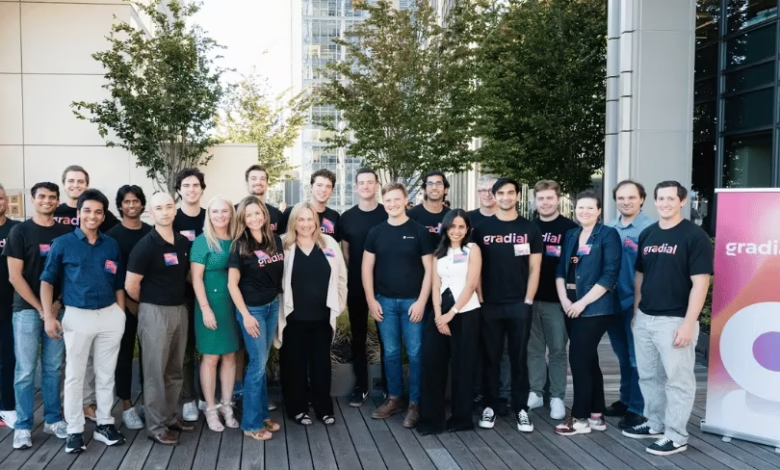
The four co-founders met at Dartmouth and launched Gradial in 2023, shortly after ChatGPT’s debut. Tallmadge and CTO Deip Kumar are both SpaceX alumni; chief growth officer Anish Chadalavada worked on AI strategy at Microsoft. The 100-person company plans to use the new money to hire across engineering, sales, and marketing, as the broader wave of enterprise AI agents moves from pilot projects into the systems companies run every day.
(Source: The Next Web)