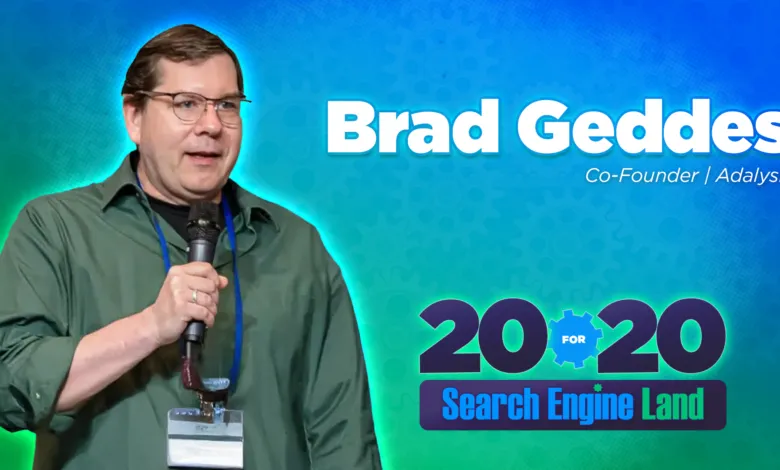
Brad Geddes on 20 Years of Paid Search Change
▼ Summary
– Brad Geddes started in SEO in 1996 and moved to paid search in 1998, later working as an affiliate marketer for Amazon and eBay.
– The pay-per-click system began with Goto.com’s 1998 launch by Bill Gross, which valued clicks over impressions and later became Overture and Yahoo Search Marketing.
– Google became the industry leader around 2006–2007, introducing ad groups that required weekly campaign management, driven by its superior search engine traffic.
– Major milestones include Google’s organic algorithm updates (Panda, Penguin, Pigeon) forcing specialization, automated bidding freeing time for strategy, and the 2005 one-ad-per-domain rule pushing affiliate marketers to create value.
– Geddes warns AI cannot fully run ad accounts, predicts the industry will reward creativity and strategy over automation, and notes he correctly predicted voice search would merge into normal queries.
Brad Geddes has witnessed nearly every major shift in the paid search industry since its inception, starting his digital marketing journey in SEO back in 1996 and moving into paid search by 1998. After burning out in another profession, he taught himself web design and began working from home as an affiliate marketer for giants like Amazon and eBay.
The real birth of the pay-per-click model, according to Geddes, came with the 1998 launch of Goto.com by Bill Gross. That platform, which later evolved into Overture and then Yahoo Search Marketing, introduced a groundbreaking pricing structure that assigned a dollar value to each click rather than simply charging for ad impressions.
Google’s path to industry dominance wasn’t immediate. The search giant didn’t solidify its leadership position until around 2006 or 2007, and early advertisers found its system frustratingly complex. Google’s introduction of “ad groups” forced marketers to shift from spending just a few hours per year on traditional advertising to managing digital campaigns on a weekly basis. Advertisers only adopted the platform because Google’s superior, user-focused search engine drew the overwhelming majority of online traffic.
By the time Search Engine Land launched in 2006, the industry culture had transformed dramatically. What once operated out of basements and side projects became a mainstream corporate environment fueled by venture capital, inflated salaries, and extravagant private yacht parties. Geddes also notes that early in his career, professionals shared information far more freely because corporate secrecy and non-disclosure agreements were much rarer than they are today.
Two major milestones permanently reshaped PPC. First, Google’s organic algorithm updates,Panda, Penguin, and Pigeon,made organic search so complex that marketers could no longer remain generalists. They had to choose between specializing in SEO or paid search. Second, the successful rollout of automated bidding eliminated the tedious, transient work of manually calculating bids in Excel spreadsheets. This freed up marketers to focus on creativity and strategic account management instead.
Another pivotal shift occurred in 2005 when Google decided to allow only one ad per domain on a search results page. That forced affiliate marketers to build dedicated landing pages and deliver genuine value to users in order to survive.
Looking back, Geddes strongly dislikes Single Keyword Ad Groups (SKAGs). This over-segmentation strategy once required advertisers to create thousands of campaigns simply to work around early platform limitations. However, he does miss several features that have since disappeared. The original Enhanced Cost-Per-Click (ECPC) allowed advertisers to set the exact price they wanted to pay per click and let Google handle the calculations. He also mourns the loss of hyper-specific geo-targeting tools that let marketers draw custom radius points around individual interstates, as well as features for custom ad adjustments at the business location level.
Looking ahead, Geddes warns against a common AI misconception. He argues that artificial intelligence cannot fully manage an advertising account. Just as marketers shouldn’t blindly accept all of Google’s auto-applied recommendations, they shouldn’t hand total control to AI, which can generate both effective and terrible ads. Over the next twenty years, he predicts the industry will reward creativity, strategic thinking, and business optimization rather than basic “button-pushers.” Because marketing ultimately depends on connecting with humans,who often make illogical decisions that an AI wouldn’t predict,human creativity will remain essential.
In a rapid-fire retrospective, Geddes admits he got one major prediction wrong: he thought mobile adoption would happen much faster than it actually did. On the other hand, he correctly predicted that voice search was overhyped and would simply merge into normal search queries rather than become a separate channel. He also observes that Google rarely acknowledges how the world actually functions today, preferring instead to market ideal future scenarios based on massive data sets that most advertisers don’t have access to.
Finally, Geddes believes that PPC professionals rarely test their campaigns as thoroughly as they claim. And if he could give his younger self one piece of advice from a decade or more ago, it would be simple: buy more Google stock.
(Source: Search Engine Land)