Indie Pass: $6.99 Monthly Subscription Launches with 70 Games
▼ Summary
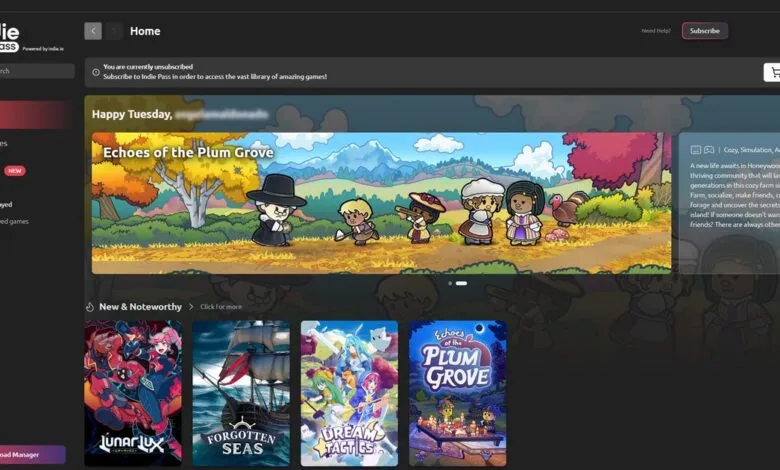
– Indie.io is launching a subscription service called Indie Pass on April 13, offering access to a rotating catalogue of indie games for $6.99 per month.
– The service aims to solve discoverability challenges for indie developers by providing a curated platform to surface their games, including back-catalogue titles.
– Developers are paid through a revenue-sharing model based on the time users spend playing their games, without exclusivity requirements for participation.
– The platform uses a recommendation system that suggests games based on player engagement, play style, controller preference, and localization.
– Indie Pass is an outgrowth of the company’s existing publishing and community operations, leveraging its catalogue and wiki.gg platform’s audience.
A new subscription service is entering the crowded gaming market with a sharp focus on independent titles. Indie Pass, launching April 13 for $6.99 per month, will provide access to a rotating library of roughly 70 games curated from the indie sphere. The service, created by publisher Indie.io, aims to solve a critical problem for smaller developers, discoverability, while offering players a dedicated channel for unique gaming experiences.
Jess Mitchell, the company’s Director of Growth, frames the platform as a solution for developers struggling to be seen. The sheer volume of new releases means a title can vanish quickly if its launch isn’t a major event. Indie Pass offers a path to sustained visibility for a developer’s back catalogue and new releases alike. For subscribers, it promises a handpicked selection of “distinctly indie” games that refresh monthly, guided by a recommendation system designed to surface hidden gems they might otherwise miss.
The platform is a natural extension of Indie.io’s existing operations, which include a publishing label with over 200 games and the community site wiki.gg, boasting 10 million monthly active users. Mitchell emphasizes the company’s commitment to developer success beyond traditional publishing, seeking new ways to generate additional exposure. The initial lineup will draw heavily from the company’s own catalogue, featuring titles like Echoes of the Plum Grove and the Dark Deity series, with active outreach to other studios.
Crucially, the service is not trying to compete with vast, all-encompassing subscriptions. Its philosophy is one of curated quality over quantity, targeting players who appreciate shorter narratives or complete experiences rather than endless live-service games. This focused approach, Mitchell argues, can attract fresh audiences even for older titles.
A revenue-sharing model based on player engagement time will determine developer payouts. Mitchell describes it as an egalitarian system where money follows playtime, similar to traditional storefronts. She acknowledges that a subscriber playing many games would dilute individual payments but welcomes that scenario as a sign of high engagement. The company will provide developers with detailed analytics on how users interact with their games, fostering a transparent partnership.
Addressing potential concerns that subscriptions cannibalize sales, Mitchell differentiates Indie Pass from services like Microsoft’s Game Pass. She views it as a complementary channel that can lift all boats, citing the company’s own positive experiences with other subscription models. The goal is to partner with games seeking new audiences, regardless of their retail price point, which can range from $5.99 to $29.99 within Indie.io’s own portfolio.
The service will add new titles regularly and imposes no exclusivity requirements, allowing developers to launch simultaneously on other storefronts. Mitchell notes strong interest from developers looking to revitalize their back catalogues, an area she finds particularly exciting given the industry’s constant churn of new releases. For many indie creators who release a single, complete work, finding ways to keep that game discoverable over time is a significant challenge.
As the April 13 launch approaches, Mitchell avoids specific predictions, noting the unpredictability of the gaming market. The immediate priority is ensuring the platform is accessible and that its recommendation engine functions effectively. This system will use game tags, player preferences, input methods, and localization data to personalize suggestions, similar in principle to algorithms used by major storefronts. Session time metrics will also help shape future curation decisions.
Ultimately, the strategy is to launch and adapt based on user behavior, with a primary focus on rapidly growing the player base. Mitchell expresses confidence in this goal, leveraging the company’s existing audience of players, global retail partnerships, and a comprehensive marketing plan. The mission is clear, connect passionate players with distinctive indie games and provide developers with a meaningful new avenue for discovery.
(Source: GamesIndustry.biz)
