AI’s Marketing Revolution: Reshaping the Ecosystem

▼ Summary
– The customer journey now spans multiple platforms like TikTok, YouTube, and Instagram, with last-click attribution being outdated and overvaluing search.
– AI hasn’t fundamentally changed marketing but has accelerated existing trends, exposing how messy and people-driven the ecosystem has always been.
– Brands must focus on understanding their audience, investing in creators, and building experiences to cut through the noise and generate trust.
– Paid channels are becoming more expensive, making owned and earned channels more critical for customer acquisition and conversion.
– SEO and PPC are significantly impacted by AI features, with reduced click-through rates and increased customer acquisition costs.
The marketing world is currently experiencing a significant transformation, though not one entirely driven by artificial intelligence. Artificial intelligence serves more as an accelerator than a revolutionary force, amplifying existing trends rather than creating entirely new paradigms. What we’re witnessing is the continued evolution of consumer behavior that began long before advanced AI entered the mainstream. People increasingly seek authentic connections, trust individual creators over corporate messaging, and navigate complex multi-platform journeys before making purchasing decisions.
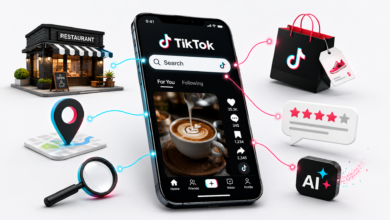
Consumer pathways have become remarkably intricate, with modern buyers typically using nearly four different platforms before completing a purchase. While Google remains part of this ecosystem, it now represents just over one-third of total search activity. Platforms like YouTube, TikTok, and Instagram collectively capture more than sixty percent of search-related interactions. This fragmentation demonstrates that last-click attribution models severely misrepresent actual consumer behavior by overvaluing final interactions while ignoring the substantial influence of discovery platforms and creator content.
The relationship between brands and potential customers now unfolds across numerous touchpoints. Someone might encounter a product on TikTok, research it through Reddit discussions, watch demonstration videos on YouTube, and finally perform a branded search on Google before purchasing. This elaborate journey highlights why marketing strategies must extend beyond traditional search optimization to include creator collaborations, community engagement, and platform-specific content strategies.
Regarding paid advertising, the landscape has become increasingly challenging. Data indicates that when AI overviews appear in search results, paid clicks can decrease by over three-quarters for brands not featured in these summaries. Even without AI overviews present, paid click volumes have dropped by approximately twenty percent. This development makes customer acquisition more expensive and pushes brands to rely more heavily on owned and earned media channels.
Social platforms present their own complexities. While users globally spend considerable time on these networks, trust in social media content has declined due to misinformation and algorithm-driven content that prioritizes engagement over quality. The very platforms designed to connect people often deliver manufactured experiences rather than genuine interactions, creating both obstacles and opportunities for authentic brand communication.
Email marketing remains one of the most reliable channels since brands maintain direct ownership of their subscriber relationships. However, the temptation to use AI for content generation risks diminishing engagement if the output lacks personality and genuine value. The most effective approach combines technological efficiency with human creativity and strategic insight.
Successful modern marketing requires integrated strategies across multiple channels. Building genuine audience understanding and developing authentic creator relationships proves more valuable than relying exclusively on paid acquisition. Brands should focus on creating remarkable experiences that naturally generate word-of-mouth exposure while maximizing owned channel value through technical excellence, content quality, and consistent brand messaging.
The current environment demands that marketing teams collaborate more effectively, sharing insights across search, social, and advertising disciplines. Rather than viewing AI as a replacement for human creativity, forward-thinking organizations use it to enhance their understanding of audience needs and streamline operational processes. The fundamental goal remains unchanged: creating meaningful connections with people through valuable experiences, regardless of which tools or platforms facilitate those interactions.
Quality search optimization continues to play a vital role in this ecosystem. Understanding how your brand appears across different platforms, including AI summaries, provides crucial insights into market positioning and audience perception. By combining technical excellence with creative audience engagement, brands can navigate this complex landscape while reducing dependence on increasingly expensive paid channels.
(Source: Search Engine Journal)