The Analogue 3D: The Ultimate N64 Collector’s Console
▼ Summary
– The Analogue 3D is a premium modern console that plays original N64 cartridges on modern TVs with features like 4K output and wireless controllers.
– It uses FPGA technology to replicate original N64 hardware performance and is region-free with claimed 100% game compatibility.
– The console offers multiple visual output modes, including “clean” for sharp graphics and BVM mode to preserve original effects like fog for authentic experiences.
– Unlike subscription services or emulators, it provides a tactile, focused gaming experience by requiring physical cartridges and deeper engagement with each game.
– It includes modern connectivity options like HDMI and USB ports but does not come with a controller, supporting both original wired and wireless alternatives.
For serious video game collectors, the Analogue 3D represents the pinnacle of Nintendo 64 gaming, blending modern technological enhancements with the authentic feel of original cartridges. This premium console breathes new life into a classic library, offering an experience that goes far beyond simple emulation.
Spending time with the Analogue 3D has rekindled my appreciation for the Nintendo 64. I’ve explored titles I missed originally and revisited cherished classics, all while enjoying contemporary comforts like wireless controllers and stunning 4K resolution.
The company Analogue first captured attention in 2015 with its modern reinterpretation of the NES, the Analogue NT. Since that debut, they have applied the same thoughtful approach to other beloved systems including the Sega Genesis and Super Nintendo. These consoles are engineered to play original game cartridges, which can range in price from a few dollars to several hundred, on today’s high-definition televisions. They achieve this through the use of FPGA (field-programmable gate array) technology, which replicates the original hardware’s functionality with remarkable accuracy.
The Analogue 3D brings this sophisticated concept to the N64. While more affordable and accessible methods exist to play these games, such as a Nintendo Switch Online subscription or various emulator apps, the Analogue 3D provides a distinct, hands-on encounter. It’s comparable to how a high-quality turntable celebrates the physical ritual of listening to music. This console fosters a deeper, more tangible connection to the gaming experience.
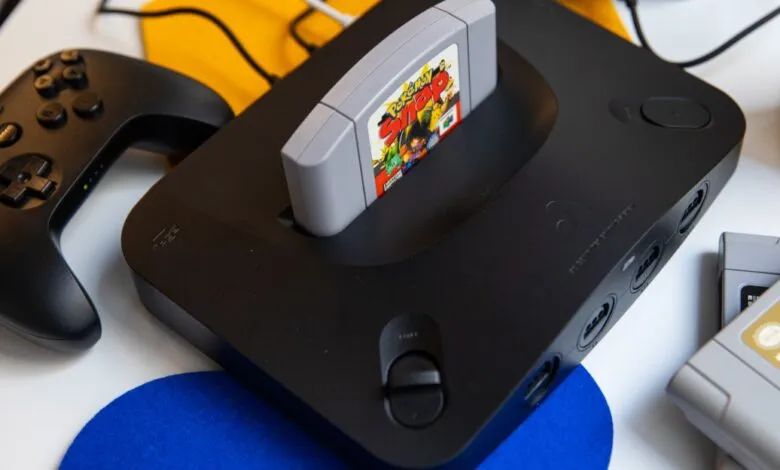
Priced at $249.99, the console features a sleek, modernized design reminiscent of the original N64 and is available in both black and white finishes. It includes a top-loading cartridge slot and four controller ports on the front, alongside power and reset buttons. The rear panel houses an SD card slot, two USB-A ports, and an HDMI output for seamless connection to modern displays. The package includes an HDMI cable, a USB cable, a power adapter, and a 16GB SD card pre-loaded with the system software. A controller is not included, but the console is compatible with original wired N64 gamepads as well as various wireless alternatives. During my testing, I used the $39.99 Bluetooth controller from 8bitdo, which cleverly reinterprets the iconic three-prong N64 design into a more familiar, ergonomic shape.
The system supports output resolutions up to 4K and is region-free, allowing you to enjoy games from any market. Analogue claims the console offers 100 percent compatibility with the entire N64 library. While I couldn’t test every single game, I did try several obscure titles, including a Japanese-exclusive J.League soccer game I purchased for ten dollars, and encountered no problems. A particularly useful feature of the minimalist interface is its ability to automatically recognize inserted cartridges, enabling you to build a digital catalog of your collection. This catalog can then be used to tailor visual settings for individual games. The company has also announced that future updates will introduce features like quick save states and screenshot capabilities.
It’s the extensive visual customization that truly demonstrates the power of the Analogue 3D. The N64 has historically been a challenging system to emulate properly; even Nintendo’s own efforts sometimes result in unappealing textures or missing effects like fog, with limited options for adjustment. The Analogue 3D tackles this head-on with five distinct output modes, and I frequently switched between them based on the game I was playing.
One mode, aptly named “clean,” delivers exactly that: the original game rendered in high resolution with vibrant colors and crisp edges. This became my preferred setting for bright, cheerful games like Banjo-Kazooie, which looked incredibly lively on my television. However, for other titles, this pristine output undermined the intended atmosphere. Games such as Star Wars: Shadows of the Empire and Turok: Dinosaur Hunter rely on desaturated color palettes and effects like fog to establish a somber, gritty mood. The “clean” mode stripped away that feeling. Switching to BVM mode (Broadcast Video Monitor), which Analogue describes as a “reference-grade for N64,” instantly restored all those crucial atmospheric elements. Suddenly, I was back in the gloomy Ord Mantell Junkyard, hunting Boba Fett just as I did thirty years ago, peering through the fog to spot incoming drones.
Additional modes are available for on-the-fly switching, including one that replicates the distinctive look of a classic CRT television. There are also deeper customization settings with technical names like “gamma transfer” and “beam convergence,” which admittedly went over my head. Nevertheless, I had no difficulty finding the optimal visual presentation for each game. The level of control available here is vastly superior to the single CRT filter offered by Nintendo’s subscription service.
One minor consideration has less to do with the Analogue 3D hardware itself and more with the era of games it supports. The company’s previous consoles primarily focused on 2D games, which generally hold up better over time than early 3D efforts. Even though I played many N64 games at their launch, I found myself challenged by some of the platforming sections and sorely missed the free-moving cameras common in modern 3D games. This was even more pronounced with titles that were completely new to me. This is not a fault of the console, but it is a factor to keep in mind if you plan to invest in a physical cartridge collection.
For me, however, this very challenge has made the hunt for cartridges even more rewarding. Discovering an interesting and unexpected game, then dedicating time to master its mechanics, allows for a level of engagement that feels profoundly deeper. Unlike browsing a vast digital library where I can instantly jump to another title if I grow bored, the Analogue 3D and its physical media demand a focus that I often find lacking in my daily life, where countless distractions compete for my attention.
I can say with certainty that I would never have given Jikkyo J. League: Perfect Striker a second look on Nintendo Switch Online. But now that I own the cartridge, it has become a beloved multiplayer staple in my home.
(Source: The Verge)