Dyson Award Winners: AI Water Sensor and Smart Parkinson’s Keyboard
▼ Summary
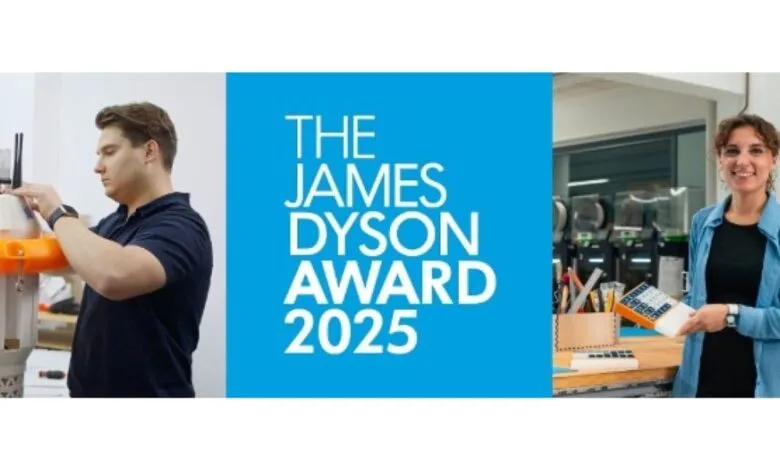
– The James Dyson Award 2025 recognized two global winners: WaterSense for sustainability and OnCue for medical innovation, each receiving $59,700 in prize money.
– WaterSense, invented by Filip Budny, is an autonomous device that monitors water quality in real-time using AI and recyclable paper sensors to detect pollution early.
– OnCue, created by Alessandra Galli, is a smart keyboard with haptic and visual cues to help people with Parkinson’s type more accurately by managing tremors and freezing.
– WaterSense operates using natural water currents for power and transmits data to an online platform that forecasts pollution events up to 72 hours in advance.
– OnCue features a customizable design with adjustable vibrations and lighting, and it aims to expand support for other neurological conditions like Alzheimer’s and dystonia.
The 2025 James Dyson Award has honored two groundbreaking innovations: an AI-powered water quality monitoring system and a smart keyboard designed for individuals with Parkinson’s disease. Each global winner received $59,700 to advance their projects, which tackle urgent environmental and health challenges through intelligent design and technology.
Now celebrating its twentieth year, this international student design competition has backed over 400 inventions with total prize funding exceeding £1.5 million. This year’s contest attracted more than 2,100 submissions from innovators in 28 countries and regions.
James Dyson, founder of the global technology company, emphasized the award’s mission to champion young inventors who confront real-world problems with fresh thinking. He praised the winners, Filip and Alessandra, for creating practical and imaginative solutions to complex issues in health and sustainability. Dyson expressed hope that the award would serve as a launchpad for commercializing their inventions.
WaterSense, the Sustainability Winner, was created by Filip Budny, a nanotechnology PhD candidate at Warsaw University of Technology in Poland. This autonomous device transforms water quality monitoring by providing real-time, AI-driven analysis and early pollution alerts, replacing outdated manual sampling methods.
OnCue, the Medical Winner, is the work of Italian product designer Alessandra Galli, a graduate of Delft University of Technology in the Netherlands. Her smart keyboard uniquely incorporates therapeutic cues into its design to help individuals with Parkinson’s manage tremors and freezing episodes, reducing typing errors and improving digital communication.
Sustainability Winner – WaterSense, by Filip Budny
The Challenge
Pollution affects more than 40% of the world’s freshwater bodies. Rivers and lakes face particular risk due to their smaller size, slower flow, and proximity to pollution sources like agricultural runoff, sewage, and industrial waste. Despite these threats, many regions rely on infrequent and outdated monitoring methods, creating dangerous gaps in water quality data.
In Australia, water monitoring occurs under the National Water Quality Management Strategy, a federal program coordinated with state and territory governments. However, consistent nationwide tracking of water quality trends remains a challenge.
The Winning Solution
Filip Budny’s WaterSense introduces a new approach to water quality monitoring. The device operates autonomously, using natural water currents to power a built-in hydrogenerator. It employs low-cost, recyclable paper sensors to measure more than 20 critical water quality indicators—such as pH, dissolved oxygen, nitrates, chlorides, and conductivity—at three customizable depths. This layered analysis helps detect pollutants that might otherwise go unnoticed.
Each day, the system automatically advances to a fresh sensor, much like advancing film in a camera, ensuring consistent lab-grade accuracy without manual intervention. Used sensors remain safely stored inside the device for up to a year before replacement.
WaterSense transmits data regularly via mobile networks to an AI-powered online platform. The platform not only assesses current water health but also learns from historical patterns to predict pollution events up to 72 hours in advance. All results are publicly accessible, empowering communities and authorities to take timely action to protect water ecosystems.
James Dyson noted that conventional water monitoring tends to be slow, manual, and sporadic. He described WaterSense as a worthy winner that delivers real-time monitoring and predictive capabilities using innovative paper-based sensors. Dyson expressed enthusiasm for seeing the device deployed in rivers worldwide.
Currently, WaterSense prototypes are undergoing testing at 20 sites across Poland in collaboration with water companies and local governments. Following his award win, Filip intends to refine the technology and expand its use to other countries.
Filip shared that the James Dyson Award reinforces the global importance of environmental innovation. He plans to continue developing systems that make clean water measurable and accessible to all. His team is now building partnerships with environmental agencies and research institutions across Europe, with a goal of establishing a continent-wide WaterSense network by 2026. To support this vision, they are seeking initial investment to scale production and accelerate deployment.
Tamara Tokarczyk, an associate professor and hydrologist at Poland’s Institute of Meteorology and Water Management, described WaterSense as the first solution enabling systematic, real-time qualitative monitoring. She highlighted its potential to generate high-resolution data for reliable forecasting models, benefiting both society and ecosystems.
Medical Winner – OnCue, by Alessandra Galli
The Challenge
More than 10 million people worldwide live with Parkinson’s disease, including over 150,000 Australians. Every day, 50 Australians receive a Parkinson’s diagnosis. Common symptoms—tremors, freezing episodes, and bradykinesia (slowed movement and impaired fine motor control)—make typing difficult and often frustrating.
While existing assistive keyboards may offer larger keys, high-contrast colors, or split layouts, they typically lack therapeutic features such as vibration and visual feedback tailored to Parkinson’s-specific motor challenges.
The Winning Solution
Alessandra Galli designed OnCue to help people with Parkinson’s engage confidently in the digital world. This affordable smart keyboard, used with accompanying wristbands, integrates haptic and visual cues to ease typing difficulties.
Each time a key is pressed, OnCue delivers gentle vibrations through the keyboard and wristbands, helping users maintain a steady rhythm and improve key awareness. If a key is held too long, the vibration gradually intensifies, prompting the user to release and continue typing. Using AI, the device predicts the next likely letters and illuminates them on the keyboard, offering visual guidance to reduce errors and hesitation.
Inspired by gaming keyboards, OnCue features a compact, split design that minimizes hand and arm strain. Raised key edges help prevent typing mistakes. The keyboard connects wirelessly via Bluetooth to most computers and laptops, operating for up to a week on a single charge.
Recognizing that Parkinson’s symptoms vary widely and can change throughout the day, Alessandra made OnCue highly customizable. Users can adjust vibration intensity in both the keyboard and wristbands, as well as modify the keyboard’s lighting. She is also developing software to further personalize vibration patterns based on individual routines and symptom fluctuations.
With her award win, Alessandra plans to continue collaborating with medical experts and people living with Parkinson’s to refine OnCue. Her long-term goal is to bring the device to market and adapt it for individuals with other neurological conditions, such as Alzheimer’s and dystonia.
James Dyson described OnCue as a clever and empowering solution that addresses the frustration of typing with Parkinson’s. He highlighted how the keyboard’s gentle vibrations, AI letter prediction, and raised key edges work together to support independent communication.
Alessandra expressed that winning the James Dyson Award validates her decision to pursue the project after graduation. The prize not only offers recognition but also practical support to finalize the operational prototype and bring OnCue closer to those who need it. She believes the award will help expand her professional network and create new opportunities for the device.
Gert Pasman, a senior lecturer in Industrial Design Engineering at Delft University of Technology who has lived with Parkinson’s for over ten years, shared his personal frustration with losing the ability to type easily. He praised Alessandra’s empathy, research skills, and motivation to create meaningful change. Pasman added that the award will help advance the project, offering hope to the broader Parkinson’s community.
(Source: ITWire Australia)