▼ Summary
– The Okapa water bottle costs $295, significantly more than typical high-end bottles that usually range from $50 to $150.
– Okapa positions itself as both a luxury status symbol and a solution for superior hygiene and durability using medical and aerospace materials.
– The brand invested eight years in R&D, created over 10,000 prototypes, and secured more than 70 patents globally for its design.
– In testing, the bottle featured high-quality engineering details like a smooth one-handed opening mechanism and a secure locking cap.
– Despite its distinctive design and premium feel, the bottle did not attract noticeable attention or compliments from others during real-world use.
When a water bottle carries a price tag of nearly three hundred dollars, it naturally raises eyebrows and prompts the question: what could possibly justify such a cost? Okapa’s flagship water bottle sells for $295, positioning it far above typical premium bottles that might include high-tech filtration, UV sterilization, or smart tracking features. Brands usually command extreme prices for one of two reasons, either the item functions as a luxury status symbol, or it delivers a unique solution to a common problem. Okapa boldly claims to do both, branding itself under “luxury hydration” while asserting its design redefines hygiene and durability using materials borrowed from medical and aerospace industries.
The company states that eight years of research and development, plus over 10,000 prototypes, were needed to achieve what they call “micron-level precision.” Okapa has secured more than 70 patents worldwide and describes the bottle as a “technical feat of engineering beyond reason.” According to the brand, “Okapa” represents a mindset, a “State of Okapa”, where the unthinkable becomes reality. The founder, Hardy Steinmann, brings experience from the luxury sector, having previously handled U.S. marketing and sales for Hublot and later relaunching Hamilton watches globally.
But do aerospace-grade materials actually improve a water bottle? Can any container genuinely transform hygiene standards? To find out, I used the Okapa bottle for nearly two months and consulted an expert in medical toxicology.
My first impression began with the brand’s website, which features a retro video game aesthetic complete with pixelated text and sliding transitions. Even the user manual is illustrated in the same playful style. I appreciate when a company invests heavily in branding and visual identity, and Okapa clearly does.
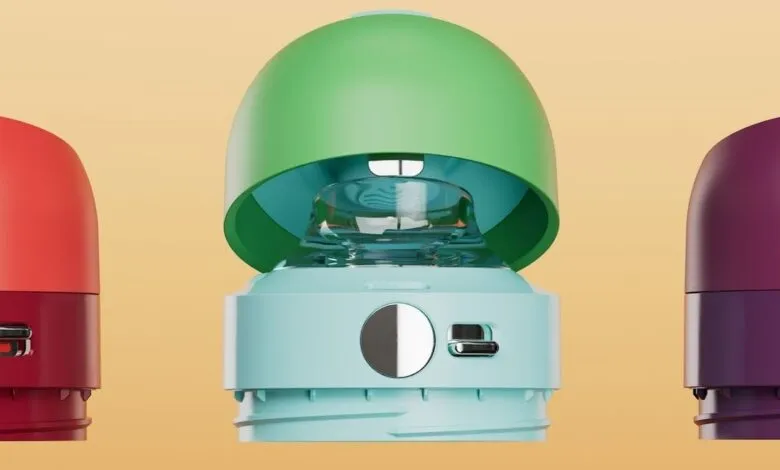
Unboxing the bottle only reinforced that initial appeal. Its design is undeniably beautiful, clean lines, an eye-catching dot pattern, and a soft matte finish that looks and feels premium. I selected the “Peaches Copperwire” color, a blend of pink and yellow, though there are eight options in total. Each has a creatively named finish, such as “Redd Rumble” or “Mitsi Pinku,” sounding more like characters from a sci-fi film than simple color choices.
Given its unique look, I wondered whether the bottle would attract attention or envy. Could strangers tell it was expensive? I carried it through airports, to spas, work events in New York, and on European trains, often holding it conspicuously, hoping for compliments. None came.
In terms of performance, the Okapa bottle surprised me with its thoughtful engineering. Drinking from it is a genuinely satisfying experience. A button press opens the lid, producing a crisp “pop” as the spring-loaded top retracts. It operates smoothly with one hand, and when tilting the bottle to get the last drops, the cap stays neatly out of the way instead of swinging forward to hit your face.
The mouthpiece fits comfortably against the lips, and the Swiss-made Grilamid plastic feels softer and higher quality than typical materials. The locking mechanism works exceptionally well, even when I forgot to engage it, the lid never accidentally opened in my bag. Having once ruined a laptop when another brand’s bottle opened during my commute, I truly value a reliable, secure closure.
(Source: Wired)