The Dirty Secret Behind Your AI Tools

▼ Summary
– AI companies are building massive data centers near gas-production sites and generating power directly from fossil fuels, giving the fracking industry a surprising resurgence.
– These data centers, like Poolside’s Horizon project in West Texas, use natural gas from fracked sources and produce immense computing power, equivalent to major hydroelectric dams.
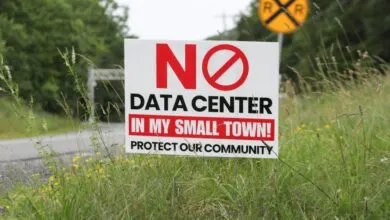
– Local residents in areas like Abilene, Texas, and Richland Parish, Louisiana, face disrupted lifestyles, environmental concerns, and water supply issues due to construction and resource demands.
– AI firms justify this fossil fuel reliance by citing geopolitical competition with China and the need for rapid energy buildout to support AI growth and national re-industrialization.
– The trend raises long-term financial and environmental risks, as communities may be left with costly infrastructure and higher bills after tech companies’ contracts expire, despite potential future shifts to cleaner energy.
The rapid expansion of artificial intelligence is quietly fueling a resurgence in natural gas extraction, creating an unexpected alliance between cutting-edge technology and traditional fossil fuels. This growing dependence on fracked gas to power energy-intensive data centers raises serious environmental and social questions, often overlooked amid enthusiastic coverage of AI’s potential benefits. Major technology firms are establishing massive computing facilities near gas fields, opting to generate their own electricity by burning fossil fuels directly on site.
A recent development highlights this trend. AI startup Poolside is building a sprawling data center complex on over 500 acres in West Texas, drawing power from the Permian Basin’s extensive natural gas reserves. The Horizon project aims to produce two gigawatts of computing capacity, matching the entire output of the Hoover Dam, but through burning fracked gas rather than hydroelectric generation. CoreWeave, a cloud provider supplying tens of thousands of Nvidia AI chips, is collaborating on this venture in what industry observers describe as an emerging “energy Wild West.”
Poolside is not an isolated case. OpenAI’s chief executive Sam Altman recently visited his company’s Stargate data center in Abilene, Texas, openly acknowledging they are “burning gas to run this data center.” The facility consumes approximately 900 megawatts across eight structures and incorporates a gas-fired power plant using naval-style turbines. While companies claim these plants mainly serve as backup power, with primary electricity sourced from local grids, these grids themselves heavily rely on natural gas alongside West Texas wind and solar farms.
Local residents express growing unease about these developments. Arlene Mendler, whose property faces the Stargate complex, told reporters her peaceful rural existence has been transformed by constant construction noise and glaring lights that obscure the night sky. She recalls moving to the area decades ago seeking tranquility, now lost to industrial expansion.
Water scarcity presents another critical concern in drought-prone regions. Although Oracle states its cooling systems will require minimal water after initial filling, researchers caution this overlooks the substantial indirect water consumption at power plants generating the extra electricity these systems demand. With city reservoirs at half capacity during recent visits, and residents adhering to strict watering schedules, the strain on local resources is palpable.
Meta is pursuing a comparable approach in Louisiana’s poorest region, planning a $10 billion data center spanning 1,700 football fields. The facility will demand two gigawatts of computational power, prompting utility company Entergy to invest $3.2 billion in three natural-gas plants fueled by fracked gas from the Haynesville Shale. Around-the-clock construction activity has drawn criticism from communities suddenly surrounded by industrial development.
Even Elon Musk’s xAI maintains connections to fracking through its Memphis operations. The local utility supplying power to xAI purchases natural gas transported via pipelines directly linked to major hydraulically fractured shale formations.
When questioned about their energy strategy, AI companies frequently frame it as a geopolitical necessity. OpenAI’s global affairs lead Chris Lehane recently argued that America must generate approximately one gigawatt of energy weekly to compete with China’s massive infrastructure expansion, which added 450 gigawatts and 33 nuclear facilities in a single year. This perspective has found political support, with recent executive orders fast-tracking gas-powered data centers through streamlined permits and financial incentives, while explicitly excluding renewable energy projects from similar benefits.
Most AI users remain unaware of the carbon footprint associated with their tools, focusing instead on capabilities like OpenAI’s Sora 2 video generator, which demands exponentially more energy than basic chatbots. Technology companies present natural gas as the practical solution to AI’s escalating power requirements, though the speed and scale of this fossil fuel expansion warrants greater public scrutiny.
The AI industry has developed interconnected dependencies that create systemic risk. As one financial publication noted, if this foundation falters, substantial infrastructure, both digital and gas-burning, could become stranded assets. Concerns are mounting about whether OpenAI alone can meet its commitments without creating broader economic repercussions.
A crucial question receiving insufficient attention is whether all this new energy capacity is genuinely necessary. Research from Duke University indicates utilities typically utilize just 53% of their available capacity annually, suggesting significant potential to accommodate new demand without constructing additional power plants. The study found that reducing data center electricity consumption by half during peak demand periods could free up 76 gigawatts of capacity, more than enough to handle the 65 gigawatts data centers are projected to require by 2029.
Such flexibility would enable faster AI data center deployment while providing breathing room to develop cleaner energy alternatives. However, industry leaders like Lehane contend this approach would cede competitive advantage to geopolitical rivals, making continued natural gas expansion the preferred path.
The long-term implications for host communities remain uncertain. Meta has guaranteed to cover Entergy’s costs for new Louisiana generation for 15 years, while Poolside’s lease with CoreWeave runs for a similar duration. What happens to utility customers after these contracts expire presents an unresolved question.
Investment continues flowing into alternative energy solutions like small modular reactors and advanced solar installations, with fusion startups attracting significant funding from AI industry leaders. This optimism has spread to public markets, where energy companies with minimal revenue command substantial valuations based on expectations they will eventually power these data centers.
During what could be a multi-decade transition period, the most immediate concern remains that local communities, facing both financial and environmental consequences, never consented to hosting this industrial expansion in the first place.
(Source: TechCrunch)